The series starts with three kinds of magic: sorceries, miracles, and pyromancies.
Sorcery is a form of magic that is implied to have been created by Seath, the "grandfather of sorcery," the scaleless dragon who betrayed all other dragons for a chance at immortality. Anyone with a high Intelligence and a catalyst (usually a staff of some kind) can cast a sorcery. There are less than 28 sorceries in the first Dark Souls and that number only grew to 39 by the third installment.
Miracles are stories retold so many times that they have become a form of magic, the story evokes an effect. Though miracles do require both a Talisman to cast and a high Faith score. The first Dark Souls has 23 miracles and that number exploded to 38 by the third game.
Pyromancies originated as flame sorceries that only the Witch of Izalith and her Daughters of Chaos knew. When they failed to recreate the First Flame, pyromancy was one of the resulting side effects of their failure. Within the lore of Dark Souls, learning to wield a pyromancy flame requires that you produce the flame from your own body. There is no stat requirement for casting a pyromancy spell. There are only 20 pyromancies in the first Dark Souls, but by the third game there are 30 of them.
(In the second Dark Souls game they introduce hexes, which originate as a subset of sorcery from the Abyss that deals Dark damage, but it is implied that this same Dark magic has tainted some miracles as some hexes are cast the same way that a miracle would be.)
Suppose you apply these forms of magic to D&D. Sorceries are the domain of wizards, miracles would apply to clerics, and pyromancies would most easily fit with druids. Bards would, predictably, dabble with all of them. But a magic system that only requires the proper stat requirement and the tool to use it appeals to me more than a class-based system. The lore behind each spell usually explains where it originates within the game's backstory. Consider the in-game description for Fall Control, the Dark Souls equivalent of feather Fall:
"Sorcery developed by a certain surreptitious sorcerer at Vinheim Dragon School. Reduce damage and noise from fall.
This sorcery, along with Hush, explains the extravagant cost of hiring Vinheim spooks."
What if Mirror Image was just a spell you could find out in the world? And you knew it was developed in a city called Riverport? So if you want it, you'd venture toward Riverport to look for it, right?
These are all things I want for D&D: Lore for spells. An origin of magic. Smaller spell lists.

> bonebox = nerdwerds AT gmail
Tuesday, October 15, 2019

Monday, October 7, 2019
October 2019 - summer ennui
We haven't played D&D in almost 2 months. This seems to happen to me every year, around July or August we take a break and then we just never return to gaming or it's such a huge break from the table that I wonder if we should continue with the game we had going in the first place. Christmastime seems to have a similar break, but players are always eager to return. Probably has something to do with the weather.
Monday, September 23, 2019
my Appendix N
In 1979 when Gary Gygax first compiled his list of literature for Appendix N, he was drawing upon literature that he had grown up with and read for decades. The earliest stories were written by Lord Dunsany and he was published as early as 1905, but from what I can gather the most recent story on that list was published in 1978 (The Pirate of World's End by Lin Carter), though some of the series mentioned were still having stories written after 1979. My experiences with fantasy and science fiction are far removed from much of this literature. If I were to compile my own list of inspirational literature it would be ironic that I would end up listing several D&D books as my inspiration for playing D&D. Additionally, so much of pop culture and nerd culture is wrapped up in movies and video games, it would be impossible for me to write an Appendix N without including these cinematic and interactive media, despite the fact that much of it is likely also influenced by the existence of D&D.
Caveats in place, I give you my Appendix N:
literature
Alexander, Lloyd: Chronicles of Prydain
Barker, Clive
Findley, Nigel: Into the Void; GURPS Illuminati
Howard, Robert E: Conan series
Jackson, Steve and/or Livingstone, Ian: the Fighting Fantasy gamebook series
King, Stephen
Lewis, C.S.: Chronicles of Narnia
Lindsay, David: A Voyage to Arcturus
Lovecraft, H.P.: At the Mountains of Madness
Maitland, Karen: Company of Liars
Martin, George R.R.: Saga of Ice and Fire
Matheson, Richard
Pratchett, Terry: Discworld series; SMALL GODS
Tolkien: The Hobbit; The Lord of the Rings
Weis, Margaret & Hickman, Tracy: Dragonlance Chronicles trilogy; Death Gate Cycle
comic books
Coda
Conan (anything published by Marvel or Dark Horse)
Heavy Metal magazine
Lone Wolf and Cub
Swamp Thing (volume 2)
Usagi Yojimbo
film & television
The Dark Crystal
Doctor Who (both series)
Dragonslayer
Excalibur
John Carpenter's The Thing
Labyrinth
Mad Max; Road Warrior; Mad Max Beyond Thunderdome; Mad Max: Fury Road
Time Bandits
The Twilight Zone
video games
Dark Souls and it's sequels
Dwarf Fortress
Elder Scrolls series
Fallout series
The Legend of Zelda series
Ultima series
Vermintide
Caveats in place, I give you my Appendix N:
literature
Alexander, Lloyd: Chronicles of Prydain
Barker, Clive
Findley, Nigel: Into the Void; GURPS Illuminati
Howard, Robert E: Conan series
Jackson, Steve and/or Livingstone, Ian: the Fighting Fantasy gamebook series
King, Stephen
Lewis, C.S.: Chronicles of Narnia
Lindsay, David: A Voyage to Arcturus
Lovecraft, H.P.: At the Mountains of Madness
Maitland, Karen: Company of Liars
Martin, George R.R.: Saga of Ice and Fire
Matheson, Richard
Pratchett, Terry: Discworld series; SMALL GODS
Tolkien: The Hobbit; The Lord of the Rings
Weis, Margaret & Hickman, Tracy: Dragonlance Chronicles trilogy; Death Gate Cycle
comic books
Coda
Conan (anything published by Marvel or Dark Horse)
Heavy Metal magazine
Lone Wolf and Cub
Swamp Thing (volume 2)
Usagi Yojimbo
film & television
The Dark Crystal
Doctor Who (both series)
Dragonslayer
Excalibur
John Carpenter's The Thing
Labyrinth
Mad Max; Road Warrior; Mad Max Beyond Thunderdome; Mad Max: Fury Road
Time Bandits
The Twilight Zone
video games
Dark Souls and it's sequels
Dwarf Fortress
Elder Scrolls series
Fallout series
The Legend of Zelda series
Ultima series
Vermintide
Saturday, September 21, 2019
what I think I want in D&D
I have no idea if any of this is doable, but I'm going to try
Monday, July 1, 2019
July 2019 - clerical error
I've changed my mind about clerics: they shouldn't have the ability to turn undead.
This decision has upended everything I've been working on!
I have more options with undead creatures now, but also don't know how to revise clerics to compensate for the loss of class ability.
There's a concept in Dungeon World that a PC cleric is THE cleric for the world, so you wouldn't be seeing them in large groups unless they were "very important" NPCs or, more likely, villains and opponents. I'm thinking about taking this concept into OSRenstein and saying there are very few clerics overall, but they end up being leaders or chamopions of their faith.
Where does that leave PCs?
I don't know yet, but I'm working on it.
This decision has upended everything I've been working on!
I have more options with undead creatures now, but also don't know how to revise clerics to compensate for the loss of class ability.
There's a concept in Dungeon World that a PC cleric is THE cleric for the world, so you wouldn't be seeing them in large groups unless they were "very important" NPCs or, more likely, villains and opponents. I'm thinking about taking this concept into OSRenstein and saying there are very few clerics overall, but they end up being leaders or chamopions of their faith.
Where does that leave PCs?
I don't know yet, but I'm working on it.
Sunday, June 30, 2019
Hey Dave! this is Dark Souls
My brother asked me to explain Dark Souls to him, I told him I'd make a video explaining the basics - here it is:
Monday, June 17, 2019
some Hot Springs Island bullshit
I never explained who the players' characters are:
Zora is a Chaotic Human Fighter, she signed up as a mercenary with the Martell Company to spy on their operations and she wants to find some precious elven relics before she tries to leave the island
Allmah is a Neutral Human Thief, she was sentenced to work for the Martell Company to pay for her crimes back in the city (a 9 year sentence), she and Zora kept each other alive during the war and Zora helped her escape her chains when their ship wrecked upon the island, she hopes she can leave the island with enough wealth to never work another day in her life
Diera is a Good Human Magic-User, she signed up as a mercenary with the Martell Company because her cousin, Zora, had as well, she she hopes to find powerful magic on the island which she can claim for her own use
 One of our "heroes," Zora, decided she wanted to burn down the glade of pine trees swarming with bees. She snuck off in the morning with her Lava Rug to burn the glade down and immediately stumbled across a nest of vyderac seekers and swarmers. She used the Lava Rug to roll over the swarmers and it protected her from the seekers well enough, but she still got bit through her boots and the seeker dust made her hands go numb, causing her to drop the rug as soon as she made it to the glade. She soon learned the bees will extinguish fires fairly quickly, and they can overwhelm vyderac seekers. After reconnecting with the others, they decided to move their camp closer to the glade.
During the hours of traveling back and forth between the shoreline and the glade, Allmah crossed paths with an earth imp named Gode, who seemed very curious as to why humans have returned to the island. She answered all of his questions and explained about the Martell Company and the lizardmen and salamanders she had encountered. Gode corrected her, "Well, actually, those are the Goa and they're very unfriendly." and "Well, actually, those are the Fuegonauts and they're really stupid."
Zora insisted on exploring around the glade and they found a ruined hilltop that Gode was reluctant to approach. He claimed there were more elementals like him living there and they were cheats and liars. Zora ignored his prattling and walked down the only stairwell amongst the ruins to find a gambling den filled with steam and fire creatures, all drinking and gambling, and being super annoyed that another earth imp, Gode, had arrived. The bartender bet each of the humans one gold bar that they wouldn't be able to get the earth elementals to leave, and Zora took the bet. She talked to the other earth imp, Grine, for a very short period of time before he agreed to follow her. As they left the gambling den, they found there were already steam imps at the top of the stairs with gold bars. This was not so much a bet as it was a payoff. The steam imps helped construct a ship for the humans to sail of the island and then returned to the den, asking the humans not to return with their two "friends."
They moved the second ship, a very simple but large rowboat, closer to their pirate skiff along the shore, then proceeded back into the jungle where they found a copper arch standing in a pond of white lilies. Allmah swam through the pond and found an ornate golden box with a strip of perfectly preserved and tattooed skin inside - nobody could read the runes etched into it. Diera proceeded to study the archway, and they were soon approached by lizardmen who held their hands up peacefully. Some tense conversation led to an understanding that these were Arva, "good lizard people" as Diera put it, and they wanted to know what the arch did. When Diera concluded her study, she shared her knowledge with them: a teleportation gate that required a chime to operate.
"I bet that chime is in the gambling den!" said Zora. The party returned to camp resolved to explore the gambling den, and at the very least attempt to steal the elemental core that dominated the archway over the bar.
Some DMing note:
At first the players thought that Gode was cute, but I emphasized that his questions are tedious, never stop, and are potentially hazardous. "So your hair just gets longer every day? Can you feel it? How can you not feel your hair? are there other parts of your body you can't feel? Does it hurt when I poke you like this? How about here? How about like this?"
Describing the gambling hall, the House of Tranquility, was difficult but I think I pulled it off well enough for the players to understand that this place is part of an elemental society built upon elven ruins. One of Diera's INT checks revealed that these imps weren't summoned, they came here on their own - now she's wondering if there are portals to find on the island. When I described the gray core in the bar, table talk immediately turned to "how can we steal this thing?!" and it became a focal point for returning to the den.
While reading the description of the Arva I realized that their motivation of not wanting "any non-Arva to know who or what their leader is" was not going to work. There didn't seem to be any other way for me to have the players hear the name 'Damadar Deodan' so I ignored this motivation and had them be very open about it, even bragging about how powerful he was. I also really like the character of Damadar Deodan so I placed him in hex 19-03, because why the hell not? It gives the Arva a place to congregate to after they explore, and it's close enough to the bathhouse that Damadar might ask some adventurers to go find the source of power the Arva sense there.
Zora is a Chaotic Human Fighter, she signed up as a mercenary with the Martell Company to spy on their operations and she wants to find some precious elven relics before she tries to leave the island
Allmah is a Neutral Human Thief, she was sentenced to work for the Martell Company to pay for her crimes back in the city (a 9 year sentence), she and Zora kept each other alive during the war and Zora helped her escape her chains when their ship wrecked upon the island, she hopes she can leave the island with enough wealth to never work another day in her life
Diera is a Good Human Magic-User, she signed up as a mercenary with the Martell Company because her cousin, Zora, had as well, she she hopes to find powerful magic on the island which she can claim for her own use
During the hours of traveling back and forth between the shoreline and the glade, Allmah crossed paths with an earth imp named Gode, who seemed very curious as to why humans have returned to the island. She answered all of his questions and explained about the Martell Company and the lizardmen and salamanders she had encountered. Gode corrected her, "Well, actually, those are the Goa and they're very unfriendly." and "Well, actually, those are the Fuegonauts and they're really stupid."
Zora insisted on exploring around the glade and they found a ruined hilltop that Gode was reluctant to approach. He claimed there were more elementals like him living there and they were cheats and liars. Zora ignored his prattling and walked down the only stairwell amongst the ruins to find a gambling den filled with steam and fire creatures, all drinking and gambling, and being super annoyed that another earth imp, Gode, had arrived. The bartender bet each of the humans one gold bar that they wouldn't be able to get the earth elementals to leave, and Zora took the bet. She talked to the other earth imp, Grine, for a very short period of time before he agreed to follow her. As they left the gambling den, they found there were already steam imps at the top of the stairs with gold bars. This was not so much a bet as it was a payoff. The steam imps helped construct a ship for the humans to sail of the island and then returned to the den, asking the humans not to return with their two "friends."
They moved the second ship, a very simple but large rowboat, closer to their pirate skiff along the shore, then proceeded back into the jungle where they found a copper arch standing in a pond of white lilies. Allmah swam through the pond and found an ornate golden box with a strip of perfectly preserved and tattooed skin inside - nobody could read the runes etched into it. Diera proceeded to study the archway, and they were soon approached by lizardmen who held their hands up peacefully. Some tense conversation led to an understanding that these were Arva, "good lizard people" as Diera put it, and they wanted to know what the arch did. When Diera concluded her study, she shared her knowledge with them: a teleportation gate that required a chime to operate.
"I bet that chime is in the gambling den!" said Zora. The party returned to camp resolved to explore the gambling den, and at the very least attempt to steal the elemental core that dominated the archway over the bar.
Some DMing note:
At first the players thought that Gode was cute, but I emphasized that his questions are tedious, never stop, and are potentially hazardous. "So your hair just gets longer every day? Can you feel it? How can you not feel your hair? are there other parts of your body you can't feel? Does it hurt when I poke you like this? How about here? How about like this?"
Describing the gambling hall, the House of Tranquility, was difficult but I think I pulled it off well enough for the players to understand that this place is part of an elemental society built upon elven ruins. One of Diera's INT checks revealed that these imps weren't summoned, they came here on their own - now she's wondering if there are portals to find on the island. When I described the gray core in the bar, table talk immediately turned to "how can we steal this thing?!" and it became a focal point for returning to the den.
While reading the description of the Arva I realized that their motivation of not wanting "any non-Arva to know who or what their leader is" was not going to work. There didn't seem to be any other way for me to have the players hear the name 'Damadar Deodan' so I ignored this motivation and had them be very open about it, even bragging about how powerful he was. I also really like the character of Damadar Deodan so I placed him in hex 19-03, because why the hell not? It gives the Arva a place to congregate to after they explore, and it's close enough to the bathhouse that Damadar might ask some adventurers to go find the source of power the Arva sense there.
Monday, June 10, 2019
Kumatra, the Umbral Drake
Kumatra was once an ancient dragon, obsessed with extending his own life he explored every possible avenue to fins the secret to immortality. He imprisoned his own kind and discovered ways of inflicting magics and curses, documenting the effects they had. Kamutra pursued the only method he knew to extend his own life, by consuming the blood of his fellow dragons, though this had despoiled his body and he found himself growing more despondent with each passing year.
 Kumatra was fortunate to cross paths with and befriend Sanglorious'es child, Aspehnen, and they discovered the two shared a connection within dreams, able to converse whenever both were asleep. With the help of Aspehnen and her brother Verlamm, Kumatra developed advanced magics and skills within dreams, researching a way to transpose his physical form into dreams in order to become truly immortal. There was only one catch: in order to live forever Kamutra would have to ensure that there were always dreamers.
After toiling for an age, Kumatra finally achieved his goal of immortality through the creation of dreamwalkers. However, the transposition did not come without a price. As the dragon retreated into dreams, his desires and passion became muted and insubstantial, his mind became as mercurial and unfocused as a dream. Kumatra would probably have tried to escape, but he had so committed himself to traversing dreams that in the end he became one. Eternally trapped within dreams, Kumatra flew far and wide across dreams to teach the art of dreamwalking to any who might dream deeply enough to catch his attention.
Prime Requisite: Charisma (minimum 9, opt.)
Hit Dice: d6
Weapons: Any
Armor: Any
Saves: as Fighter
Dream Magic
Spells must be selected when the character first enters sleep. The maximum number of spells active is equal to the Dreamwalker's charisma modifier (minimum of 1). Spells have effects upon waking the next morning.
Dreamlink
connect to others through dreams
Effect: The Dreamwalker can link to a number of PCs and NPCs dreams equal to their level, these connections must be made with people the Dreamwalker has at least met face to face. While awake, the Dreamwalker can recall knowledge of or have communicated with the PC or NPC. This knowledge can be used to receive bonuses for skill checks, or supplant the character's knowledge with information they might not have access to in the waking world. For example, linking to a priest from a secluded monastery might bestow knowledge of the layout inside the monastery.
Reveried
acquire skill in waking world from dreams
Effect: The Dreamwalker can learn a skill, at the maximum for their level, for use in the waking world. The knowledge of this skill is lost upon entering sleep again, unless the Dreamwalker continues to use this spell to acquire the same skill.
Armor of Sleep
dream-realized armor in the waking world
Effect: In the waking world, the Dreamwalker's body manifests a shadowy armor that pushes away enemies and protects the Dreamwalker from harm. Any damage received is reduced by a number of points equal to the Dreamwalker's level, to a minimum of 1 damage.
Umbral Ally
summons dream ally into waking world
Effect: Upon waking, the Dreamwalker has a shadowy ally that follows them obediently and without question or hesitation. The ally has half the HP of the Dreamwalker (round down), but otherwise has the same stats for combat purposes. The ally disappears if their HP are reduced to zero or when the Dreamwalker sleeps again.
Dreamed Weapon
conjures dream weapon into waking world
Effect: The Dreamwalker awake with a shadowy, wispy weapon of their choosing. It cannot be broken and leave their hand unless the Dreamwalker wills it. As soon as the weapon is put down it begins to fade into nothing (in 1d6+1 rounds) unless the Dreamwalker picks it back up.
Mass of Nightmares
surrounds dreamer with nightmares pulled from dreams, can be used as weapons or armor
Effect: Upon waking a number of Nightmares equal to their level hovers around the Dreamwalker's head, these wispy orbs of darkness can only be seen by someone who gets within 15 feet of the Dreamwalker, otherwise it appears as if an aura of darkness surround the Dreamwalker, though actual light around them is unaffected. Each Nightmare has 1d6 HP, and the Dreamwalker can dispatch one as a weapon to inflict damage equal to it's HP. A single Nightmare can be sacrificed to bestow Disadvantage to an attack against the Dreamwalker.
Kumatra was fortunate to cross paths with and befriend Sanglorious'es child, Aspehnen, and they discovered the two shared a connection within dreams, able to converse whenever both were asleep. With the help of Aspehnen and her brother Verlamm, Kumatra developed advanced magics and skills within dreams, researching a way to transpose his physical form into dreams in order to become truly immortal. There was only one catch: in order to live forever Kamutra would have to ensure that there were always dreamers.After toiling for an age, Kumatra finally achieved his goal of immortality through the creation of dreamwalkers. However, the transposition did not come without a price. As the dragon retreated into dreams, his desires and passion became muted and insubstantial, his mind became as mercurial and unfocused as a dream. Kumatra would probably have tried to escape, but he had so committed himself to traversing dreams that in the end he became one. Eternally trapped within dreams, Kumatra flew far and wide across dreams to teach the art of dreamwalking to any who might dream deeply enough to catch his attention.
Dreamwalker
Prime Requisite: Charisma (minimum 9, opt.)
Hit Dice: d6
Weapons: Any
Armor: Any
Saves: as Fighter
Dream Magic
Spells must be selected when the character first enters sleep. The maximum number of spells active is equal to the Dreamwalker's charisma modifier (minimum of 1). Spells have effects upon waking the next morning.
Dreamlink
connect to others through dreams
Effect: The Dreamwalker can link to a number of PCs and NPCs dreams equal to their level, these connections must be made with people the Dreamwalker has at least met face to face. While awake, the Dreamwalker can recall knowledge of or have communicated with the PC or NPC. This knowledge can be used to receive bonuses for skill checks, or supplant the character's knowledge with information they might not have access to in the waking world. For example, linking to a priest from a secluded monastery might bestow knowledge of the layout inside the monastery.
Reveried
acquire skill in waking world from dreams
Effect: The Dreamwalker can learn a skill, at the maximum for their level, for use in the waking world. The knowledge of this skill is lost upon entering sleep again, unless the Dreamwalker continues to use this spell to acquire the same skill.
Armor of Sleep
dream-realized armor in the waking world
Effect: In the waking world, the Dreamwalker's body manifests a shadowy armor that pushes away enemies and protects the Dreamwalker from harm. Any damage received is reduced by a number of points equal to the Dreamwalker's level, to a minimum of 1 damage.
Umbral Ally
summons dream ally into waking world
Effect: Upon waking, the Dreamwalker has a shadowy ally that follows them obediently and without question or hesitation. The ally has half the HP of the Dreamwalker (round down), but otherwise has the same stats for combat purposes. The ally disappears if their HP are reduced to zero or when the Dreamwalker sleeps again.
Dreamed Weapon
conjures dream weapon into waking world
Effect: The Dreamwalker awake with a shadowy, wispy weapon of their choosing. It cannot be broken and leave their hand unless the Dreamwalker wills it. As soon as the weapon is put down it begins to fade into nothing (in 1d6+1 rounds) unless the Dreamwalker picks it back up.
Mass of Nightmares
surrounds dreamer with nightmares pulled from dreams, can be used as weapons or armor
Effect: Upon waking a number of Nightmares equal to their level hovers around the Dreamwalker's head, these wispy orbs of darkness can only be seen by someone who gets within 15 feet of the Dreamwalker, otherwise it appears as if an aura of darkness surround the Dreamwalker, though actual light around them is unaffected. Each Nightmare has 1d6 HP, and the Dreamwalker can dispatch one as a weapon to inflict damage equal to it's HP. A single Nightmare can be sacrificed to bestow Disadvantage to an attack against the Dreamwalker.
Sunday, June 2, 2019
Hot Pirate Island
The players in this game are all women. I feel like I should point that out before I mention that the first thing they did in the second session is seduce the last surviving pirate into having a lesbian orgy with them. It feels like not a lot happened in this session, but there WAS quite a bit of character development. Its difficult to remember in-game conversations, but they definitely spent a lot of time discussing what they wanted to do and what their goals are. My players also don't have a lot of experience with rules so I'm sort of keeping the nuts and bolts rules secret but just offering a lot of options and trying to make "Yes, you can (do that) if you (do this) first" statements. I'm essentially using an Apocalypse World 'success/partial success/miss' kind of roll for everything, but the players always roll a d20.
They had dumped the bodies of the dead pirates into the water of the cove, and the blood attracted some salamanders - Fuegonauts. The salamanders attempted to capture them, but the magic-user in the group, Diera Fireflame, cast a spell called Song of the Poisonous Memory. Diera Fireflame has been having bad luck with her magic, she keeps failing to cast a spell and the magic twists and warps into ways she doesn't intend. So far she has inadvertently and unintentionally possessed a magic club, sent a charm spell backwards in time to convince a hive of bees that she's their queen, turned her eyes into black inky portals to the Abyss (she can still see with them), turned all insects within 100 feet into geniuses, and that's just what I can remember. She finally cast a spell successfully, and infected the salamander brains with brain aneurysms, causing them all to die instantly. Later, she would do the same to a swarm of giant centipedes.
They spent a few days resting, brewing poison, identifying magic items, and converting the pirate cove into a base of operations, then sailed around the southern tip of the island in search of elven ruins. Their surly and rude warrior, Zora Lieng, had come to the island in search of elven relics and their new ex-pirate lover indicated that ancient elven ruins could be found in that direction. After landing on a centipede-infested beach, they made camp and explored for a few hours, finding a grove of trees with massive beehives. Zora has decided to destroy the trees, but it's getting late and so they returned to camp.

1st-level spell
Song of the Poisonous Memory
range: 30 feet
Wisdom saving throw negates
failure = target takes 2d6 damage, damage ignores armor and cannot be reduced in any way, only affects creatures with brains
1st-level spell, cast at higher level to affect more targets (each level adds +1 target)
if rolling for spell, a critical success turns the spell into an area effect (a DCC spell might also increase damage or be able to affect non-brained creatures with a high enough roll!)
They had dumped the bodies of the dead pirates into the water of the cove, and the blood attracted some salamanders - Fuegonauts. The salamanders attempted to capture them, but the magic-user in the group, Diera Fireflame, cast a spell called Song of the Poisonous Memory. Diera Fireflame has been having bad luck with her magic, she keeps failing to cast a spell and the magic twists and warps into ways she doesn't intend. So far she has inadvertently and unintentionally possessed a magic club, sent a charm spell backwards in time to convince a hive of bees that she's their queen, turned her eyes into black inky portals to the Abyss (she can still see with them), turned all insects within 100 feet into geniuses, and that's just what I can remember. She finally cast a spell successfully, and infected the salamander brains with brain aneurysms, causing them all to die instantly. Later, she would do the same to a swarm of giant centipedes.
They spent a few days resting, brewing poison, identifying magic items, and converting the pirate cove into a base of operations, then sailed around the southern tip of the island in search of elven ruins. Their surly and rude warrior, Zora Lieng, had come to the island in search of elven relics and their new ex-pirate lover indicated that ancient elven ruins could be found in that direction. After landing on a centipede-infested beach, they made camp and explored for a few hours, finding a grove of trees with massive beehives. Zora has decided to destroy the trees, but it's getting late and so they returned to camp.

1st-level spell
Song of the Poisonous Memory
range: 30 feet
Wisdom saving throw negates
failure = target takes 2d6 damage, damage ignores armor and cannot be reduced in any way, only affects creatures with brains
1st-level spell, cast at higher level to affect more targets (each level adds +1 target)
if rolling for spell, a critical success turns the spell into an area effect (a DCC spell might also increase damage or be able to affect non-brained creatures with a high enough roll!)
Saturday, June 1, 2019
June 2019 - writing is editing
My job has been exhausting and I have ended up having less time for my hobbies. I only play video games about once a week, and I don't even check my email until the end of the week. I've also run into the problem of constantly trying to reschedule my own tabletop gaming due to everyone's conflicting work schedules. I don't really know how to simplify some of these complications, and I'm inclined not to think too hard about them. My job pays well, and when I'm asked to do extra work I jump at the chance, for now.
I have been writing scant new material, but I have been rewriting a few things I posted on this blog over the years. I guess the correct word is editing. I should have called this blog Rough Draft, because I usually just spout off a bunch of ideas or nonsense that I come up with and I only check to make sure it's coherent before I hit the publish button. Lately I've been going through old posts about Kosranon and editing them.
For example, I looked at this:
The Masadhi are an oddly private race of grotesquely misshapen mystics who feel compelled to constantly travel from one place to another. They are revered for their insights by most of the other cultures they come into contact with.
and it became this:
The Masadhi are a race of grotesque nomadic mystics, revered by most others for their prophetic insights.
There were unnecessary words, and I end up keeping the description while leaving more open to personal interpretation.
The edit of that first sentence looks like this:
The Masadhi are an oddly private race of grotesquely misshapen mystics who feel compelled to constantly travel from one place to another (replace with nomadic). They are revered for their (+prophetic) insights by most of the other cultures they come into contact with.
Stephen King says that he cuts about 10% of everything he writes, and I'm definitely no Stephen King because I'm cutting about half of my words.
Aos talks about self-publishing here and I have to admit that right now, I have no art budget. I've been handwaving it in my head that I will start commissioning art when I have a finished draft that I'm comfortable publishing but I'm also not saving money for it. I have bills to pay and debts to eliminate before I can consider putting any of my money aside. I set up a patreon page before they hiked their pricing, but I don't know if I even want to use patreon. For now I'm just focusing on writing and drawing maps when I have the time and energy to do so.
I have been writing scant new material, but I have been rewriting a few things I posted on this blog over the years. I guess the correct word is editing. I should have called this blog Rough Draft, because I usually just spout off a bunch of ideas or nonsense that I come up with and I only check to make sure it's coherent before I hit the publish button. Lately I've been going through old posts about Kosranon and editing them.
For example, I looked at this:
The Masadhi are an oddly private race of grotesquely misshapen mystics who feel compelled to constantly travel from one place to another. They are revered for their insights by most of the other cultures they come into contact with.
and it became this:
The Masadhi are a race of grotesque nomadic mystics, revered by most others for their prophetic insights.
There were unnecessary words, and I end up keeping the description while leaving more open to personal interpretation.
The edit of that first sentence looks like this:
The Masadhi are a
Stephen King says that he cuts about 10% of everything he writes, and I'm definitely no Stephen King because I'm cutting about half of my words.
Aos talks about self-publishing here and I have to admit that right now, I have no art budget. I've been handwaving it in my head that I will start commissioning art when I have a finished draft that I'm comfortable publishing but I'm also not saving money for it. I have bills to pay and debts to eliminate before I can consider putting any of my money aside. I set up a patreon page before they hiked their pricing, but I don't know if I even want to use patreon. For now I'm just focusing on writing and drawing maps when I have the time and energy to do so.
Sunday, May 19, 2019
Hot Springs Island
I ran a session and started with a shipwreck, as per the module's suggestion. We started with a Fiasco-like background starter that allowed me to tie their backgrounds together as well as connect them all to the Martel Trading Company. The players instantly started scavenging from their dead shipmates and the flotsam washing up on shore (hex 13). They found boar along the shoreline but didn't venture into the island interior. One of the players has a geology degree and she immediately pointed out that the black sandy beaches shouldn't be there with the volcanic activity.
They tried to build a shelter and were ambushed by two Goa sneaking around the ship wreckage, then found copperbacks and a magic hammer (Rockcracker) amidst the remains of a scorched battlefield (hex 18). I created a group of pirates who were also looting the wreckage, and the PCs followed them and learned that these pirates had brokered a peace with the Goa and were enemies of Martel. The PCs ambushed the pirates and killed all but one of them, the only survivor a mute and disfigured woman who always wears a mask depicting a white demon. They looted the pirate's cave (along the rocky shoreline of hex 22) and found a couple more magic items (a vest of jungle vitality, see below, and Lava Rug).
As the session progressed I introduced rules, rather than spelling them all out at the beginning or during character creation, such as time passing in-game and measuring the day/night cycle using colored poker chips. Overall, a productive session, and everyone wanted to keep playing! I'm getting pretty good at GMing.

Vest of Jungle Vitality
While the wearer is in a jungle environment they have no need to eat, drink, or sleep.
They tried to build a shelter and were ambushed by two Goa sneaking around the ship wreckage, then found copperbacks and a magic hammer (Rockcracker) amidst the remains of a scorched battlefield (hex 18). I created a group of pirates who were also looting the wreckage, and the PCs followed them and learned that these pirates had brokered a peace with the Goa and were enemies of Martel. The PCs ambushed the pirates and killed all but one of them, the only survivor a mute and disfigured woman who always wears a mask depicting a white demon. They looted the pirate's cave (along the rocky shoreline of hex 22) and found a couple more magic items (a vest of jungle vitality, see below, and Lava Rug).
As the session progressed I introduced rules, rather than spelling them all out at the beginning or during character creation, such as time passing in-game and measuring the day/night cycle using colored poker chips. Overall, a productive session, and everyone wanted to keep playing! I'm getting pretty good at GMing.

Vest of Jungle Vitality
While the wearer is in a jungle environment they have no need to eat, drink, or sleep.
Monday, May 13, 2019
Expanded Tool Proficiency rules
[5e]
TOOLS
Alchemist's Supplies.
Anyone with proficiency can use Alchemist's Supplies to craft any of the following items: acid, alchemist's fire, antitoxin, candles, ink, oil, perfume, soap; any kind of process that might require distillation (liqour) or calcination (the creation of oxides) can also be performed with alchemist's supplies. Typical DC to successfully make any of the above is 15. Proficiency checks are made when the alchemist wishes to study a new substance or plant. Typical DCs are between 15 or 20, and it takes one hour. Magical substances that are studied would have a DC of 25 to correctly distill and analyze without spoiling the substance (or blowing up the alchemist).

Poisoner's Kit.
Anyone with proficiency in this tool can craft poison as per the crafting rules. Any poison listed in the DMG (page 257) can be crafted with a poisoner's kit and the gold piece investment required to craft a poison is half of the market value listed for the poison. Carrion Crawler Mucus, Purple Worm Poison, Serpent Venom, and Wyvern Poison are the only exceptions, these poisons require harvesting from a dead or incapacitated creature. The gold piece value of harvested organs from carrion crawlers, purple worms, poisonous snakes, or wyverns is left to the DM's discretion. When harvesting poison from a creature, a character uses their Proficiency bonus with a Poisoner's Kit but if they are proficient in the Nature skill then their Proficiency bonus is doubled.
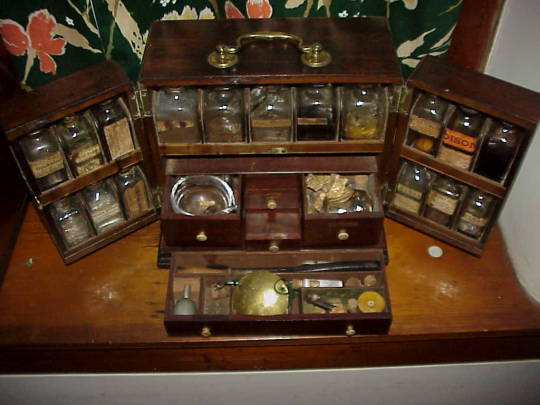
CRAFTING
Half of the market value must be invested in making an item, one hour per gold piece market value of the item must be spent to make the item, and a minimum of one gold piece must be spent.
Examples: Acid takes 25 hours and costs 12 gold and 5 silver to make, this includes the cost of a vial to put it in; candles take 2 hours to make and 200 of them can be made at a cost of 1 gold; a suit of plate armor takes 1500 hours (94 days minimum) and costs 750 gold.
Time is invested consecutively and the project is ruined if the character is taken away from the project for more than one day.
Alchemist's Supplies.
Anyone with proficiency can use Alchemist's Supplies to craft any of the following items: acid, alchemist's fire, antitoxin, candles, ink, oil, perfume, soap; any kind of process that might require distillation (liqour) or calcination (the creation of oxides) can also be performed with alchemist's supplies. Typical DC to successfully make any of the above is 15. Proficiency checks are made when the alchemist wishes to study a new substance or plant. Typical DCs are between 15 or 20, and it takes one hour. Magical substances that are studied would have a DC of 25 to correctly distill and analyze without spoiling the substance (or blowing up the alchemist).
Poisoner's Kit.
Anyone with proficiency in this tool can craft poison as per the crafting rules. Any poison listed in the DMG (page 257) can be crafted with a poisoner's kit and the gold piece investment required to craft a poison is half of the market value listed for the poison. Carrion Crawler Mucus, Purple Worm Poison, Serpent Venom, and Wyvern Poison are the only exceptions, these poisons require harvesting from a dead or incapacitated creature. The gold piece value of harvested organs from carrion crawlers, purple worms, poisonous snakes, or wyverns is left to the DM's discretion. When harvesting poison from a creature, a character uses their Proficiency bonus with a Poisoner's Kit but if they are proficient in the Nature skill then their Proficiency bonus is doubled.
CRAFTING
Half of the market value must be invested in making an item, one hour per gold piece market value of the item must be spent to make the item, and a minimum of one gold piece must be spent.
Examples: Acid takes 25 hours and costs 12 gold and 5 silver to make, this includes the cost of a vial to put it in; candles take 2 hours to make and 200 of them can be made at a cost of 1 gold; a suit of plate armor takes 1500 hours (94 days minimum) and costs 750 gold.
Time is invested consecutively and the project is ruined if the character is taken away from the project for more than one day.
Saturday, May 11, 2019
Quick and dirty potion requirement
So your uppity wizard wants to make a potion and you want the wizard to work a little bit without handwaving it away as a monetary cost but you don't know what to tell them for what they need. Simple. The spell level of the potion effect determines what ingredients are needed.
Level 1 = 2 common
Level 2 = 3 common
Level 3 = 4 common, 1 obscure
Level 4 = 5 common, 2 obscure
Level 5 = 5 common, 3 obscure, 1 rare
Level 6 = 5 common, 4 obscure, 2 rare
Level 7 = 5 common, 5 obscure, 3 rare
Level 8 = 5 common, 5 obscure, 4 rare
Level 9 = 5 common, 5 obscure, 5 rare
Common ingredients are easy to come buy, usually for a single silver or gold piece each - not even worth mentioning what it is - and these can be found in any market.
Obscure ingredients require a little bit of work, are not easily found, and may require a bit more money if they are available in a marketplace.
Rare ingredients require a great expenditure of effort and attention to acquire, and can almost never be found in a marketplace.
First roll on COMPONENT Table, then add result from either OBSCURE or RARE Tables
COMPONENT 2d20
02 genitals
03 hip
04 heel
05 ankle
06 knee
07 tail/rump
08 vertebrae
09 nails/claws
10 hands/paws
11 elbow
12 jawbone
13 skull
14 larynx
15 kidney
16 saliva
17 lungs
18 stomach
19 liver
20 ears
21 eyes
22 knuckle
23 tongue
24 heart
25 blood
26 lymph node
27 brain
28 intestine
29 anus
30 pancreas
31 spleen
32 gallbladder
33 muscle tissue
34 mouth /lips
35 bladder
36 esophagus
37 fur/hair
38 nose
39 skin
40 veins
OBSCURE 1d100
01 aardvark
02 albatross
03 alligator
04 anteater
05 antelope
06 ape
07 armadillo
08 baboon
09 badger
10 bat
11 bear
12 beaver
13 bison
14 boar
15 camel
16 caribou
17 chameleon
18 cheetah
19 coyote
20 crab
21 crane
22 crow
23 deer
24 dolphin
25 dove
26 duck
27 eagle
28 elephant
29 emu
30 falcon
31 ferret
32 flamingo
33 fox
34 frog
35 gazelle
36 giraffe
37 goat
38 goose
39 gorilla
40 hawk
41 heron
42 hippo
43 horse
44 hyena
45 ibex
46 ibis
47 jackal
48 jaguar
49 kangaroo
50 koala
51 komodo dragon
52 lemur
53 leopard
54 lion
55 llama
56 lobster
57 magpie
58 manatee
59 mole
60 mongoose
61 monkey
62 moose
63 narwhal
64 nightingale
65 opossum
66 ostrich
67 otter
68 owl
69 panther
70 parrot
71 panda
72 partridge
73 pelican
74 penguin
75 pigeon
76 porcupine
77 puppy
78 quail
79 rabbit
80 raccoon
81 ram
82 rat
83 raven
84 rhino
85 salamander
86 sea lion
87 seal
88 sheep
89 skunk
90 sloth
91 squirrel
92 swan
93 tapir
94 tiger
95 turkey
96 turtle
97 walrus
98 weasel
99 wolf
00 zebra
RARE 1d20
01 ankheg
02 basilisk
03 centaur
04 cockatrice
05 dryad
06 ettin
07 harpy
08 hippogriff
09 hydra
10 lich
11 lycanthrope
12 minotaur
13 owlbear
14 remorhaz
15 roc
16 sphinx
17 troll
18 unicorn
19 vampire
20 wyvern
Level 1 = 2 common
Level 2 = 3 common
Level 3 = 4 common, 1 obscure
Level 4 = 5 common, 2 obscure
Level 5 = 5 common, 3 obscure, 1 rare
Level 6 = 5 common, 4 obscure, 2 rare
Level 7 = 5 common, 5 obscure, 3 rare
Level 8 = 5 common, 5 obscure, 4 rare
Level 9 = 5 common, 5 obscure, 5 rare
Common ingredients are easy to come buy, usually for a single silver or gold piece each - not even worth mentioning what it is - and these can be found in any market.
Obscure ingredients require a little bit of work, are not easily found, and may require a bit more money if they are available in a marketplace.
Rare ingredients require a great expenditure of effort and attention to acquire, and can almost never be found in a marketplace.
First roll on COMPONENT Table, then add result from either OBSCURE or RARE Tables
COMPONENT 2d20
02 genitals
03 hip
04 heel
05 ankle
06 knee
07 tail/rump
08 vertebrae
09 nails/claws
10 hands/paws
11 elbow
12 jawbone
13 skull
14 larynx
15 kidney
16 saliva
17 lungs
18 stomach
19 liver
20 ears
21 eyes
22 knuckle
23 tongue
24 heart
25 blood
26 lymph node
27 brain
28 intestine
29 anus
30 pancreas
31 spleen
32 gallbladder
33 muscle tissue
34 mouth /lips
35 bladder
36 esophagus
37 fur/hair
38 nose
39 skin
40 veins
OBSCURE 1d100
01 aardvark
02 albatross
03 alligator
04 anteater
05 antelope
06 ape
07 armadillo
08 baboon
09 badger
10 bat
11 bear
12 beaver
13 bison
14 boar
15 camel
16 caribou
17 chameleon
18 cheetah
19 coyote
20 crab
21 crane
22 crow
23 deer
24 dolphin
25 dove
26 duck
27 eagle
28 elephant
29 emu
30 falcon
31 ferret
32 flamingo
33 fox
34 frog
35 gazelle
36 giraffe
37 goat
38 goose
39 gorilla
40 hawk
41 heron
42 hippo
43 horse
44 hyena
45 ibex
46 ibis
47 jackal
48 jaguar
49 kangaroo
50 koala
51 komodo dragon
52 lemur
53 leopard
54 lion
55 llama
56 lobster
57 magpie
58 manatee
59 mole
60 mongoose
61 monkey
62 moose
63 narwhal
64 nightingale
65 opossum
66 ostrich
67 otter
68 owl
69 panther
70 parrot
71 panda
72 partridge
73 pelican
74 penguin
75 pigeon
76 porcupine
77 puppy
78 quail
79 rabbit
80 raccoon
81 ram
82 rat
83 raven
84 rhino
85 salamander
86 sea lion
87 seal
88 sheep
89 skunk
90 sloth
91 squirrel
92 swan
93 tapir
94 tiger
95 turkey
96 turtle
97 walrus
98 weasel
99 wolf
00 zebra
RARE 1d20
01 ankheg
02 basilisk
03 centaur
04 cockatrice
05 dryad
06 ettin
07 harpy
08 hippogriff
09 hydra
10 lich
11 lycanthrope
12 minotaur
13 owlbear
14 remorhaz
15 roc
16 sphinx
17 troll
18 unicorn
19 vampire
20 wyvern
Wednesday, May 1, 2019
May 2019
I got a job! With money coming in I can finally stop being anxious about paying bills, but now I get to be anxious about not having enough time to play games and write. Writing has continued, but sporadically. Between my new job and the social freedom supplied by the changing seasons I haven't spent much time sitting down and typing. (also, I started playing Dark Souls 3 and that is a HUGE distraction!) I finished everything I planned to write for last month and I suppose I should keep making a checklist for myself. The things I want to accomplish over the next month:
Re: Kosranon
I drew up a crude map of my campaign world, and I want to make a hex map version. I've written a few scenarios for different areas and I want to re-write those to fit with how the setting has changed.
Re: OSRenstein
The playtests have been very helpful, and what I was hoping would be a good balancing factor for skill tests has turned out to be a near-impossible penalty. Mathematically, the PCs would only end up succeeding on skill tests against NPCs 15% of the time, and this isn't an outcome I wanted. As for magic, we have one wizard and I'm thinking of changing wizards dramatically, again. The point system works well enough, but after reading about GLOG wizards last month I can't stop thinking about the dice roll mechanic and I want to implement something similar. Definitely something I want to experiment with!
Re: Dark Souls
I cannot describe to you how terrifying and exhilarating it is to explore new areas of Dark Souls 3. Every time I turn a corner I think I'm going to be ambushed or worse. If you want the OSR experience in a video game, this is the series that has it!
Re: Kosranon
I drew up a crude map of my campaign world, and I want to make a hex map version. I've written a few scenarios for different areas and I want to re-write those to fit with how the setting has changed.
make a hex map
write encounter tables
build factions for both city and countryside
Re: OSRenstein
The playtests have been very helpful, and what I was hoping would be a good balancing factor for skill tests has turned out to be a near-impossible penalty. Mathematically, the PCs would only end up succeeding on skill tests against NPCs 15% of the time, and this isn't an outcome I wanted. As for magic, we have one wizard and I'm thinking of changing wizards dramatically, again. The point system works well enough, but after reading about GLOG wizards last month I can't stop thinking about the dice roll mechanic and I want to implement something similar. Definitely something I want to experiment with!
write up monsters
write a GLOG class
Re: Dark Souls
I cannot describe to you how terrifying and exhilarating it is to explore new areas of Dark Souls 3. Every time I turn a corner I think I'm going to be ambushed or worse. If you want the OSR experience in a video game, this is the series that has it!
Tuesday, April 23, 2019
OSRenstein: cleric megapost!

Favor fuels divine miracles. Whenever a miracle requires Favor, you spend one point from your total. One Favor is restored to the cleric every day, at what time of day is subject to the deity worshiped and is called Observance. To regain more Favor quickly, a cleric must perform a Communion.
Divine miracles are divided into spheres. All clerics are bestowed the spheres of Divination and Healing, but each deity has their own sphere that only their dedicated clerics can cast miracles from.
Divine spheres of magic have seven levels of power. A cleric cannot cast miracles higher than their experience level. For example, a 3rd-level cleric can use 1st-, 2nd-, and 3rd-level miracles but cannot access miracles of 4th-level or higher.
DIVINE POWER
Divine Power is equal to the cleric's HD plus their WIS modifier. Several miracles also rely on this Divine Power to work effectively. Most Sacraments and some Miracles require a Spell Check, this is done by rolling 2d6 and adding the cleric's Divine Power.
OBSERVANCE
All deities have a specific time of day when their clerics are renewed and refreshed, this is called Observance. Clerics receive 1 point of Favor, and all of their day-long miracles expire at this time. Clerics who have Sinned do not have their Favor renewed, and any active miracles also end at this time.
SIN
All deities have a collection of 3 to 5 commandments that a cleric must adhere to. If they break one of these commandments, or fail to perform it when the opportunity arises, they Sin against their deity and lose all access to Divine Powers until they Atone.

When a cleric casts a Miracle, they spend 1 or more points of Favor. Some Miracles require a Spell Check when there is some chance that another person could resist the Miracle.
Sacraments are Divine powers similar to Miracles that all clerics have access to. These include Atonement, Blessing, Bolster, Communion, Sanctify, and Turning. Sacraments can be performed by any cleric that has at least 1 or more points of Favor. However, Sacraments require a Spell Check and if the result is 10 or higher then the Sacrament doesn't cost Favor.
If a cleric has zero Favor and they perform a Sacrament, all deities consider that a Sin. Some Sacraments will activate Favor costs, and if the cleric has no Favor to draw upon then they have Sinned twice! In both cases, the Sacrament is performed but the cleric has Sinned.
ATONEMENT
This Sacrament can be invoked for a cleric who has Sinned and must restore their deity's Favor. If the cleric seeking Atonement committed the Sin by accident or via magical compulsion, the Atonement can be performed by the cleric in question. However, for clerics atoning for deliberate and willful Sins, an Atonement must be invoked by another cleric of the same faith.
The Atonement is unique, and should be tailored to the Sin committed. Many times this requires the atoning cleric to fulfill a quest for their deity, but the deity may call for a sacrifice of some kind in place of a quest.
This Sacrament takes 1 hour to perform and must be invoked within a Sanctified space.
BLESSING
A Blessing is bestowed upon another person or creature (never the cleric themself) or upon a vial of water no larger than 1 pint. Blessings take one minute to perform (or 10 combat rounds), and the cleric can take no other action while the Blessing is made - no movement and no defending.
Performing a Blessing upon an NPC grants them a +1 bonus to Armor and Attack scores.
Performing a Blessing upon a PC grants the player a bonus 1d4 which they have until the cleric's next Observance. This bonus 1d4 can be used at any time before or after a roll. It can be used with a Saving Throw, Reaction check, Surprise check, Skill check, Attack roll, Armor roll, or damage roll. The character can only have one Blessing at a time, and if the character Sins, as defined by the deity's commandments, then they lose the Blessing immediately. While a PC has an active Blessing, all of their followers and any hired retainers have +1 to Morale.
Performing a Blessing upon a vial of water makes Holy Water. This is permanent but always requires a point of Favor, no Spell Check is rolled. Otherwise, and in general, Blessings last until the cleric's next Observance.
HOLY WATER
Holy Water can be used to store a single Divine Power, either a Sacrament or a Miracle, which is activated when drunk. The person or creature that drinks the Holy Water becomes the target of the spell. The spell must be cast into the Holy Water after it is made.
Holy Water also causes 2d4 damage to Un-dead or Demon creatures.
BOLSTER
Clerics can bolster their own health by spending 10 minutes kneeling and praying with both hands on their holy symbol. A cleric cannot move or take any other actions while Bolstering. At the end of this prayer, the cleric recovers Hit Points equal to their HD plus CON modifier (same as a Rest).
COMMUNION
This Sacrament has multiple functions. The most common use is to provide funeral rites for a deceased person or creature. At the completion of the Communion, the body cannot be raised as Un-dead.
Communion is also used to bring new clerics into the service of the deity. At the end of the Communion, the character abandons their old class and becomes a cleric. Any PC wishing to undergo this change becomes dual-classed.
Finally, a cleric may wish to seek guidance or counsel directly from their deity, and Communion also allows them to do this. At the conclusion, the cleric can ask questions that can be answered with a simple yes or no, or one-word answer. The cleric can ask a number of such questions equal to their Hit Dice. Answers given are correct within the limits of the deity’s knowledge. In cases where a yes-no answer would be misleading or contrary to the deity’s interests, a short phrase (five words or less) may be given as an answer instead.
Communion takes 2 hours to perform and requires a Sanctified space.
SANCTIFY
This Sacrament allows a cleric to create a holy space, suitable for other Sacraments. Typically, Sanctify is performed at a cleric's time of Observance as the holy space created by Sanctify expires at that time. If a cleric spends 5 Favor while performing Sanctify, the space continues to remain Sanctified for as long as the cleric lives.
A Sanctified space is very beneficial for clerics in service to the same deity, allowing Miracles to be performed at +1 Power and bestowing a +1 bonus to reaction checks. Un-dead and Demons whose HD is equal or less than the performing cleric's Divine Power cannot enter the Sanctified space, and if they manage to make it inside their Attack, Armor, and Morale are all reduced by the cleric's Divine Power. Also, clerics within Sanctified spaces have Advantage while attempting to Turn such creatures.
While they remain inside the Sanctified space, clerics in service to the same deity can see when another person within the Sanctified space is cursed, charmed, poisoned, or under the effects of a Geas, no roll or Miracle is required.
Sanctified spaces are required for Atonements and Communions.
TURNING
Clerics can Turn wild beasts and unholy creatures by holding their deity's holy symbol aloft and commanding the creatures back. This is the only Sacrament that never costs Favor to use!
At any time the cleric may use an action to make a Turning attempt. Clerics can attempt to Turn any creature with the Animal, Un-dead, or Demon trait. This Turning check uses 2d6 and adds their Divine Power. Unlike a Spell Check, this roll doesn't suffer penalties for wearing armor. The base roll needed is 8 or higher to turn Animals, 10 or higher to turn Un-dead, and a 12 or higher to turn Demons. The HD of the target is added to the number needed to successfully Turn them. For example, a Demon with 3 Hit Dice will only be Turned on a roll of 15 or higher.
Animals and Un-dead that are successfully Turned will try to flee from the cleric until the cleric is out of sight. If cornered or trapped, the Turning ends and the creature will likely attack the nearest opponent. Demons that are successfully Turned are not compelled to flee, but cannot willingly approach the cleric. If forced to approach the cleric, or cornered by the cleric, the Turning ends and the Demon may act as it pleases.
An attempt to Turn a creature that has already broken free from being Turned will automatically fail. Failing a Turning attempt doesn't count as breaking free from being Turned, and the cleric may attempt to Turn a creature (or creatures) as many times as they wish.
The cleric names something to detect. This could be poison, disease, gold, food, magic, un-dead, life, heat, etc. Anything that could be defined as a substance, whether it is a material or energy (illness, disease, or secret doors could be detected, but deception, emotions, or "evil" could not).
The cleric can sense the presence of this chosen substance if it is Nearby even through walls or barriers, as long as they are not magically concealed. The cleric detects it as a glowing aura. This Miracle lasts for as long as the cleric concentrates on it.
2nd: Augury
The cleric is gifted with a supernatural sense of what is about to happen for certain situations of their choosing. The cleric rolls dice equal to their maximum Favor - they can be of any size. Until their next Observance, the cleric can use these dice rolls to replace any rolls of the same size dice. For example, a cleric casts Augury and rolls 2d20, these results can be used later to replace rolls that used d20s but wouldn't be usable for rolls made with d4s, d6s, etc.
3rd: Read Minds
The cleric can read the surface thoughts of creatures as if they were clearly visible signs. The cleric can only Read Minds of creatures with Hit Dice equal to or less than the cleric's Spell Check. This Miracle lasts for as long as the cleric concentrates on it.
4th: Clairvoyance
The cleric can see and hear at a location they have already visited. The ability to see and hear in this location is limited to whatever the cleric's former movements were (if the cleric had only walked around the western steps of an arena then their Clairvoyance is limited to that area of the arena).
For Clairvoyance to work the location must be within a certain range of the cleric equal to their Divine Power in miles. Anyone trying to detect magic or living beings will see the luminous form of the cleric using Clairvoyance. This Miracle lasts for as long as the cleric concentrates on it.
5th: Espy
The cleric describes or names a specific kind of animal, plant, person, or object that is familiar to them, and the cleric becomes aware of how far away and which direction they are in. If the subject of their Espy is moving, the cleric is aware of the speed and direction of movement as well.
For Espy to work the subject must be within a certain range of the cleric equal to their Divine Power in miles. This Miracle lasts for as long as the cleric concentrates on it.
6th: Revelation
The cleric names or describes a person, place, or object and a brief summary of significant lore is brought to the cleric's mind about the thing named. The lore might consist of current legends, forgotten stories, or even secret lore that has been destroyed or concealed. If the thing named is of no importance, then the cleric may learn nothing. The lore learned is always accurate but may be framed in obscure language ("the wraiths resist their descent into darkness and persevere along an honorable path" or "only a child of light may awaken the true power of the axe").
7th: True Sight
Until their next Observance, the cleric, or another creature they touch, gains the ability to see all things as they actually are. Anything concealed or hidden with magic and the true forms of polymorphed creatures are revealed, illusions appear as obvious outlines of what they are.
True Sight doesn't penetrate solid matter, and won't reveal things hidden by mundane means such as cover of fog, disguises, someone hiding in shadows, or a secret door that is concealed through nonmagical means.

The cleric touches a subject, not themself, and instantly heals them of hit point damage. The amount healed is equal to their WIS modifier multiplied by their HD.
2nd: Death Rite
The cleric touches a subject, not themself, and until the cleric's next Observance the subject has advantage on all death saving throws and drain attacks. While this Miracle is active the subject, whether they died while the Miracle was active or were dead when the Miracle was bestowed upon them, cannot be raised as an Un-dead - this effect is permanent.
3rd: Mass Heal
The cleric forms a circle with their subjects, usually a ring of hands, and instantly heals those in the circle of hit point damage equal to the cleric's Divine Power. This miracle will only affect a number of people equal to the cleric's maximum Favor, and attempting to heal more than that won't work - and is a Sin.
4th: Restoration
The cleric touches a subject, not themself, and instantly heals them of illness, disease, poison, or impairment. If the subject is blind, deaf, crippled, or missing a limb, this miracle restores their vision, hearing, or abilities.
5th: Magical Restoration
The cleric touches a subject, not themself, and instantly heals them of drained Hit Dice, ability score damage, and any curses affecting them are also removed. If the subject is under the effect of a Geas or magical compulsion, this miracle also removes those.
6th: Heal Body
The cleric touches a subject, not themself, to instantly heal someone of all damage. The subject recovers their maximum total hit points, and if any diseases or poisons are present those are also removed.
7th: Raise Dead
Upon performing the Miracle, the subject is restored to life as if their death never occurred but in a weakened condition. The subject must have died recently, within a number days equal to or less than the cleric's Divine Power. The subject's body must also be whole with their heart and brain intact. All of the subject's ability scores are at -1 and they must Rest to recover them, magical healing will not restore this loss.
The cleric permanently sacrifices a point of Favor to perform this miracle. Using this miracle on an enemy of the cleric's faith, or a body that doesn't have an intact and connected heart and brain, fails outright and is also a Sin.
Thursday, April 18, 2019
OSRenstein: illusion magic
Illusions have a special kind of resistance. When a person or creature overcomes the effect of an illusion, it does not Misfire. A Misfire can only occur when the illusion is first cast, but creatures can "see through" the illusion later.
When a PC is first confronted with an illusion, they must make a Saving Throw to see through the illusion. The Saving Throw uses an ability based upon the kind of illusion they see, and this requires GM judgement. The illusion of a collapsing ceiling might use Constitution, but whenever in doubt about which ability to use the default is Intelligence.
If another character tries to assist a PC in seeing through an illusion the PC may add a +4 to their Saving Throw, but only if this is communicated effectively.
Often players will deduce when something in the game world is an illusion, even when their characters fail their Saving Throws. Remind yourself, and them, that this is an ideal time to role-play as if the illusion were real.
NPCs who view illusions only see through them if their Hit Dice exceeds the Spell Power of the illusion. Another character could try to get an NPC to see through an illusion. If this happens, add the character's Hit Dice to the NPC's Hit Dice. If the combined total doesn't equal or exceed the Spell Power then the NPC can't see through the illusion and may believe the character is affected by their own magical illusion, delusion, or mental illness.
Illusions that "kill" characters put them into a trance-like coma that only ends when the spell ends, or the magic affect on their body and mind is dispelled. Illusionary attacks and affects always use the creating wizard's Abilities and Skills to determine their effectiveness. Thus, a wizard who has created an illusionary minotaur to fight a group of goblins uses his own Attack and Armor scores when determining how well the illusion fights.
Un-dead are immune to all illusions and their effects. Some creatures, especially Demons, have natural resistances as well. In general, illusions with Power high enough to affect them will modify the behavior of NPCs and monsters.
I don't know if I'm taking the "bite" out of illusions by ruling it this way. Illusions were definitely more prominent in 1st edition AD&D, but I think they required a lot more arbitration on the GM's part. I might have to write guidelines for how illusions work, but for now the comparing of Hit Dice will have to do.
When a PC is first confronted with an illusion, they must make a Saving Throw to see through the illusion. The Saving Throw uses an ability based upon the kind of illusion they see, and this requires GM judgement. The illusion of a collapsing ceiling might use Constitution, but whenever in doubt about which ability to use the default is Intelligence.
If another character tries to assist a PC in seeing through an illusion the PC may add a +4 to their Saving Throw, but only if this is communicated effectively.
Often players will deduce when something in the game world is an illusion, even when their characters fail their Saving Throws. Remind yourself, and them, that this is an ideal time to role-play as if the illusion were real.
NPCs who view illusions only see through them if their Hit Dice exceeds the Spell Power of the illusion. Another character could try to get an NPC to see through an illusion. If this happens, add the character's Hit Dice to the NPC's Hit Dice. If the combined total doesn't equal or exceed the Spell Power then the NPC can't see through the illusion and may believe the character is affected by their own magical illusion, delusion, or mental illness.
Illusions that "kill" characters put them into a trance-like coma that only ends when the spell ends, or the magic affect on their body and mind is dispelled. Illusionary attacks and affects always use the creating wizard's Abilities and Skills to determine their effectiveness. Thus, a wizard who has created an illusionary minotaur to fight a group of goblins uses his own Attack and Armor scores when determining how well the illusion fights.
Un-dead are immune to all illusions and their effects. Some creatures, especially Demons, have natural resistances as well. In general, illusions with Power high enough to affect them will modify the behavior of NPCs and monsters.
I don't know if I'm taking the "bite" out of illusions by ruling it this way. Illusions were definitely more prominent in 1st edition AD&D, but I think they required a lot more arbitration on the GM's part. I might have to write guidelines for how illusions work, but for now the comparing of Hit Dice will have to do.
Wednesday, April 17, 2019
the Ghost Tower
This tower sits like a teetering stack of broken bricks on Hush Island, which has no bridges to cross to or docks to park boats. City officials place Hush Island within the Statue district, though the island seems to reject the association, sitting bridgeless and silent in the river's mouth. The tower juts out of the mouth of the Crowkut River in Marakāven, a thoroughfare which splits the city into northern and southern sections. Despite its central position in the river, captains and sailors give the island a wide berth. Nobody knows who the wizard was that built it and presumably lived there, but everyone assumes it was a wizard because the tower is infamous for swallowing up anyone who dares to explore the structure and never regurgitating them back out into the world. A few brave explorers have set foot on the island itself, but anyone who steps foot into the building is always lost. For this reason, Swamphaven's courts do not have a death penalty but instead sentence the most loathsome of criminals to enter the Ghost Tower.
Tuesday, April 16, 2019
OSRenstein: learning new spells

The level of a spell is the number of hours a wizard must spend in secluded study with the formula, and this level also represents how difficult it is to learn. At the end of their study, the wizard rolls 2d6 and adds their HD and INT modifier to the roll. If the result is 10 plus the level of the spell or higher, they learn the spell. If they fail to learn the spell, they can try again after leveling up.
This was something I looked forward to and simultaneously dreaded when I played wizards in 2nd edition AD&D: rolling to learn new spells. In this system, higher level spells are more difficult to learn, but accomplished wizards learn lower spells more easily. I like the idea that wizards have to study to learn their spells, even if I don't like the Vancian style of daily studying.
Monday, April 15, 2019
James Smith memorial fund

He didn't have life insurance or any kind of real savings, and his family are trying to raise $700 to help cover the funeral costs. Considering the heavy costs of most funeral parlors, this doesn't seem like a lot. Unfortunately, I'm unemployed right now and I felt like I could only spare $10 to help out. However, according to blogger's analytics, if every person reading my blog donated $5 then they should be able to reach their goal of $700. It's not much, but it could really help them out in exchange for everything James gave the OSR blogosphere.
The link to make a donation is: paypal.me/jamessmithmemory
Thursday, April 11, 2019
OSRenstein: healing & rest
When characters spend at least 6 hours without strenuous activity of any kind (walking, fighting, casting spells, etc.) they recover Hit Points equal to their level + CON. Recovered Hit Points can be reduced by a negative CON modifier, but characters always heal at least 1 Hit Point. This recuperative period is a Rest, and is often used for sleeping, especially in dungeons.
Characters cannot receive Hit Point recovery from more than two Rests in a single 24-hour period. Each Rest must be a continuous six hours. It can be interrupted briefly, but must be returned to immediately for the Rest to take affect.
After a Rest, wizards also recover Magic Points equal to their level + INT. Unlike Hit Points, a wizard can recover Magic Points from multiple Rests in one 24-hour period.
Ability scores are sometimes lowered from traumatic injury or through arcane sacrifice. These lost points can be restored at a rate of 1 point per day, except three Rests during the course of the day are required. Some ability score losses cannot be recovered except through magical means.
Another of my attempts at simplifying something that is often complex, or turns complex in play. I wanted to codify exactly how long PCs need to rest to recover, and I wanted that period to be defined in regards to hit point and ability score recovery. The way magic points work hasn't been playtested yet, so this description might change in the future.
Characters cannot receive Hit Point recovery from more than two Rests in a single 24-hour period. Each Rest must be a continuous six hours. It can be interrupted briefly, but must be returned to immediately for the Rest to take affect.
After a Rest, wizards also recover Magic Points equal to their level + INT. Unlike Hit Points, a wizard can recover Magic Points from multiple Rests in one 24-hour period.
Ability scores are sometimes lowered from traumatic injury or through arcane sacrifice. These lost points can be restored at a rate of 1 point per day, except three Rests during the course of the day are required. Some ability score losses cannot be recovered except through magical means.
Another of my attempts at simplifying something that is often complex, or turns complex in play. I wanted to codify exactly how long PCs need to rest to recover, and I wanted that period to be defined in regards to hit point and ability score recovery. The way magic points work hasn't been playtested yet, so this description might change in the future.
Subscribe to:
Posts (Atom)