Showing posts with label 5e. Show all posts

Monday, May 13, 2019

Expanded Tool Proficiency rules
[5e]

TOOLS
Alchemist's Supplies.
Anyone with proficiency can use Alchemist's Supplies to craft any of the following items: acid, alchemist's fire, antitoxin, candles, ink, oil, perfume, soap; any kind of process that might require distillation (liqour) or calcination (the creation of oxides) can also be performed with alchemist's supplies. Typical DC to successfully make any of the above is 15. Proficiency checks are made when the alchemist wishes to study a new substance or plant. Typical DCs are between 15 or 20, and it takes one hour. Magical substances that are studied would have a DC of 25 to correctly distill and analyze without spoiling the substance (or blowing up the alchemist).

Poisoner's Kit.
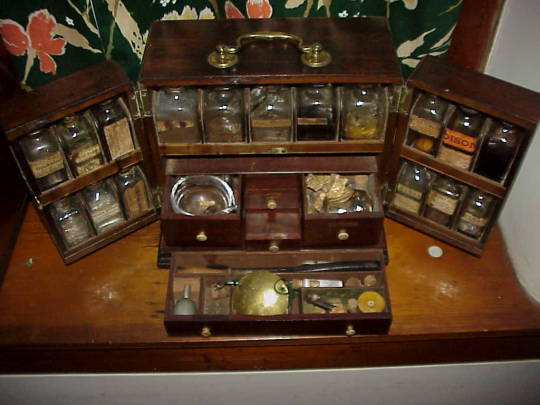
Anyone with proficiency in this tool can craft poison as per the crafting rules. Any poison listed in the DMG (page 257) can be crafted with a poisoner's kit and the gold piece investment required to craft a poison is half of the market value listed for the poison. Carrion Crawler Mucus, Purple Worm Poison, Serpent Venom, and Wyvern Poison are the only exceptions, these poisons require harvesting from a dead or incapacitated creature. The gold piece value of harvested organs from carrion crawlers, purple worms, poisonous snakes, or wyverns is left to the DM's discretion. When harvesting poison from a creature, a character uses their Proficiency bonus with a Poisoner's Kit but if they are proficient in the Nature skill then their Proficiency bonus is doubled.

CRAFTING
Half of the market value must be invested in making an item, one hour per gold piece market value of the item must be spent to make the item, and a minimum of one gold piece must be spent.
Examples: Acid takes 25 hours and costs 12 gold and 5 silver to make, this includes the cost of a vial to put it in; candles take 2 hours to make and 200 of them can be made at a cost of 1 gold; a suit of plate armor takes 1500 hours (94 days minimum) and costs 750 gold.
Time is invested consecutively and the project is ruined if the character is taken away from the project for more than one day.

Wednesday, September 2, 2015

six swords [5e]


the Silmite Sword
Fashioned of a silvery metal, with a simple hilt and a rounded pommel, this blade is completely smooth and somewhat cylindrical with a single edge molded out of one side.
1d8 slashing, 2 lb., versatile (1d10)
...while holding this blade, you believe you are the best at everything you do, regardless of whether you are or not. This confers disadvantage on Charisma checks, but your boosted confidence means you're immune to fear, both mundane and magical.


Blade of Liberation
This steel sword has a fine tracing of electrum along its side, the ornate metalwork depicts an optical illusion of a sphere flying along a path that reverses back upon itself. The pommel and hilt are made of fine steel and leather, but are worn from use.
1d8 slashing, 3 lb., versatile (1d10)
...while holding this weapon by the hilt, you are always under the effects of a freedom of movement spell.


Tooth Smasher
This iron scimitar has a dull and beaten blade, while it appears old from use it shows no signs of rust. The hilt is threadbare wrapping of silk which could easily be replaced.
1d6 slashing, 3 lb., finesse, light
...when you attack with this weapon and roll a natural 20, the weapon deals an additional 2d6 damage (beyond the normal critical damage) and the opponent struck loses a tooth (there is no saving throw to resist this effect). If the opponent does not have a tooth to lose then no additional effect is incurred.


Sinner's Sword
This powerful cutlass is made of adamantine metal, with five wide purple gems embedded along its length, a silver hilt wrapped in platinum wire, and a small pommel to provide balance.
1d8 slashing, 3 lb., versatile (1d10)
...while you have this sword in your possession you are immune to banishment and are proficient with Deception and Persuasion checks (if you are already proficient then you receive advantage). Additionally, regardless of your alignment, others will always detect you as being evil, and you are effected by protection from evil effects as if you are evil.


the Demon Blade of Aishapra
A sinister looking scimitar of black metal. The hilt is wrapped in a soft but drying leather, with a pommel shaped like a snake's head - the blade extends like a great black tongue and has many whorls and hooks and does not easily fit within a scabbard.
1d8 slashing, 3 lb., finesse, light
...while using this weapon you add your Charisma modifier to the damage rolled. Additionally, when you slay a living creature with this sword (undead and constructs don't count) you receive HP equal to half of your opponent's maximum HP, if this takes you over your maximum HP then you receive the extra HP as temporary HP which will disappear after your next short rest.


Skull Piercer
This rapier has a blade of steel with a hilt wrapped in dull purple-stained leather. The large, round pommel is stamped with the image of a thorny stem, and a hornet within a banner (as emblem). Four quillons shaped like talons surround the blade.
1d8 piercing, 2 lb., finesse
...while you have this sword in your possession you can detect thoughts at will (as a bonus action) and you can read any language or writing as if you were under the effects of a comprehend languages spell.

Wednesday, August 12, 2015

the Alchemist
[a Rogue Archetype for 5e]

Rogues who study alchemy are adventurous botanists and chemists, always searching for unusual or strange flora in exotic or distant environments. They obsess over the natural world as much as they do their laboratories. Many alchemists spend their time making potions to heal but are often the first people to turn to for an adequate poison. In the magical world, an alchemist is an ideal person to turn to for specialized knowledge. They have a tendency to be homebodies, with endless projects and experiments that can keep them busy for weeks or months. But there are occasional alchemists who take an active role in exploring the wild world around them, and these explorers are the true pioneers of alchemy.

ALCHEMICAL TRAINING
Starting at 3rd level, if you don't already have them, you gain proficiency with Alchemist's supplies and Poisoner's kit.

ARCANE ALCHEMY
When you choose this archetype at 3rd level, you gain the ability to mix alchemical formula using Alchemist's supplies at half the cost. The process by which alchemical formula is created is magical but the finished products are not always magical.
Additionally, an Alchemist can use their Alchemist's supplies to Identify (as per the ritual spell) any liquid or potion.

ABSOLUTE SUBSTITUTION
At 9th level, you can attempt to create a missing rare ingredient for a special formula (such as Wyvern venom for a poison) using Alchemist's supplies. Assume it takes at least eight hours and supplies worth 2d6 x 50 gold pieces to adequately create a substitute ingredient.

MIMIC POTION
By 13th level, you have the ability to create your own potions using Alchemist's supplies and in half the time as described in the DMG. You can make any potion that you have ever used, Identified, or come into physical contact with, but cannot brew your own creations.

THE PERFECT SOLUTION
When you reach 17th level, you can produce Alkahest. It costs 10,000 gp and requires 200 days to craft a single vial using Alchemist's supplies. Alkahest is a powerful disintegration solvent and does not count as a poison or a magical potion. The spell purify food and drink will immediately neutralize the acid if the Alkahest is within range.
If thrown or poured onto a single object or creature, Alkahest immediately deals 4d8 points of damage, and another 4d8 points of damage each round thereafter until it is neutralized. Magical objects have damage resistance against the Alkahest, but assume they will be destroyed just like a regular object of their type once their hit points are reduced to zero (page 246, DMG). A creature which is reduced to 0 hit points by Alkahest is reduced to black residue, and cannot be raised or resurrected. Preventing damage can be done by either submerging the subject in water or wiping it off with clothing, rags, or something similar (both methods will reduce damage by 1 die each round of submersion/activity, but in the latter case the objects used to wipe it off take 1d8 damage each round they are used or until destroyed).
A creature which drinks Alkahest must make an immediate Constitution saving throw versus DC 30. If the saving throw fails, the creature dies immediately as its tongue, jaw, and esophagus melt away. If the saving throw succeeds, the creature takes 25d4 corrosive damage to their internal organs, any damage is interpreted as viscera melting out of the body. In either case, the result is not pretty.

Tuesday, August 11, 2015

Alchemical Formula
[5e]

(anyone with proficiency in Alchemist's Supplies can craft these)

Chattercap. After drinking this mixture, the user can throw their voice to any location within 60 feet, which need not be seen but must be known to the user. The voice cannot be thrown through a barricading object, such as a door or wall. Their voice is as quiet as a whisper or as loud as a shout and seems to emanate from the location specified. This effect only lasts for 1 round. (25 gp, weight is negligible)

Fateful Elixir. The drinker of this elixir receives Advantage to the very next ability or proficiency check they make, provided it happens within the next minute. Traveling vendors and mysterious tinkers have been known to give this elixir away for free to veteran mercenaries down on their luck. (25 gp, weight is negligible)

Fire Bottle. Upon breaking the seal of this bottle, the liquid inside ignites but not explosively. The flame produced from the liquid's exposure to air is very dim, it will illuminate a 5-foot radius around the bottle (considered bright light) and extend dim light for another 5 feet. The flame is incredibly hot and can be used to ignite anything even remotely flammable. A few minutes after mixing this potion if the alchemist hasn't sealed the bottle right away then the mixture's effects take hold. (25 gp, weighs 1 lb.)

Golden Philtre. This golden beverage has a cloyingly salty flavor. Upon consumption, the user can add +1 to any attack rolls they make for the next minute. (25 gp, weight is negligible)

Healing Brew. This lightly flavored, dry, and alcoholic beverage warms the body and calms the nerves. It effectively heals 1d4 Hit Points after being imbibed, but also neutralizes any poisons that are affecting the consumer. Drink three and you'll be buzzed, drink six and you're drunk, drink any more and you'll likely vomit, losing all of the effects. (costs 5 gp, weight is negligible)

Kryn's Salve. This ointment is the consistency of watery oatmeal and dark green in color. When applied to a plant its effects are immediate, seed pods will sprout, flowers blossom, or buds bloom. The plant also will not need watering or sunlight for several days as it thrives from the nutrients of the potion. (30 gp, weighs 1 lb.)

Luminescent Water. To get the best use out of luminescent water it should be placed within a glass vial. When shaken vigorously, the water begins to glow brightly and sheds light as a torch would. It has the added benefit of lasting for four hours; after two hours the bright light becomes dim, and after another two hours the dim light fades entirely. (costs 1 gp, weighs 1 lb.)

Universal Glue. This thick mixture begins to flow slowly as soon as it is exposed to the air. If the mixture is touched to an object it leaves a quickly hardening patch of glue, and if a second object is fixed to this glue then the two objects become bonded together semipermanently. The bond sets within 1 round, but the thick fluid won't bond properly if the two objects are being moved (gluing a grappled creature to an object, or another creature, requires that you exceed their Strength check by 5). The only things that can separate two objects that have been bonded with universal glue are a solvent brewed by an alchemist (of equal worth in gp) or by damaging the bond either with heat or a metal instrument (30 hit points worth) which is likely to damage one or both of the objects. (50 gp, weighs 1 lb.)

Vigorous Respite. This foul concoction is a brackish, thick gruel and most find it difficult to swallow, but its effects are potent and last for several hours. For three hours after being ingested, if the imbiber ever falls to 0 hit points for any reason then they immediately stabilize without the need for rolling death saving throws. (25 gp, weight is negligible)

Tuesday, July 21, 2015

Daughter of Baba Yaga
[a Sorcerer Origin for 5e]

(inspired by Timothy Brannan's tradition for Basic)

Daughters of Baba Yaga
Your innate magic comes from your ancestry which can be traced back to a powerful witch or mystic. Only the women in your family have this sorcerous blood, but few study and foster the powers it can harness. Any witch that shares a lineage to Baba Yaga can recognize one another on sight regardless of how distant their familial connection might be.

Ritual Spellcasting
At 1st level, choose one spell from any class with the Ritual tag. The spell must be of level you can cast, as shown on the Sorcerer table. The chosen spell counts as a Sorcerer spell for you, but isn't included in the Spells Known column of the Sorcerer Table. You can also cast the spell as a Ritual. When you gain a level in the Sorcerer class, you can replace the chosen spell with another spell, following the same requirements

Occult Servant
Starting at 1st level, you always have a familiar at your command, as per the find familiar spell. If it is killed or destroyed, then after you've completed a long rest you can summon it again from its pocket dimension as a bonus action.

Unseen Witchery
Starting at 6th level, as long as you have at least 1 sorcery point to spend you can detect invisible or concealed creatures of the beast or humanoid type within 30 feet of yourself even if they are behind cover. You cannot sense the presence of undead or constructs, nor can you pinpoint exactly where a living creature you can sense is, but you are aware of when living creatures come near.
Additionally, you can now cast Bestow Curse as if it were part of your available spell list.

False Form
At 14th level, you gain access to the Shapechange spell and can cast it as if it were a 7th-level spell, but when you cast it at a lower level you may not apply Metamagic to the spell. Additionally, you can now cast either Animate Objects or Polymorph as a Quickened spell without spending Sorcery Points, but only if you have the Quicken ability and no other Metamagic may be applied to the casting.

Witching Hour
At 18th level, you stop aging. You are unaffected by any kind of magic that prematurely ages you, and you will never die of old age. After you spend one or more Sorcery Points roll 1d20 and on a roll of 19 or 20 you instantly recover one Sorcery Point.

Sunday, June 28, 2015

house rules for [5e]

One of the things I don't like about 5th edition is that I feel like its too easy to bounce back from a fight by taking a long rest. I've had two players in my Dwimmermount game who expressed how they felt clerics were useless, since healing became much less of a concern once resting for 6 hours became a cure-all rinse for HP loss and crippling injuries.

This discussion about 5th edition's superhero tone has led me to meditate some more on what I don't like about 5th edition, and almost everything I don't like is something that was handed down from 4th edition, imagine that!. There are, therefore, a few house rules I plan on installing into my Sunday game:

Resting

1) Long Rests take 2+1d4 days, one roll is made for each PC; Long Rests require lots of sleep, no strenuous activity, and plenty of food and water - no more than 2 spells may be cast per day, if any; insuring a Long Rest works without interruption means staying at a monastery, hiding at an inn, holed up in a secret hideout, or something similar; at the end of a Long Rest the character recovers all lost Hit Points as well as all spent Hit Dice

2) Short Rests take 4+1d4 hours, one roll is made for the entire party; Short Rests usually involve sleeping and performing light activities such as reading, talking, eating, or standing watch for no more than 2 hours; during a Short Rest a character can spend Hit Dice to recover Hit Points just as described in the PHB but one use from a Healer's Kit must also be expended, if a character elects not to spend any Hit Dice then they instead recover spent Hit Dice (up to half of their total) at the end of a Short Rest; at the end of a Short Rest each class recovers different abilities
Barbarians: Rage recovers completely
Bards: Bardic Inspiration recovers after a Short Rest
Clerics: Channel Divinity, Domain Powers, and Spell Slots all recover from a Short Rest (Divine Intervention still recovers at the end of Long Rest)
Druids: Wild Shape can be used a number of times equal to the Druid's Proficiency Bonus before requiring a Short Rest, Natural Recovery still works as normal but requires a use from Wild Shape to be expended (which also takes 1 hour)
Fighters: Action Surge, Superiority Dice, and Indomitable all recover from a Short Rest; Battle Masters get twice as many Superiority Dice; Second Wind can be used a number of times equal to the Fighter's Proficiency Bonus before requiring a Short Rest (Constitution of 14+ can increase bonus HP recovered)
Paladins: Divine Sense, Lay on Hands, Channel Divinity, Cleansing Touch, and all 20th-level Oath Powers all recover after a Short Rest
Rogues: Stroke of Luck can be used twice and recovers after a Short Rest
Sorcerers: Sorcery Points and Wild Magic recover after a Short Rest
Wizards: Arcane Recovery can still be used as described (but it also takes 1 hour to use), Specialist Powers recover after a Short Rest

Bards
At 5th level, Bardic Inspiration can effect more than one person. As long as somebody can hear you and understand you, you can designate your Bardic Inspiration affects them. Using Bardic Inspiration multiple times doesn't allow Inspiration dice to "stack" more dice together.

Dungeoncrawling and Random Encounters

1) Random encounters only have a chance of happening when the PCs take a Short Rest, exit a room and enter into a hallway within the dungeon, or make enough noise in a room to potentially draw the attention of something within it's Perception range.

2) The curse on an item reveals itself when the item is worn or used, never through Detect Magic or Identify spells.

Non-Player Characters

1) All NPC followers and allies have a secret Loyalty score ranged from 0 to 20, and caps at the highest Charisma in the party. The higher the Loyalty the better. NPCs that are abused, misled, neglected, or ignored lose Loyalty, and NPCs that are treated well, helped, rescued, or otherwise assisted with their bonds and goals gain Loyalty. The score determines how the NPC behaves in stressful situations, but in general, having a Loyalty of 10 or higher means that the NPC is favorably dispositioned to one of the PCs or the entire party.

2) All NPCs have a goal or motivation that determines their natural course of actions. If an NPC with Loyalty has a goal that is at crosspurposes with a PC (or the party), then a Loyalty test is rolled. The DM rolls 1d20 and if the roll is equal to or under the NPCs Loyalty then they continue to act favorably to the PC (or the party as a whole). If the d20 rolls higher than the NPC's Loyalty then they either stop acting in the PC's (party's) best interest either by leaving or working in secret to further their own goal at the cost of a PC's (or the party's) downfall.


Inspiration

1) Inspiration is tied to the player rather than the character. Players can never have more Inspiration than their character's current level, or their highest character's level if they're playing more than one character.

2) Players earn Inspiration by fulfilling or acting upon one of their character's Personality Traits, Ideals, Bonds, or Flaws

3) Inspiration is used to gain Advantage, and three Inspiration is used to turn a failed roll into a success


Death & Retirement

1) If a character dies, retires, or simply leaves onscreen play temporarily, a replacement character starts with half as many XP.

2) If your character dies while fulfilling or acting upon one of their Personality Traits, Ideals, Bonds, or Flaws then your replacement character starts with 75% of your dying character's XP total.

Monday, May 18, 2015

Inspiration alternative [5e]

I've noticed that my players tend to forget about Inspiration. As a player I often only used it as a last resort sort of rolling mechanic. As a GM I forget to dispense so I tend to just say "Everybody gets Inspiration" which kind of screws anybody who hasn't spent theirs, since you either have it or you don't. I've seen some other people tweak Inspiration in different ways and I've decided to take some... uh, inspiration from this and make my own tweaks.
Inspiration
Inspiration is carried by the player and can be transferred from character to character. If one character falls, another may be inspired to rise up. Characters start with no Inspiration whatsoever. Inspiration can only be earned by playing.

Gaining Inspiration
Whenever you play out one of your character's personality traits, follow your character's ideal, or give in to one of your characters drawbacks or bonds, you gain +1 Inspiration. If you do this to your character's detriment, you gain +2 Inspiration. If you do this and it gets your character killed, you gain +3 Inspiration. Your character can never have more Inspiration than their current level. Excess Inspiration is automatically lost.
For example, Bob is playing Robin, a 7th-level Fighter with the Noble background. Robin has the Bond "My loyalty to my sovereign is unwavering." Robin overhears mercenaries who work for Robin's sovereign plotting to desert from their posts before a battle. If Bob intervenes or confronts the mercenaries he could gain 1 Inspiration, if it causes him to lose an ally or suffer greatly he could gain 2 Inspiration, and if Robin gets killed confronting them Bob gains 3 Inspiration. If Bob waits to report the mercenaries to a commanding officer then he gains no Inspiration, he didn't handle them himself.

Using Inspiration
One point of Inspiration can give you advantage or take away disadvantage on a single d20 roll.
Three points of Inspiration can turn one of your unsuccessful d20 rolls into a successful rolls.

Losing Inspiration
When your character dies you roll up a new character at 1st-level and lose all of your Inspiration. Each point of Inspiration you have raises the starting level of your new character by +1. If you were holding onto a maximum amount of Inspiration then your new character would start at the same level as your old character.
For example, Charlie has 5 Inspiration and is playing Tytus, an 8th-level Cleric. When Tytus dies, Charlie rolls up a Rogue, Marigold, and she starts at 6th-level.

Friday, March 6, 2015

lying, manipulating, persuading, and scrutinizing

The 5th edition rules feature a concise list of 18 skills associated with the traditional 6 ability scores. Some of these skills have obvious explanations (Athletics is going to cover climbing and swimming) while other skills are bleakly defined (if I'm searching for a secret door do I use Perception or Investigation?).

Perception versus Investigation
All of the examples with Perception involve hearing things and all of the examples with Investigation involve looking and touching things. This makes me think that calling for a check would really depend on how the player narrates their character's actions, but most of the time it's going to be Investigation.

Passive Perception
The great utility of the passive check is to determine whether a character detects something secret without the need to roll dice and reveal to the player that something is there. I really like the concept of passive skill checks because it means I can flag areas of dungeons ahead of time for things the characters will detect just from walking down the hall or looking around the room for the first time. Also, Stealth checks are countered by Passive Perception, which can also apply to NPCs for when PCs want to sneak past guards or into jewelry stores. This gets into a sticky gray area when it comes time to have social secrecy...

Lying Liars and the Lies they Lie
Deception is a skill under Charisma and Insight is a skill under Wisdom, and according to what's been established on the previous page with Stealth and Passive Perception it would seem that Insight should be Passive and the one attempting to lie rolls their Deception. I've been having PCs roll Insight in some situations and now I'm beginning to think that if I want to maintain consistency that I should revert to the Stealth-Perception dynamic.

Since I started running 5th edition D&D I've had two different players in two different games convinced that an NPC was lying simply due to the circumstances in which the NPC was speaking. In both situations the NPC was not lying, and in both situations I approached the skills in a narrative way. In one situation, I had the player roll their Insight and they rolled above 15 so I decided the NPC was lying in accordance with what the player expected. In the other situation I asked the player what their Passive Insight was and it wasn't above 15 so I decided the NPC wasn't lying. Both situations were wrong.

In both situations I should have ruled that rolling above 15 means the character realizes the NPC was not lying, since the player was so dead certain that they were. Passive Insight should pick up obvious lies. Scrutinizing an NPCs words and body language should have an Insight check to determine the truthfulness of their words.

Get the hell out of my way!
Intimidation is a pretty straight forward social skill, but what does it mean in terms of combat? You can't bluff an Intimidation, because bluffing would fall under Deception. Intimidation requires the will to enact violence. If you fail your Intimidation roll, then you have to make good on your promise of violence. Consider the options:
You threaten someone and they resist, then you inflict violence. Your threat was meaningful.
You threaten someone and they resist, then you do nothing. Your threat was meaningless, it was actually a bluff.
(Sidenote: this is also my primary argument for why I use Manipulate for bluffing in Apocalypse World)
If your threat is meaningful then your target is really just trying to determine one of two things, whether you intend to act upon your threat or whether they can take you in a fight. In either case, the Intimidation roll would tell them either "Yes, he intends to act upon his threat." or "No, I don't think I can take him." and would best be resolved with a contested Perception.
Additionally, I think Intimidation should fall under Strength as a skill, since having an imposing frame (or a slight one) can greatly affect whether or not somebody thinks they can "take" you.

Buddy, can you spare a dime?
Persuasion falls into a strange category where it is a skill used to coerce behavior out of an NPC, but it uses neither subterfuge or brute force. Applying charm and good manners to convince somebody to take a course of action.

Stealth and Intimidation are countered by Perception
Deception and Persuasion are countered by Insight

That's my take on it.

Saturday, February 14, 2015

Crafting, alchemist's supplies, and proficiency checks
[5e]

Both the 5th edition PHB and DMG state that proficiency with tools allows one to add their proficiency bonus when using the tools, yet there are no rules given for applying DCs to tasks with the tools or rolls made with tools. In the Player's Handbook, crafting itself is described as a downtime activity (page 187). For every day spent crafting, one or more items worth 5 gold can be crafted per day but half of the market value must be spent as investment. If something costs more than 5 gold, then you make 5 gold of progress per day spent crafting. A vial of acid costs 25 gold so it takes 5 days to make it. A suit of plate armor costs 1500 gold so it takes 300 days to make it.

This is according to the rules in the 5e Player's Handbook, and not according to reality.

In reality it takes about 2 days to make acid, and a suit of armor could probably be made in a few weeks. These rules seem arbitrarily time consuming to me. One hour per gold piece market value of the item to be produced sounds better to me. Half of the market value must still be invested in making the item, and a minimum of one gold piece must be spent (acid takes 25 hours to make and costs 12 gold and 5 silver to make, this includes the cost of a vial to put it in; candles take 1 hour to make and the alchemist makes 100 of them at a cost of 5 silver). Time is invested consecutively and the project is ruined if the alchemist is taken away from the project, though the crafter can still sleep and those hours count towards the investment of time to make the item.

There is also very little information about how to use the different tools that many characters receive proficiency with, and that's only if there happens to be any information at all (page 154).

Alchemist's Supplies is one of those toolkits that has, literally, no information. For 50 gold pieces you get a collection of gear that weighs 5 pounds and presumably allows you to make stuff if you have the right ingredients. In my personal quest to find rules for these tools I instead ended up absorbing information from the books to inform the creation of my own rules.

In the PHB, under equipment in chapter 5 (page 150), there are items that seem like they could have been made by an alchemist listed as purchasable:

Acid, does 2d6 damage, costs 25 gp/vial
Alchemist's fire, set something on fire, 1d4 damage/round, costs 50 gp/flask
Antitoxin, gives advantage on poison saves, costs 50 gp/vial
Candles, cost 1 cp each (its just hot wax but you could make wax that has a scent or wax that releases poison gas)
Ink, costs 10 gp/ounce
Oil, can set somebody on fire (5 damage for 2 rounds), presumably also keeps a lantern lit, costs 1sp/flask
Perfume, smells nice, costs 5 gp/vial
Soap, keeps you clean, costs 2 cp/bar

All of this seems a little weird, like different people wrote these items up. The biggest bang for your buck is clearly acid, as alchemist's fire is twice as expensive as acid and it gives a minimal boost of damage that can easily be saved against. Well, whatever! I'm not here to rewrite everything in the Player's Fucking Handbook! I simply want somebody to be able to make stuff using alchemist's supplies.
Alchemist's Supplies. Anyone with proficiency can use alchemist's supplies to craft any of the following items: acid, alchemist's fire, antitoxin, candles, ink, oil, perfume, soap; any kind of process that might require distillation (liqour) or calcination (the creation of oxides) can also be performed with alchemist's supplies. Proficiency checks are only made whenever the alchemist wishes to study a new substance or plant. Typical DCs are between 10 and 20, but magical substances that are studied would have a DC of 25 to correctly distill and analyze without spoiling the substance or blowing up the alchemist.

Why isn't Poison on this list?
Because there's a Poisoner's Kit listed amongst the available tools. For completeness let's look at the stats for basic poison:
Poison (basic), coat a weapon with it and it does +1d4 damage, costs 100 gp/vial
And against that, acid still stacks up as the best purchase.

The PHB actually gives a write-up for the poisoner's kit (page 154), but all it says is that it "lets you add your proficiency bonus to any ability checks you make to craft or use poisons." So, to use poisons. The DMG doesn't give any specifics about crafting (page 258) but says you can use the crafting rules in the PHB.

So here's how I would fix that:
Poisoner's Kit. Anyone with proficiency in this tool can craft poison as per the crafting rules. Any poison listed in the DMG (page 257) can be crafted with a poisoner's kit and the gold piece investment required to craft a poison is half of the market value listed for the poison. Carrion Crawler Mucus, Purple Worm Poison, Serpent Venom, and Wyvern Poison are the only exceptions that do not require a gold investment, instead these poisons require harvesting from a dead or incapacitated creature.

Re: Harvesting
The DMG states that you use proficiency with Nature or a Poisoner's Kit, but I would allow these proficiency bonuses to stack.

Friday, February 6, 2015

Am I missing something?
Astral Projection vs Plane Shift

Astral Projection takes 1 hour to cast, and consumes 1100 gold pieces of gems and silver for each person affected.
Plane Shift takes 1 action to cast, and uses a 250 gold piece component which is reusable.

Astral Projection projects astral versions of the caster and up to eight willing subjects into the Astral Plane.
Plane Shift instantly teleports yourself and up to eight willing participants to any plane designated during casting.

Astral Projection is a risky spell, since the silver cord connecting your astral body can be severed and separates your body from your soul, killing you instantly.
Plane Shift has no chance of failure, and can even be used offensively to banish planar creatures back to their plane of origin.

Astral Projection is a 9th-level spell.
Plane Shift is a 7th-level spell.

Sunday, January 25, 2015

prepping new games & learning new rules

The game I joined on Saturday had a small amount of upheaval and now I find myself GMing a game of 5th edition Dungeons & Dragons in the aftermath of a Lost Mines of Phandelver adventure. The players have written lots of interesting hooks into their characters and I think I have some good adventure ideas set down. Prep for this game was unusually simple once I decided that it wouldn't be a traditional dungeoncrawl. Instead I wrote a single hook for each character and next Saturday will be the real test where I drop the hooks and see how many of the players have their characters bite.

During prep I made a list of all of the creatures in the 5e Monster Manual that could potentially be playable character races. You could consider this a shortlist for revamping Monster Mythology, but I'm using this as a list of potential NPC races:
Aarokocra p.12
Bugbear p.33
Bullywug p.35
Cambion p.36
Centaur p.38
Cyclops p.45
Duergar p.122
Empyrean p.130
Ettin p.132
Gargoyle p.140
Gith p.158
Gnoll p.162
Goblin p.166
Harpy p.181
Hobgoblin p.186
Kenku p.194
Kobold p.195
Kuo-Toa p.199
Lizardfolk p.204
Medusa p.214
Mind Flayer p.222
Minotaur p.223
Myconid p.230
Nothic p.236
Ogre p.237
Oni p.239
Orc p.246
Pixie p.253
Rakshasa p.257
Sahuagin p.263
Salamander p.266
Satyr p.267
Slaad p.274
Sphinx p.280
Sprite p.283
Thri-Kreen p.288
Troglodyte p.290
Troll p.291
Umber Hulk p.292
Xorn p.304
Yeti p.305
Yuan-ti p.308
I even made a rando generator for this list


The Sunday game, in contrast, is going to embark upon a traditional dungeoncrawl using the Dwimmermount megadungeon and, coincidentally, 5th edition Dungeons & Dragons. I've been reading the book and taking notes for the last few weeks so I think I'm familiar enough with the upper levels of the dungeon that I shouldn't have any problems - I'll share more about the extensive prepping I did in a future post.
For now, the most surprising thing for me is reading the spells in 5e D&D. The way cantrips work is so much simpler now, but also more powerful. You don't need to worry about light if you have a single magic-user in your party. The cleric has become a much more valuable utility class considering how powerful the create water and purify food spells have become. Just from reading the new rules I would be interested in running a 5e game where the PCs can only be fighters and rogues.

Joesky Tax
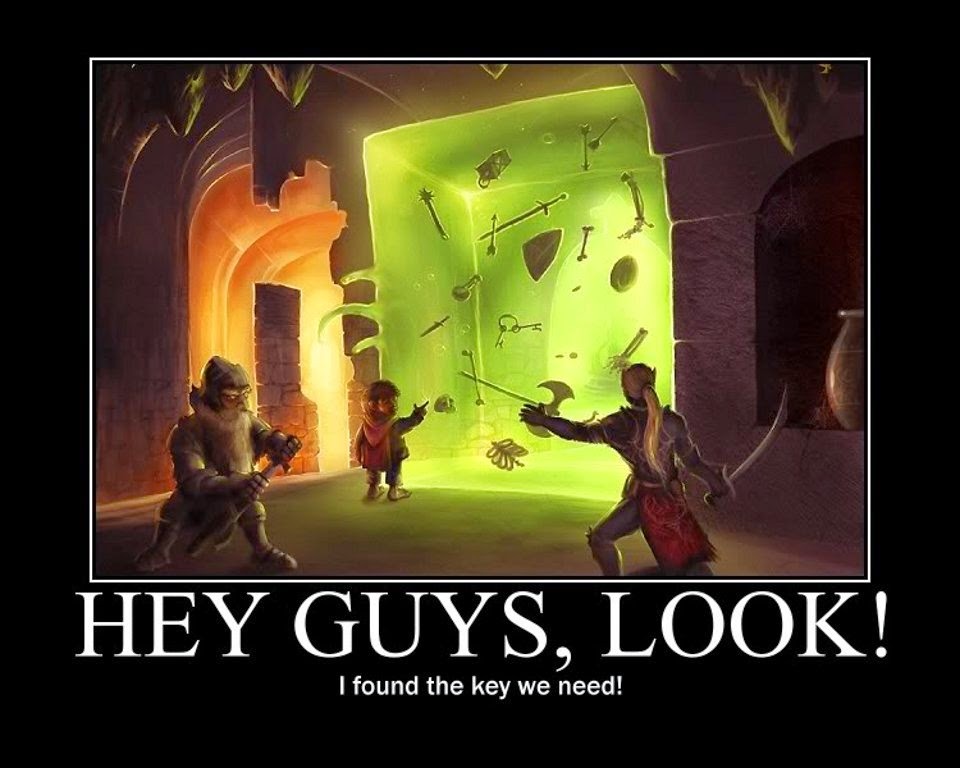
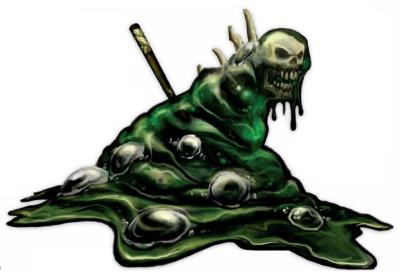
Did you know green slime has been nerfed from 'monster' to 'hazard' in 5th edition?
UNACCEPTABLE!
Here is my version of Green Slime as a monster in 5e D&D


GREEN SLIME


Green slimes always move towards the closest creature they can detect.

Armor Class: 8
Hit Points: 22 (3d8+9)
Speed: 10 ft., climb 10 ft.

STR 15 (+2), DEX 6 (-2), CON 14 (+2), INT 1 (-5), WIS 6 (-2), CHA 1 (-5)

Damage Resistances: acid, cold, fire
Damage Immunities: lightning, slashing
Condition Immunities: blinded, charmed, deafened, exhaustion, frightened, prone
Senses: tremorsense 30 ft., passive perception 11
Languages: -
Challenge: 2 (450 xp)

Amorphous. The slime can move through a space as narrow as 1 inch wide without squeezing.
Spider Climb. The slime can climb difficult surfaces, including upside down on ceilings, without needing to make an ability check.

ACTIONS
Slimed. When moving, green slime can enter other creatures' spaces. Whenever the slime enters a creature's space, the creature must make a DC 12 Dexterity saving throw.
On a successful save, the creature can choose to move back 5 feet or to the side of the slime. A creature that chooses not to be pushed back suffers the consequences of a failed saving throw.
On a failed save, the slime enter the creature's space and makes contact with the creature's body. The creature takes 10 (3d6) acid damage and is slimed (see below). Creatures that are slimed can move and act, but take 10 (3d6) acid damage at the start of each of the slime's turns until they are no longer slimed.
At the start of your turn, you must make a saving throw - follow the rules for making death saving throws, however taking damage or being reduced to 0 hit points will not cause you to fail a slimed saving throw. Failing three of these slimed saving throws turns your character into another green slime, which either adds it's mass (and 22 hit points) to any existing green slime in your space or acts as an independent and new green slime.
Succeeding at these slimed saving throws does not throw off the slime, it merely delays the inevitable.
While you are slimed, the green slime can be scraped off, but whatever implement used to scrape it off takes 10 (3d6) acid damage when it comes into contact with the slime (assume wood is a fragile material and metal is a resilient material, page 247 of the DMG).

REACTIONS
Disease. Any magical effect that would cure a subject of disease, including lesser restoration or purify food and drink, when cast upon green slime will instantly destroy it.

Wednesday, January 21, 2015

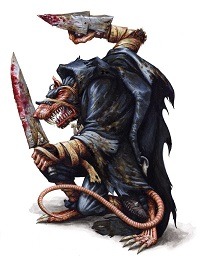
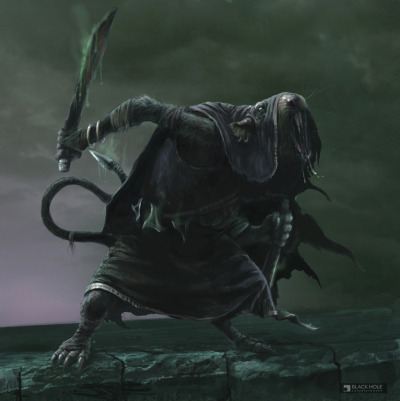
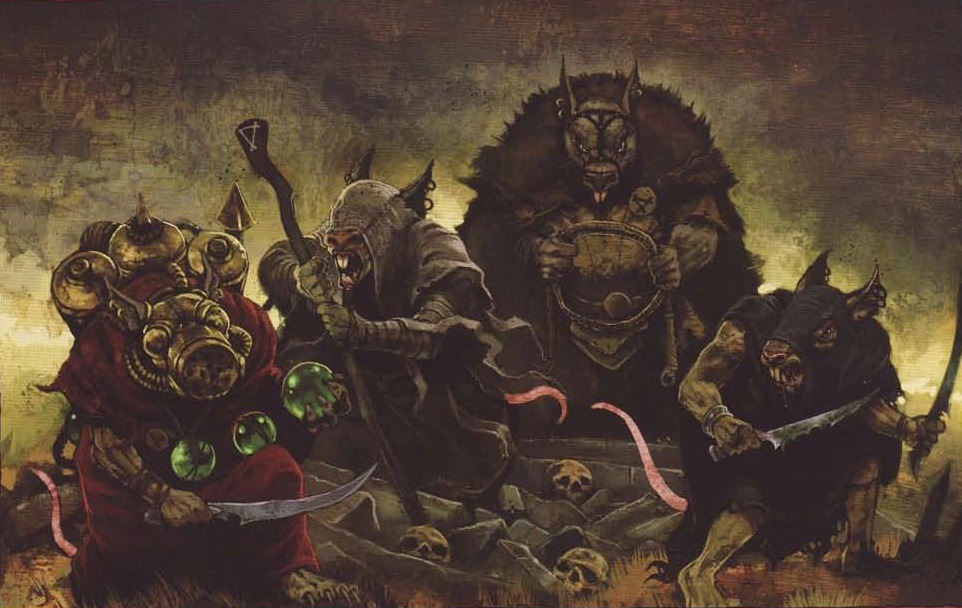
Ratkin for 5e

(Skaven with the serial numbers filed off, and a playable race for 5e)
(inspired entirely by Skaven from Warhammer Fantasy)


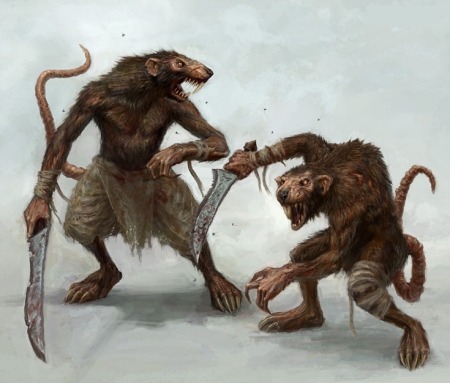
Warrens carved beneath sprawling municipalities, wickedly sharpened blades scavenged from centuries of corpses, the squeaks and scrabbling echoes of a language born of rodents, the musty and fetid scent of a black market hidden within the sewers, and the overflowing contempt of those who think they are better than the dwellers in the underdark - the ratfolk have always lived side by side with humanity, but only as cities grow have they become more noticeable, and harder to ignore.

SHORT AND FURRY
Ratkin are small, rodent-like humanoids; native to subterranean areas under cities and in dry regions. Typical ratkin average between four and five feet in height and weigh roughly 100 pounds. Most have brown fur, although this can vary greatly. Black fur is looked upon as the sign of true strength, and in most cities a ratkin of black fur that is born on the night of a new moon is often taken by the Cult of Thanskachak to be raised as an assassin in service to all ratkin. It is not uncommon for lighter colored ratkin to dye their fur black. Albino ratkin are rare and considered a good omen. Albino, and white-furred, ratkin almost exclusively become clerics, sorcerers, and rulers over other ratkin.

Ratkin have large fangs in the upper jaw structure, their eyes are commonly red, they all have over-grown claws, and a naked tail growing to almost a meter in length. With scrawning arms and legs, and lackly greatly in terms of strenght, ratkin are naturally faster, more agile, and natural diggers. Due to their cowardly nature, ratkin will most likely run then engage in direct conflict. Only when cornered will a ratkin fight with a reckless abandon.

Ratkin are hoarders by nature, and as a whole are masters of commerce, though some are shrewd merchants who carefully navigate the shifting alliances of black markets and bazaars, many ratkin love their stockpiles of interesting items far more than money, and would rather trade for more such prizes to add to their hoards over mere coins. It's common to see a successful crew of ratkin traders rolling out of town with an even larger bundle than they entered with, the whole mess piled precariously high on a cart drawn by giant rats.
They often wear robes to stay cool in the desert or conceal their forms in cities, as they know other humanoids find their rodent features distasteful. In the cities ratkin cling to the shadows and rarely venture out during the daytime, and in the bigger metropolitan areas there is always a secret ratkin marketplace which is literally underground. Ratkin have a strong attraction to shiny jewelry, especially copper, bronze, and gold, and many decorate their ears and tails with small rings made of such metals.

CONSISTENTLY INCONSISTENT CLANS
Ratkin thrive within the sewers underneath most human cities and larger towns, where they tend to maintain black markets for the seedier sides of humanity. Larger population centers house entire secondary communities of ratkin living side by side with humans. Many civil engineers have found extra tunnels and passageways added to their handiwork months, and sometimes only days, after finishing construction. Whatever wealth doesn't come to ratkin through trade arrives from scavenging or thievery. They dislike daylight, so many enterprising ratkin forge alliances with humans or halflings to handle larger or more legitimate trade negotiations above ground. Humans and halflings are always welcomed in ratkin warrens, but other races are given a cold shoulder or asked to prove their friendship, if not outright denied entry.

Ratkin are extremely communal, and live in large families where the mother is almost always the head of household. Ratkin share both a high birth rate and infant mortality rate, a typical litter can range anywhere between 6 to 18 infants, roughly half of whom will die during infancy. Women amongst the ratkin think of childbirth and motherhood as a solemn duty, to be unable to bear children is the worst fate to befall a female ratkin. Most ratkin are lucky to survive birth and childhood, and the rest are lucky to know who their father is. Any ratkin who can accumulate vast wealth is often given a kind of governorship over other ratkin, and while trade is important for ratkin survival they don't regard it as a very honorable profession. Warriors are valued over all, and the ratkin who protect their tunnels are always honored with free food and celebratory greetings.
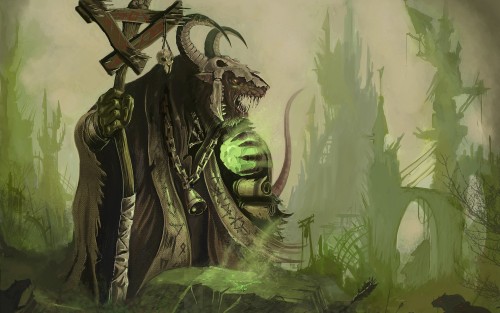
It is rumored that the ratkin have tunneled passageways between every major city on the continent, and have ways of traversing these burrows faster than non-ratkin would be able to. Each ratkin community is autonomous and doesn't answer to any other ratkin leader elsewhere, or refuses to. It would be common to see ratkin traveling either on their own or in small packs. The ratkin population is constantly growing, only to decrease drastically during times of starvation. However, in times of plenty, when a ratkin warren grows overcrowded and the surrounding city won't support a larger community, young ratkin instinctively begin to fight against their elders rather than seek out new places in which to live. These ratkin revolutions are often bloody but brief as new and younger ratkin dethrone the established elder ratkin. As such, ratkin society cannot be trusted to remain stable, but it can be relied upon to be present.

Ratkin are often driven by a desire to seek out new opportunities for trade, both for themselves and for their warrens. Ratkin adventurers may seek potential markets for their clan's goods, keep an eye out for sources of new commodities, or just wander about in hopes of unearthing enough treasure to fund less dangerous business ventures. Ratkin battles are often decided by cunning traps, ambushes, or sabotage of enemy positions.

GLORY TO THE THIRTEEN
"The Thirteen" is a misnomer since Ratkin have fourteen gods they venerate. The Horned Mother is the first ratkin, and she is never openly worshipped, nor are shrines or temples ever dedicated to her, but every ratkin will speak her name in reverence and those that blaspheme the Horned Mother are often brutally killed. The thirteen other gods are her children, and the most prominent to be offered prayers or servitude and often referred to as "the Siblings" having been birthed by the Horned Mother.

The thirteen gods the ratkin worship are:
  • Thanskachak, the god of darkness and silence, prayers are often offered to Thanskachak during funerals (there are never priests for Thanskachak, ratkin who honor him become assassins)
  • Arrassi, the goddess of gems and trade, Arrassi's symbol appears wherever a ratkin is trying to buy a thing or has a thing for sale and due to this many non-ratkin erroneously believe that Arrassi's symbol means "marketplace" (priests of Arrassi are the most common and specialize in the domain of Trickery)
  • Vasdra, the goddess of legends and lore, any ratkin who tells a story or shares knowledge is honoring Vasdra (priests of Vasdra run their temples like libraries and specialize in the domain of Knowledge)
  • Gnawdrak, the god of death and curses, no ratkin openly worships Gnawdrak but his name is invoked when fighting non-ratkin
  • Durhakk, the god of storms and winter, ratkin who brave long overland adventures or spend time in harsh climates worship Durhakk (clerics of Durhakk specialize in the domain of Tempests)
  • Thrahisk, the god of mischief and sleep, often depicted as a slothful drunk who plays pranks, there are many stories and folk tales that involve Thrahisk tricking non-ratkin, especially deities (priests of Thrahisk specialize in the domain of Life, most non-ratkin interact with these clerics)
  • Malkzarr, the god of warfare and strength, the only god depicted as having black fur, Malkzarr is not often worshiped openly but his name is always invoked before a fight occurs (priests of Malkzarr specialize in the domain of War)
  • Skrer, the goddess of sunlight and moonlight, worshiped by few ratkin but present in any community where ratkin need to venture above the ground (priests of Skrer specialize in the domain of Light)

  • Khaktabak, the god of justice and time, whenever ratkin must punish one of their own Khaktabak is invoked
  • Varski, the god of travel and art, ratkin who are learning their way in a city or journey between kingdoms or travel by boat offer prayers to Varski (priests are always wandering mendicants)
  • Chatiskikk, the god/goddess of magic, sometimes depicted as a hermaphrodite and sometimes as being sexless Chatiskikk has a presence in every ratkin community even if only superficially (there are no priests of Chatiskikk, but ratkin who become wizards or sorcerers venerate him/her)
    Morsarr, the goddess of gardening and childbirth, always invoked by ratkin who become farmers and expectant mothers (clerics of Morsarr specialize in the domain of Nature)
  • Ichikittar, the god of beauty and poison, a vain and selfish deity whose name is often used as an insult (there are no priests of Ichikittar)

    RATKIN NAMES
    Male Names: Azock, Belig, Bilik, Buchak, Cro, Curz, Garuk, Glarek, Gorbuck, Gorzun, Irksiz, Kutx, Lizkaz, Mroxk, Murz, Nagrat, Naszuss, Nirkz, Nitz, Niz, Orz, Puzz, Rirag, Shurz, Skeetz, Sorzek, Vedex, Yurt, Yurz
    Female Names: Blorg, Bresh, Crone, Dozz, Fralen, Girch, Haalesh, Hirta, Kalba, Kirat, Kourkr, Molal, Mori, Murz, Olg, Pru, Rir, Rurdu, Ur, Xaort, Zas, Zuul
    Family Names: Azhak, Azaraz, Bazassik, Burmatz, Gaznagar, Gezarr, Prazth, Razel, Tzartar, Vozer

    RATKIN TRAITS
    Ability Score Increase: Your Dexterity score increases by 2.
    Age: Ratkin age at the same rate as humans.
    Size: Ratkin are shorter than most humans but are still considered Medium sized.
    Speed: Ratkin have a walking speed of 25.
    Darkvision: Ratkin have superior vision at night and underground. You can see in dim light within 60 feet of you as if it were bright light, and in darkness as if it were dim light. You can't discern color in darkness, only shades of gray.
    Ratkin Senses: You have proficiency in the Perception skill.
    Languages: You can speak Common and Ratkin. If there is a written Ratkin language in your region then you can read it as well. The Ratkin language has as many dialects and variations as Common might, and the two often mimic each other in regions where both are spoken. As a rule of thumb, if the humans of an area speak a variation of Common that counts as a separate language then the ratkin of that area also have their own separate version of Ratkin.
    Swarming: Ratkin are adept at swarming over foes during combat. When Ratkin fight alongside an ally, they can Help their ally as a bonus action.
    Ratkin Tenacity: Ratkin gain advantage on any rolls to resist poison or disease.

    Base Height: 4'
    Height Modifier: +2d8
    Base Weight: 100 lb.
    Weight Modifier: x (3d8) lb.


    INSPIRATIONAL READING
    the Wikipedia page for Skaven (Warhammer)
    the Warhammer Wikia for Skaven
    Children of the Horned Rat - Skaven sourcebook for Warhammer Fantasy
    an OGL book about "ratmen" (circa 3e/d20)
    a Skaven name generator - I used this for the deity and family names
  • Monday, December 29, 2014

    thE aLicE class for 5e

    THE ALICE

    You will need a copy of the 5th edition Player's Handbook to fully utilize this class.
    CLASS FEATURES
    HIT POINTS
    Hit Dice:
    1d4 per alice level
    Hit Points at 1st Level: 4 + your Constitution modifier
    Hit Points at Higher Levels: 1d4 (or 2) + your Constitution modifier per alice level after 1st

    PROFICIENCIES
    Armor:
    Light armor
    Weapons: Simple weapons, hand crossbows, longswords, rapiers, shortswords
    Tools: Thieves' tools

    Saving Throws: Dexterity
    Skills: Choose two from Acrobatics, Athletics, Deception, Insight, Intimidation, Investigation, Perception, Performance, Persuasion, Sleight of Hand, and Stealth

    Equipment
    You start with the following, in addition to equipment granted by your background:
  • (a) a rapier or (b) a shortsword
  • (a) a shortbow and quiver of 20 arrows or (b) a shortsword
  • (a) a burgler's pack, (b) a dungeoneer's pack, or (c) an explorer's pack
  • Leather armor, two daggers, and thieves' tools

    EXASPERATION
    In times of unusual stress Alices may become Exasperated. This Exasperation causes fate to take notice of the Alice, and then to aid her. The Alice says or thinks something like “Oh I can’t conceive how I ever fell into this deplorable circumstance!” or “We are indeed doomed and now birds will gnaw our eyes.”

    Practically speaking, an Alice may express Exasperation once every real-time game hour (as games focus almost exclusively on stressful times, these represent the periods during which the gods are most likely to take notice).

    When this happens, the Referee should roll the dice on the Exasperation Table...

    At 1st thru 5th level roll d4, at 6th-7th level roll d6, at 8th-9th level roll d8, at 10th-11th roll d10, at 12th level and higher roll d12:

    1-A secret door is revealed where none had previously been detected. If the GM has made no provision for a secret door, it leads to the nearest unexplored area.

    2-The Alice realizes she has something in her pack, her hair, or otherwise secreted about her person. The object can be anything non-magical and generic (a key, not the key) that exists in the setting and that is small enough that the Alice could reasonably have it hidden it in her current condition or smaller than a breadbox, whichever dimensions are smaller at the time. The Alice may choose what this is.

    3-An ordinary animal--cat sized or smaller--appears. The Alice cannot directly control it but it will not under any circumstances hurt the Alice.

    4-A fact about the situation at hand occurs to the Alice--a piece of local or monster lore, perhaps something she read or was once told in a parlor or a lesson or in a kitchen.

    5-Someone of the Alice's choice falls down. (Line of sight.)

    6-The weather in the immediate area changes in a way decided by the Alice--the change is general and may not be targeted (no aimed lighting bolts or gusts of wind).

    7-A nearby creature is charmed by the Alice for an hour. (Line of sight.)

    8-An inorganic device or object of the Alice's choice breaks. (Line of sight.)

    9-Something not ordinarily able to talk (GM's choice) begins to speak to the Alice.

    10-Creatures present complete forget the Alice is there for as long as the Alice keeps making saves vs spell.

    11-Someone is sent to fetch the Alice out of her current predicament. If there is an obvious candidate from among the local NPCs (giant eagles, a friendly knight...), that's who it is. If there isn't, then: hey GM, time to make up a weirdo. The NPC does not automatically have the ability to extricate the Alice from the situation, s/he merely appears as close as is plausible.

    12-Someone or something of the Alice's choice begins to shrink at 1 foot per round down to playing-card size. (Line of sight.)

    These effects are magical and can be countered as magic.


    EXPERTISE
    At 1st level, choose one of your skill proficiencies (or your proficiency with thieves' tools). Your proficiency bonus is doubled for any ability check you make that uses the chosen proficiency.

    SNEAK ATTACK
    At 1st level, you know how to strike subtly and exploit a foe's distraction. Once per turn, you can deal an extra 1d6 damage to one creature you hit with an attack if you have advantage on the attack roll. The attack must use a finesse or ranged weapon.

    LEVELING UP
    Every time you level up beyond 1st level, roll twice on the table below. When you roll a result, cross it off and treat re-rolls as the next result UP the table unless a thing tells you not to cross it off, it will also tell you what happens when you re-roll the same result instead.

    1-10 This seemed to Alice a good opportunity... Increase your SNEAK ATTACK ability by +1d6. Re-rolls increase the damage dice as described by the ability on pages 95 and 96. Cross this result off if you manage to raise your SNEAK ATTACK to 10d6.

    11 She could be very charming when she needed to be. You gain proficiency in Deception. If you already have proficiency in Deception then you gain EXPERTISE with Deception and cross this result off. If you already have EXPERTISE with Deception then cross this result off and use the next result on the table (12).

    12 Alice liked pies, although sometimes people did not want her to have them. Add your proficiency bonus to any attempt to locate any foodstuff of any kind. Do not cross this result off! Re-rolling this gives you EXPERTISE in finding food, then cross this result off.

    13 They kept talking as though Alice was a rhododendron in a pot. You gain proficiency in Stealth. If you already have proficiency in Stealth then you gain EXPERTISE with Deception and cross this result off. If you already have EXPERTISE with Stealth then cross this result off and use the next result on the table (14).

    14 She tried to remember what she knew about stoats. You gain proficiency in the Animal Handling skill. If you already have proficiency then you gain EXPERTISE with Animal Handling and cross this result off. If you already have EXPERTISE with Animal Handling then cross this result off and use the next result on the table (15-20).

    15-20 Falling down wells really improves the hand-eye coordination Pick up EXPERTISE for a skill proficiency of your choice (your proficiency with thieves' tools counts as a choice, but you may not make the same choice twice). Do not cross this result off! If all of your skill proficiencies have acquired EXPERTISE then re-rolling this gives you a new skill proficiency.

    21-70 Alice was then reminded of something she'd noticed before... Take the CUNNING ACTION Rogue ability. Do not cross this result off! Re-rolling this raises your Hit Points by +2.

    71-75 Alice felt that if there was to be any conversation at all, she must manage it herself. You can increase one of your ability scores by 1 point. Do not cross this result off!

    76 You're very perceptive, if nothing else. For each combat round you spend just watching someone (i.e. you're not doing anything except maybe moving and you are not being attacked yourself) you get +d10 to hit and +d10 to damage or +d10 to any attempt to trip, grab, or otherwise mess with the target when you finally do decide to attack. This only works on targets that are engaged in combat while they are being observed. The ability can only be used once per fight on anyone smart enough to notice what you're doing. Also: only works on things with organs (like, not on oozes). Do not cross this result off! Re-rolling this raises the die to d12 then d20. After that you start getting 2d10 then 2d12 then 2d20 etc.

    77 Her aunt had mentioned them and this made Alice wary You gain proficiency in Intelligence saving throws. After that, you gain proficiency in Wisdom saving throws, then Charisma, then Constitution. If you manage to roll this result a fifth time then take proficiency in Strength saving throws then cross this result off.

    78-79 She did seem to offend people (and animals) wherever she went. You've become adept at dueling. You gain the UNCANNY DODGE ability (page 96) and the DUELING Fighting Style (page 72). If you already have either or both of these then you don't get replacement abilities or a re-roll.

    80 They began to throw stones, and Alice began to avoid them You gain the EVASION ability (page 96)

    81 She was not such a mouse as she used to be. You gain the RELIABLE TALENT Rogue ability (page 96)

    82 She listened attentively in the dark, Alice knw she was being surrounded. Gain the BLINDSENSE ability (page 96)

    83 "It really was curious," she thought--"How many times could this kind of thing happen?" You gain the ELUSIVE ability (page 96)

    84 She began to feel somewhat neglected. You gain the STROKE OF LUCK ability (page 97)

    85 Alice quite liked drawing, and had an impressive box of crayons at home. You gain the IMPOSTER ability (page 97)

    86 Oh, I do so apologize... You can super-easily trip any basically human-sized creature that is otherwise engaged with someone or something else on a successful attack roll (apply your Dexterity bonus to the roll). This only works once per fight unless the enemy is mindless like zombies or for some reason can't see you pull off this tactic.

    87 It was very shiny and stuck out like a soup spoon... On a successful melee hit, you may immediately make a Sleight of Hand attempt to grab an item (other than the target's weapon) off a target. This won't work twice on anyone above zombie-intelligence who sees it.

    88 Alice then did something quite astonishing... You are surprising. Use your entire charisma score as an attack roll bonus to hit with any suddenly improvised weapon the first time you strike against any intelligent foe (who knew what you could do with a gingerbread man?) and add your whole charisma score to the damage. This trick only works once per fight.

    89 The blue one certainly did make you taller, of that Alice was sure... When you use potions or substances with drug-like qualities, you can choose to double the effects or cut them in half.

    90 She knew to curtsey at times like this, and so she did. Despite the low company you keep, you've been working on your manners. Members of the upper classes instinctively recognize you as one of their own. You gain advantage on Charisma skill checks or saving throws when dealing with them.

    91 She had not known her mother's cousin very well, and decided that it was a bad thing that she had died... You have been willed 5000 units of the local currency (GP? SP? Kroner?) worth of random mundane (nonmagical) objects. Here's how it works: you have exactly ten seconds real time to say what you bought. You now have all that stuff, assuming it adds up to less than 5000gp.

    92 She thought it might be a saltcellar, or at least that seemed like the right word for it. You can appraise treasure to a nontrivial and nonboring degree: you can estimate the value of nonmagical things flawlessly and if a piece of treasure is not what it seems on any level you will get an inkling. As in, you'll go "Is this not what it seems?" and the GM will go "Yeah, you've seen a lot of jade urns in your day and this is not what it seems somehow--you're not sure how." If a treasure has some unusual or hidden feature of a mechanical or physical nature you will sense that it is there on a successful Intelligence saving throw. You won't know what it is, but you'll sense that it is there. If you re-roll this result you gain the USE MAGIC DEVICE ability (page 97), after that cross this result off.

    93 She closed her eyes and said the words as she'd been taught... You have learned one magic-user spell. It functions as if cast by a 15th level wizard or your level whichever is higher. Determine the spell randomly (d8 for level). It works once, that's it. Do not cross this result off! Same result always applies.

    94 Alice learned that nearly everything was dangerous if handled properly. You've become very skilled with weapons. Choose a Fighter's FIGHTING STYLE (page 70) for yourself. Re-rolling this result allows you to choose another FIGHTING STYLE from the same list. If you manage to acquire all six FIGHTING STYLES then cross this result off.

    95 All that hiding in the dumbwaiter has finally paid off. You know a secret. One of two kinds of secret, to be precise: either a piece of useful lore about a legendary treasure or magic item that you encounter or an embarrassing fact about an NPC. Mechanically: once per session you may astound your party's condescending wizard by pulling this lore or rumor out of your petticoat or pantaloon by making a successful Intelligence saving throw. If you fail, screw it, you can't do it this session. Re-rolling this means you try for this twice per session, then 3 times, etc

    96 It was so lovely, and--according to the book--it was right there. The dress made of manticoreflesh, the house full of lilacs, the magical fishgutting knife---whatever the thing that you always wanted is, it's there. 4 sessions worth of adventure away or less. Tell your GM, who then must place it.

    You must have a fair shot at it--like any other reward, but there's no guarantee you will get it. If you don't get it by the fourth session you can keep trying or let it go and roll again on this table. However if you choose to roll again and then you do get the thing somehow anyway, you lose whatever gimmick you rolled. GM think up some clever reason why.

    97 She knew from school what the word meant, but did not know if it was rude or not. Choose a new language to read and speak. Do not cross this result off! Re-rolls give new languages.

    98-99 Alice had seen so many unusual things lately, it had become usual. You've seen and done so much that nothing phases you--you are immune to insanity or confusion in any form. Even mind-altering cosmic horrors from the far edge of the cosmos are like whatever. You still do fear. Fear is good. Fear keeps you alive. Re-rolling this means any allies who can see you likewise get a bonus (+2) to their saves on account of your steady eye. Then cross this result off.

    00 Alice kept, through all her riper years, the simple and loving heart of her childhood. You may choose any one result from this table for yourself, but it is crossed off afterwards even if it says not to cross it off! Do not cross this result off!
  • Friday, December 26, 2014

    Jason the Morningstar

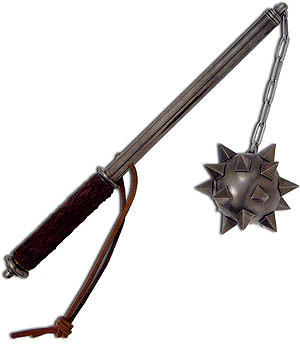
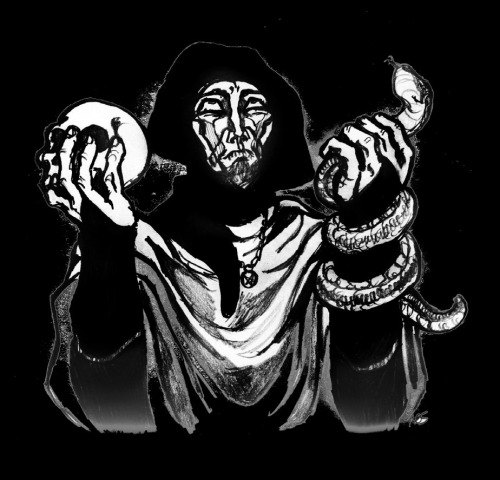
    This is an otherwise unremarkable morningstar in good condition, but anyone who sees the weapon instantly knows that the weapon's name is Jason. Upon learning this, the viewer must make a save (vs Will, vs Wisdom, vs Spell, vs whatever is appropriate) or be consumed with the burning desire to own and wield Jason the Morningstar as their signature and preferred weapon. This compulsion is as great and terrible as the compulsion to own an artifact.
    Monday, December 22, 2014

    alternate magic idea for 5e

    What if arcane magic was corrosive to the body of the caster? Like smoking cigarettes, or chronic acid reflux?

    Casting a spell requires roll + Constitution modifier vs DC 15 + spell level
    Success = no Con loss. Failure = reduce Con by an amount equal to the spell level.
    Recover Constitution from sleeping or resting.
    Rest 2 hours = 1 Con. Sleep 1 hour = 1 Con.
    New skill = Meditation (Con-based), after resting for 2 hours roll+Con(+Proficiency) vs DC 20 to recover 2 Con.

    Crystal shards from the island of Kapuo are sometimes referred to as Kapuo, or Blueglass, shards.
    Blueglass shards are used to power internal forces, as a blueglass shard is used it's essence pours into the caster's body and causes strange effects.
    Consuming a Blueglass shard is more powerful, but will solidify the organs over time.


    Holding Blueglass during casting gives +5 to casting roll, on a natural 1 the Blueglass fades to a black color is now a worthless, brittle gemstone.
    Consuming Blueglass requires Con saving throw.
    Failure = Permanently lose 1 Constitution. Success = Permanently lose 1 Hit Point but can cast # of spell levels = Constitution without rolling for Con loss

    New Spell: Detect Blueglass
    works like Detect Magic but only detects presence of Blueglass

    alternately
    make Blueglass magical so the wizard has one less spell to cast (by default Blueglass is not magical)


    Inflicting pain and bloodletting can power internal forces, and sacrificing life can be the most powerful form of personal enchantment.

    Spellcaster can inflict wounds on self to power spells.
    If wounding self with weapon they are proficient with, caster can declare how much damage they inflict up to the weapon's normal maximum.
    If wounding self with weapon they are not proficient with, caster must roll weapon damage.
    Damage inflicted on self = bonus to spellcasting roll
    Caster can inflict damage on others with a weapon to get a bonus to spellcasting as long as spell is cast on the next round
    (spells that inflict damage do not allow for this same bonus, caster must be the one to inflict damage)
    Every 2 hp damage inflicted on others = +1 bonus to spellcasting roll

    New Spell: Dedicate Blade
    2nd-level spell, cast on any edged weapon, permanent
    if the caster uses the blade to kill a creature then the next spell he casts doesn't require a spellcasting roll

    LotFP version
    all rules same as above, except
    Casting a spell requires Spellcasting skill roll, a 1d6 roll. Only arcane spellcaster classes have access to Spellcasting skill.
    Skill = level divided by 4 (round down) +1
    Wizard level 1 thru 3 have skill of 1, Wizard level 4 thru 7 have skill of 2, etc.
    No meditation skill, allow Poison save to recover 2 Con after resting 2 hours
    Holding Blueglass gives +1 to skill, rolling 6 causes Blueglass to fade
    Consuming Blueglass requires Poison save with same results.
    Every 2 hp damage inflicted on self = +1 bonus to spellcasting roll
    Every 3 hp damage inflicted on others = +1 bonus to spellcasting roll