Showing posts with label DCC RPG. Show all posts

Tuesday, September 9, 2014

Gaz and the Drake, a patron for DCC RPG

I started writing Gaz and the Drake for our gaming group, but then our group stopped playing Dungeon Crawl Classics and I lost my inspiration for completing the description of this patron. Two years later, I'm clearing out a lot of my digital accounts and I see this draft document on my blog so now I'm finishing it up. Even if I'm not playing DCC at the moment, I think it would be pretty cool to have a custom patron for my players to choose, or maybe I'll write another one so that I have a range of options outside of the core rulebook.

Without further preamble, here are Patron Spells: Gaz and the Drake

Level 1: Iron Fist

Range:
Self, Duration: Varies, Casting time: 1 round, Save: None
General: Gaz and the Drake understand that their followers are not, strictly speaking, fighters and so they impart this spell early to give devoted wizards an opportunity to utilize the arcane arts to exercise some martial skill. The caster must spellburn at least 1 point when casting this spell.
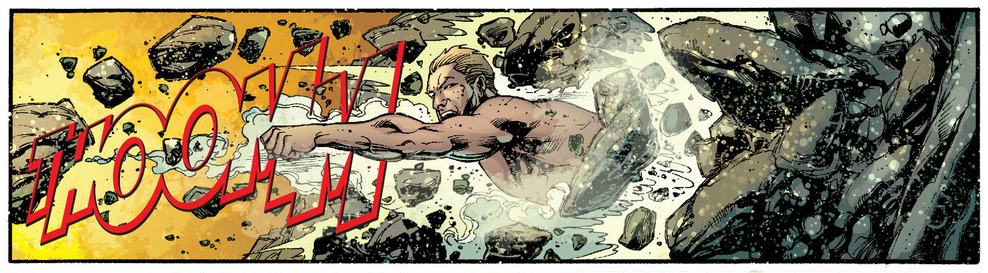
Manifestation = Roll 1d4: (1) the caster's hands twist into wooden fists incapable of grabbing objects or casting other spells (the caster takes 1 point of damage); (2) the caster's hands glow with a golden light, making him an easily discernible target in the dark; (3) the caster's hands become like stone, hard and impervious to most damage but still able to manipulate objects and cast other spells; (4) the caster's hands take on the look and feel of iron but may still be manipulated like normal digits (this version of the spell will cause +1 damage to elves).
1 = Lost, failure, and patron taint.
2-11 = Lost and failure.
12-13 = The wizard's hands become hard like weapons! For a number of rounds equal to (1d3 + caster level) unarmed attacks inflict lethal damage of 1d3 + caster level + Strength.
14-17 = The wizard's hands become hard like weapons! For a number of rounds equal to (1d4 + caster level) unarmed attacks inflict lethal damage of 1d4 + caster level + Strength.
18-19 = The wizard's hands become magical weapons! For a number of rounds equal to (1d6 + caster level) unarmed attacks are at +1 to hit and inflict lethal damage of 1d6 + caster level + Strength.
20-23 = The wizard's hands become magical weapons! For a number of rounds equal to (1d8 + caster level) unarmed attacks are at +3 to hit and inflict lethal damage of 2d4 + caster level + Strength.
24-27 = The wizard's hands become magical weapons! For a number of turns equal to caster level unarmed attacks are at +4 to hit and inflict lethal damage of 3d4 + caster level + Strength.
28-29 = The wizard's hands become magical weapons that can punch through wood or plaster! For a number of turns equal to caster level unarmed attacks are at +5 to hit and inflict lethal damage of 3d6 + caster level + Strength.
30-31 = The wizard's hands become magical weapons so strong that he can punch through stone or metal! For a number of hours equal to caster level unarmed attacks are at +7 to hit and inflict lethal damage of 3d8 + caster level + Strength.
32+ = The wizard's body glows with a golden hue and a low hum originates from the air around him! Until the next sunrise unarmed attacks the caster makes are lethal, can punch through any material, are +9 to hit, and inflict 5d8 + caster level + Strength damage. Whenever a creature is struck by the caster it must make a DC 20 Fortitude save or flee in terror and pain.

Level 2: Poisonous Gaze
Range: 30', Duration: Instantaneous, Casting time: 1 action, Save: Will vs. spell check
General: This spell gives the wizard a gaze attack that can be used to lock eyes with a living creature and poison their blood. The spell will have no effect on golems, elementals, oozes, or other such creatures that do not have eyes or blood per se.

Manifestation = Roll 1d8: (1) the caster's eyes glow green and a smoky green-tinted mist pours out from their eyelids; (2) a beam of soft white light pulses between the caster's eyes and the target of the spell; (3) a crackling sound emanates from behind the caster; (4) the sclera in the wizard's eyes turn black for the next hour; (5) the wizard emits a foul smell, similar to bleach or vinegar; (6) the wizard's eyes become ringed with pustules and sores, these heal after a good night's rest; (7) the wizard's eyes and mouth become ringed with a glittery substance that disappears at the next sunrise; (8) the caster's face becomes dry and wrinkled for the next turn.
1 = Lost, failure, and patron taint.
2-11 = Lost and failure.
12-13 = Failure, but spell is not lost.
14-15 = The caster locks eyes with a target within range, which must make a Will save or suffer 1d8 + caster level HP damage.
16-19 = The caster locks eyes with a target within range, which must make a Will save or temporarily lose 1d3 Stamina; recovered at one point per day.
20-21 = The caster locks eyes with a target within range, which must make a Will save or temporarily lose 1d4 Stamina (or Dexterity, caster's choice); recovered at one point per day.
22-25 = The caster locks eyes with a target within range, which must make a Will save or temporarily lose 1d5 Stamina (or Dexterity or Intelligence, caster's choice); recovered at one point per day.
26-29 = The caster locks eyes with a target within range, which must make a Will save or temporarily lose 1d6 Stamina (or Dexterity, Intelligence or Strength, caster's choice); recovered at one point per day.
30-31 = The caster locks eyes with a target within range, which must make a Will save or be struck blind for 2d4 rounds.
32-33 = The caster locks eyes with a target within range, which must make a Will save or be paralyzed for 2d6 rounds.
34+ = The caster locks eyes with a target within range, which must make a Will save or be paralyzed for 2d6 rounds and lose 1d6 Agility, Stamina and Intelligence; recovered at one point per day.

Level 3: Spectral Soldier
Range: 20', Duration: varies, Casting time: 1 turn, Save: None
General = The caster summons a ghostly warrior that fights alongside her and protects her from any who might harm her.

Manifestation = Roll 1d4: (1) the wizard breathes out smoke from her mouth which coalesces into the warrior; (2) a skeleton crawls out of the ground during the casting and the apparition forms around the bones (the bones crumble into nothingness at the end of the spell); (3) a heavy fog rolls in and the soldier steps out from it, the fog fades by the end of casting ; (4) the soldier is a dark misty thing that animates out of the wizard's own shadow
1 = Lost, failure, and patron taint.
2-11 = Lost and failure.
12-15 = Failure, but spell is not lost.
16-17 = The caster summons a spectral warrior who serves for up to 1 turn or until dismissed or killed, it will not stray farther than 20' away from the caster and if it is forced past that boundary it disappears. It never speaks or communicates in any way, and always attacks anything that is attacking the wizard or that the wizard attacks. If the spectral soldier is fighting another humanoid fighter it will attempt to disarm them or cripple them, and if it is fighting a monster or other non-humanoid creature it will attempt to push them back with it's attacks, keeping them away from the caster. Consider the warrior to be 1st level and have ability scores of 10. It has AC 16, 1d4+1d8 hp, and a deed die of 1d3 for purposes of attack bonus and damage. It's attacks are considered to be magical.
18-21 = As above, but it lasts for 1d3 turns and is considered to be 2nd level with ability scores of 12. It has AC 16, 12 hp, and a deed die of 1d4 for purposes of attack bonus and damage. It's attacks are considered to be magical.
22-23 = As above, but it lasts for 1d4 turns and is considered to be 3rd level with ability scores of 13. It has AC 16, 20 hp, and a deed die of 1d5 for purposes of attack bonus and damage. It's attacks are considered to be magical.
24-26 = As above, but it lasts for 1 hour and is considered to be 4th level with ability scores of 14. It has AC 17, 30 hp, and a deed die of 1d6 for purposes of attack bonus and damage. It's attacks are considered to be magical.
27-31 = As above, but it lasts for 1d4 hours and is considered to be 5th level with ability scores of 15. It has AC 18, 40 hp, and a deed die of 1d7 for purposes of attack bonus and damage. It's attacks are considered to be magical.
32-33 = As above, but it lasts for 1d6 hours and is considered to be 6th level with ability scores of 16. It has AC 19, 50 hp, and a deed die of 1d8 for purposes of attack bonus and damage. It's attacks are considered to be magical.
34-35 = As above, but it lasts for 1d8 turns and is considered to be 7th level with ability scores of 17. It has AC 20, 60 hp, and a deed die of 1d10 for purposes of attack bonus and damage. It's attacks are considered to be magical.
36+ = As above, but it lasts for 24 hours and is considered to be 9th level with ability scores of 18. It has AC 24, 80 hp, and a deed die of 1d12 for purposes of attack bonus and damage. It's attacks are considered to be magical.

Saturday, August 23, 2014

magic-users

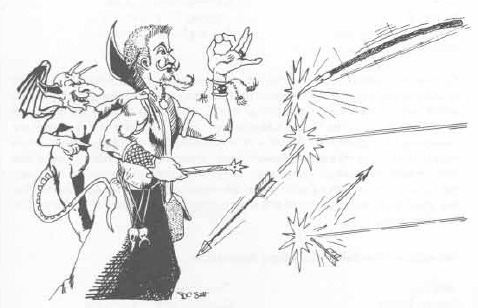
I once wrote about how I had been toying with this Apocalypse World-inspired magic system of success/partial success/failure results. Recently I've been looking at Dungeon Crawl Classics magic system a lot more, because I like the varying power levels of spells despite the overload of paperwork. The way I've been thinking of spells now is that even on a "miss" the spell would be cast, a character who can use magic will cast the spell regardless of choices or rolls. After the spell has been cast the magic-user would roll again to see how powerful the spell is, potentially all of these dice could be rolled together since the power roll would use different die types.

Using the DCC RPG spells as a standard, here's how I have it written so far.

when you cast a spell, roll+spell or choose 1 option, on a 15+ choose none, on a 10-14 choose 2, on a miss choose 3 and you draw attention to yourself:
- spell lost, you can't cast the spell again until after you rest
- the spell corrupts you
- the spell misfires and does something unexpected
- your magic dwindles, -1ongoing to magic until you rest

Power (2d10+magic)
Under 12: Spell works as normal
12-15: +1 enhancement
16-18: +2 enhancements
19-21: +4 enhancements
22+: Critical!

Corruption
Under 10: Minor corruption
10-14: Major corruption
15+: Greater corruption

Charm Person
The magic-user charms a humanoid to become friendly, they will regard the caster as a friend and ally but not do anything against their own nature.
Range: 40 yards, Duration: 1 day, Corruption: 1d4+magic+spell
Enhancements: affects +1 target (multiple), add +1 day (multiple)
Critical: affects 2d6+magic targets, lasts one month, and caster has complete control over targets (will perform suicidal or contradictory tasks)
Misfire 1d4: 1) caster also falls in love with target(s), 2) two randomly determined nearby humanoids fall in love with each other, 3) caster inadvertently puts target(s) to sleep, 4) target(s) are repulsed and angered by everyone nearby except the caster

Slow
The magic-user impairs the ability of a target creature to move at its normal speed, to such a degree that it's attacks are easily avoided. Attack rolls must still be made to hurt the slowed creature.
Range: 30 yards, Duration: 1 turn, Corruption: 1d8+magic+spell
Enhancements: affects +1 creature (multiple), add +1 turn (multiple)
Critical: all creatures that are actively hostile to caster within range are frozen in place for 3 turns
Misfire 1d4: 1) caster slows one ally within sight (if no ally in sight then caster slows themself), 2) caster slows all allies within range (if no allies in range then caster slows themself), 3) caster ages 10 years, 4) a nearby animal or insect develops the Slow spell as an innate ability (usable once/day)

Polymorph
The magic-user transforms himself or another into a different creature, assuming the creature's form and manner of movement as well as the creature's ability to survive in it's natural habitat.
Range: touch, Duration: 1 hour, Corruption: 1d10+magic+spell
Enhancements: affects +1 creature (multiple), add +1 day (multiple), grant all of the natural & magical abilities of the new form
Critical: caster can transform themself and +magic+spell targets into a new creature with all of the natural & magical abilities of the new form for up to one week
Misfire 1d4: 1) target is transformed into inoffensive domestic animal, 2) partial transformation of changed head and normal body or vice versa, 3) target's skin changes to new form but that is all, 4) also summons 1d4 creatures of the intended transformation to the caster's location and they are angry or hungry

Pretty simple in comparison to DCC RPG, but still requires a bit of paperwork.

Thursday, March 20, 2014

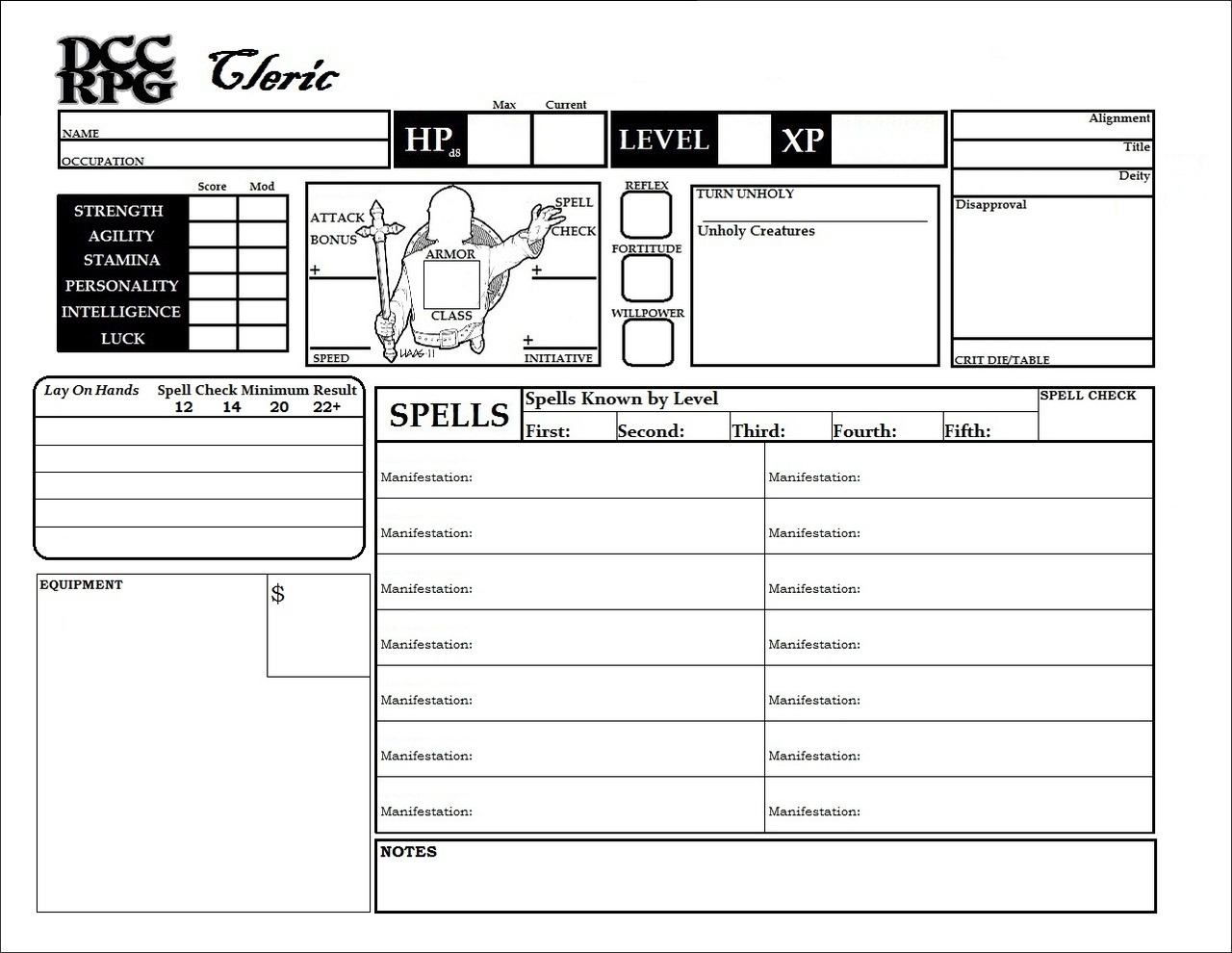
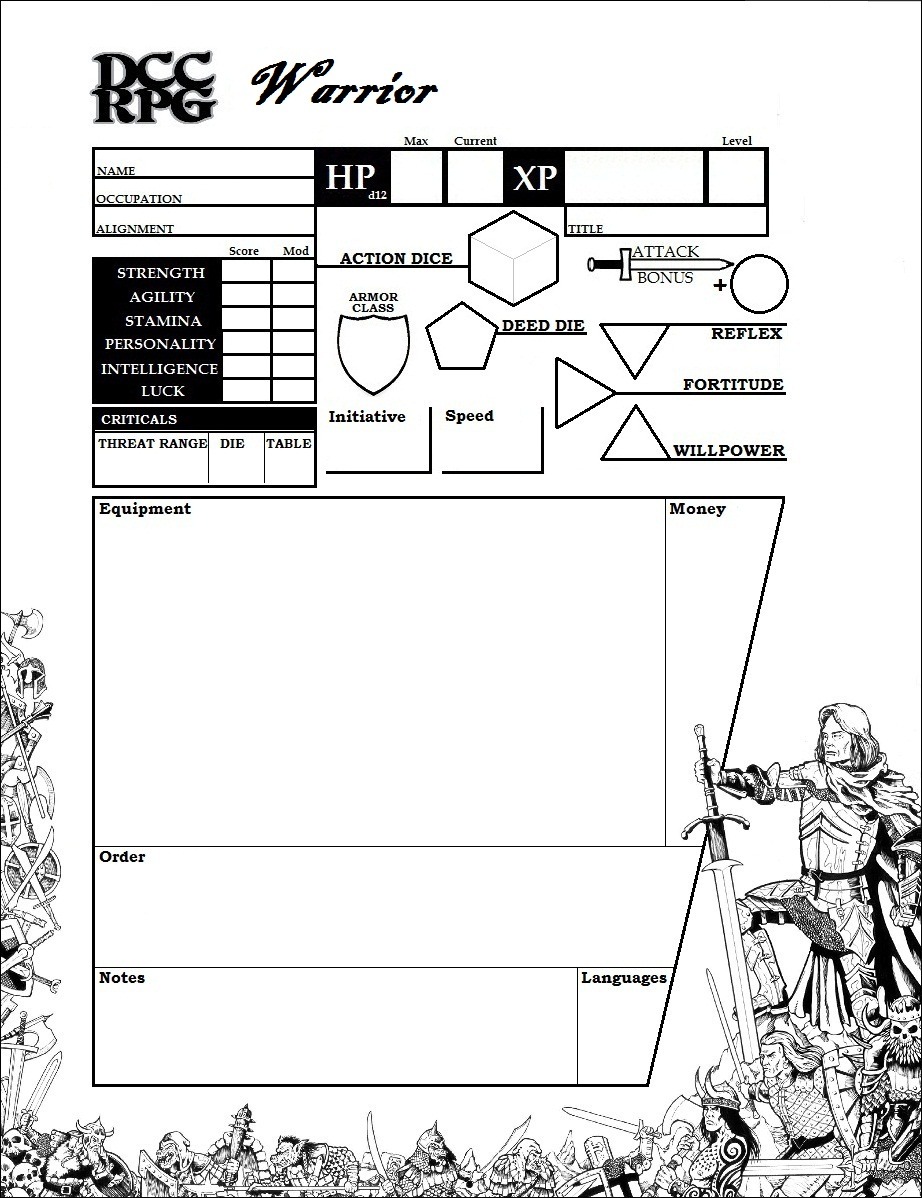
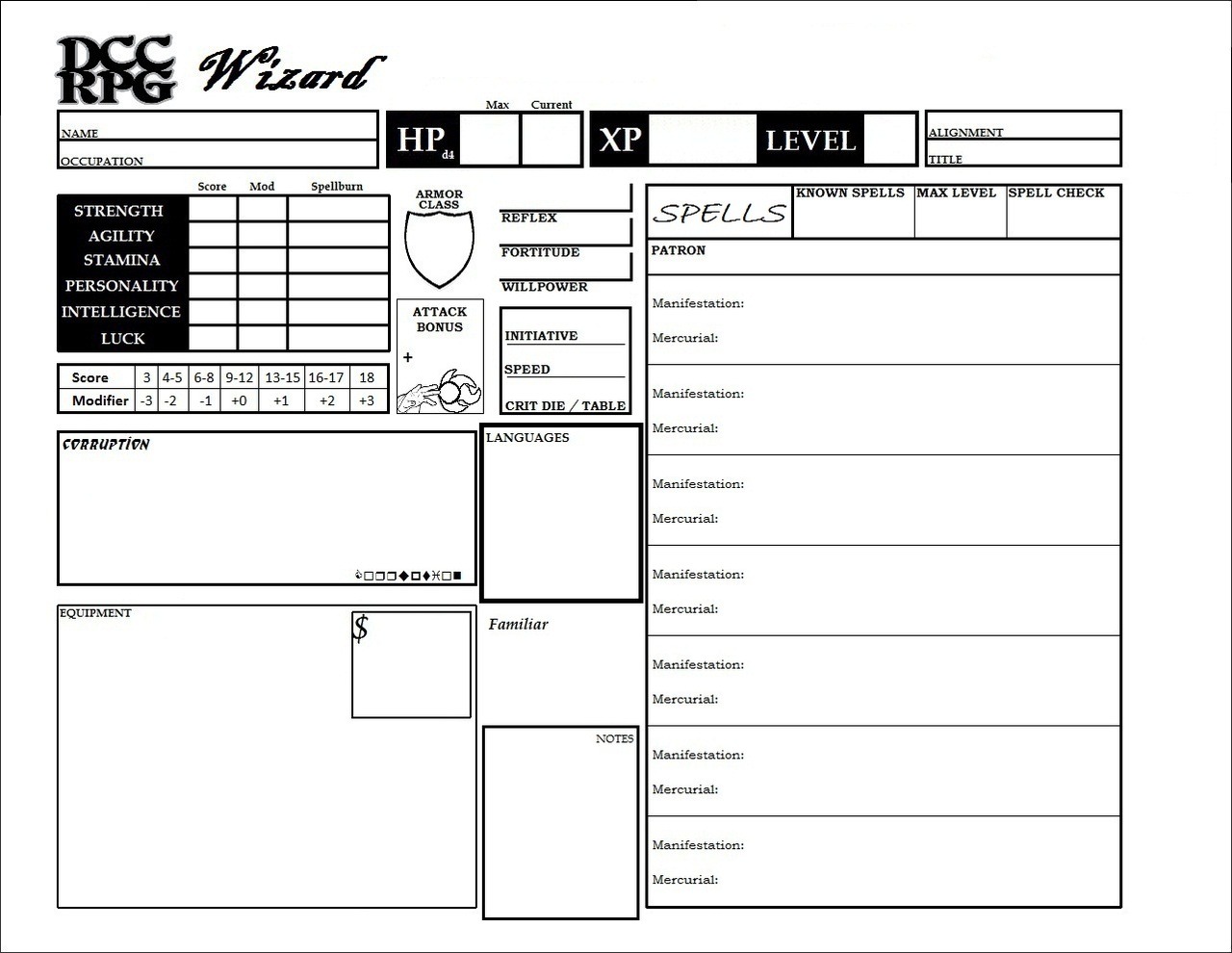
Dungeon Crawl Classics character sheets

When I first discovered Dungeon Crawl Classics I designed a few custom character sheets for "the basic 4" classes. I never got around to doing the demihuman classes because when I was first GMing I didn't include the demihuman races as classes. This was also before I had a pdf editor and so I made them entirely as jpgs that need to be printed as full-page images. I kept thinking I'll get around to remaking them as pdfs but honestly, my enthusiasm for finishing a project is directly related to how likely I am to using the finished product. These days I'm not playing DCC and I don't see that changing any time soon.

Click on the image to make it bigger (the big version is what you want to print if you choose to use these)


Monday, January 13, 2014

How to cast a spell

When I was GMing 2nd and 3rd edition D&D I had this houserule that wizards didn't have to memorize spells every day but they did have to roll a skill to cast a spell. In 2nd edition it was a proficiency and in 3rd edition it was a skill, but both were called Spellcraft.

At first it was just a simple roll to see if the spell went off, a wizard PC would roll a d20 and add their Intelligence modifier. I rated the level of the spell as the difficulty, added to 10, so a 1st level spell needed an 11 or higher to cast and a 19th level spell needed a 19 or higher. Fail the roll and the spell fails, but you didn't spend the spell slot either.

During 3rd edition, I changed it to be more similar to combat. Casting a spell had a DC of 20 and the PC could add both their Spellcraft skill and their Intelligence modifier to their roll. Failing a roll still meant the spell didn't go off and you just had to try again.

I only ever had one player walk out of a game because of this houserule because anybody who played for more than one session learned about my other two houserules for wizards.

#2: Spell slots were directly translated to spell levels and could be spent like points to cast spells, so a 5th level wizard would have 10 spell levels to cast spells with while a rules-as-written 5th level wizard would have three 1st, two 2nd, and one 3rd level spell slots.

#3: Wizards could cast any level of spell as long as they had learned it and had enough spell levels to cast it, during 3rd edition days the DC for learning was based on spell level but during 2nd edition days it was a percentage roll based off Intelligence.

I forget how I adjusted 0-level spells, but players rarely used them anyway.

All of these together made wizards a lot more powerful earlier on, and it also freed the typical wizard player from focusing all of their time on strategizing their spell lists. Something else happened, during later sessions other PCs started thinking about picking up a level or two in wizard. Which made me start thinking "why do I even need a wizard class? couldn't I just let anybody with Spellcraft attempt to cast a spell?" But then I stopped GMing and sat on the player's side of the screen for the next decade or so.

Enter: World of Darkness

When I returned to GMing a longer campaign I attempted to splice my favorite setting of Birthright into the rules of World of Darkness. Instead of using the Mage rules straight from the book, I picked apart spells and applied them to the D&D tropes of spells. I had a short list of available spells that were detailed from top to bottom. And all of that was a mistake. Often my players cast spells expecting them to work just like their D&D counterparts, even though I wasn't trying to emulate them exactly but marry them to the low magic and gritty feel I was going for, or they simply forgot they had the spells.
World of Darkness combat is also a slog so many optional and house rules were introduced, but this is a different subject for another time.

Enter: Dungeon Crawl Classics

I really enjoy this system. It feeds the nostalgia of my days playing and learning the rules of 1st edition AD&D, but it's rules-light emphasis with 3rd edition mechanics means it is also very easy to learn and utilize and build upon. It's also a system that requires a wizard to roll a d20 to cast their spell. The only thing I didn't like about it was that the spells were sometimes written across 3 or 4 pages. Half of the rulebook is literally the spells many varied results, and I couldn't help but feel there is a way to simplify them, or there should be.

Enter: Apocalypse World

We played a short campaign of this and it changed the way I view role-playing games. The mechanics of the partial success are simple and evocative and can apply to anything. But the rulebook offers ideas for applying them to your favorite game. From page 279
Magic User: Cast a spell (intelligence)
Arcane magic comes from the use of formulae, ritual, and the magic user’s own life force.
Roll 7–9: Player chooses 1
Roll 10+: Player chooses 2
• the spell is not forgotten
• the spell has a powerful effect (maximize dice)
• the spell has a large effect (double range, duration, or number
affected)
• the spell does not misfire

The implication being that if you roll a 10+ and choose for the spell to have a powerful effect and it doesn't misfire, that the spell also doesn't have a large effect and you forget the spell.

Enter: OSR influences

In a low magic, dark fantasy setting, where I want ability to take precedence in defining characters, how do I apply these lessons to make spellcasting costly but powerful and evocative of old school randomness but simple to use without charts or levels?

Blood magic. Power the spell with your blood or somebody else's, roll 2d6 and add Magic.
Roll 12+: success
Roll 8-11: success, but choose 1
Miss: all 3 are true
• the spell is lost until you rest
• suffer a cumulative -1 to Magic until you rest
• the spell fails or is cast and misfires, Oracle's call


Identify
Allows the caster to know all of the magical properties of a touched magical item.
Cost: 1 hit point, +1 hit point for +1 to Magic roll

Invisibility
Turns the caster invisible to sight until they interact physically with another object or person.
Cost: 2 hit points, +1 hit point for +1 to Magic roll, +2 hit points for the invisibility to last until dismissed (or loss of consciousness)

Fireball
A magical energy bolt flies from the caster's hand and hits another living target, causing 1d6 magical damage.
Cost: 3 hit points, +1 hit point for +1 to Magic roll, +1 hit point for +1 damage, +3 hit points for +1d6 damage

Teleport
Instantly transports caster to a location they have been to before.
Cost: 4 hit points, +1 hit point for +1 to Magic roll, +4 hit points to bring another living creature and what it's carrying

Rune magic. Take the time to draw the rune with the appropriate ink, roll 2d6 and add Magic.
Roll 12+: success, choose none
Roll 8-11: success, but choose 1
Miss: all 3 are true
• working carefully, it takes twice as long to draw the rune
• your work is sloppy, use twice as much ink to draw the rune
• the rune is drawn wrong, it either works strangely or it works in a very bad way


A typical vial of ink holds 4 uses. A typical bottle of ink holds 12 uses. An entire jug would hold 36 uses.

Trigger
When another living creature steps over, or passes by, this rune the caster instantly knows.
Cost: 5 minutes and 1 use of ink

Alarm
When this rune is activated by a Trigger rune it makes a loud noise, determined by the writing of the rune.
Cost: 5 minutes and 1 use of ink, +10 minutes and +1 use of ink for the sound to come from somewhere other than the rune, +5 minutes and 1 use of ink to designate a person to hear the sound regardless of distance from the rune

Wall of Fire
This rune creates a wall of flames that does 1d12 damage per round. These flames must be set by a Trigger and last indefinitely or until the rune is broken, unless another Trigger is applied to cease the flames.
Cost: 4 hours and 6 uses of ink, +4 hours and 6 uses of ink for +1d12 damage per round

Protection from Heat
This rune protects the object it is written on from fire, flame, and heat. Completely.
Cost: 10 hours and 20 uses of ink

Tattooing a rune onto somebody's body always adds +4 hours and +8 uses of ink to the Cost.

These are just ideas at the moment. I'm going to flesh out Blood Magic a bit more and make it less D&D-y, but I wanted to work out how some spells I know would work in such a system before I start making really unique pain-worshiping blood throwers.

Monday, November 4, 2013

GameHoleCon

The first GameHoleCon concluded yesterday and it definitely wiped me out. I didn't look exhausted but when I got home my head hit the pillow and I escaped into an abyss of sleep for the rest of the day.


I've never GMed at a convention before and I was very nervous beforehand. I only signed up to run three events, two games of Apocalypse World (which were identical) and one game of Dungeon Crawl Classics. I think if I do this again next year each game I run will be different because the first game only sold 1 ticket and so I cancelled it. The second game only sold two tickets, but I had a friend at the con who said he had some time to kill and he purchased a ticket and became a third player. The final game, DCC RPG, only sold 2 tickets, but given the nature of that game's zero-level character funnel I made it work with only 2 players.

Here are the events I ran, along with their descriptions:
Apocalypse World: what's the name of this town?
An introduction to the Apocalypse World rules and suitable for anybody new to the game. Players will quickly make characters, help define NPCs for the setting, and then play through a number of scenes where outside forces try to tear down or destroy the community they live in. Apocalypse World is a game about dwindling resources, filled with territorial warlords, grotesque mutants, decaying environments, and brutish savages. What you do is who you are in Apocalypse World. So what are you going to do?

I've run this one-shot a few times now, and I always think of ways I could improve it. Every time I run this game something unique happens that simply cannot be prepared or accounted for. We had a Chopper, a Brainer, and a Savvyhead, and they managed to track down and eliminate most of the threats I have loaded into the love letters. This was the first time players formed a link between two of my threats which doesn't actually exist, and it was the only time the players found out about the big bad secret of their hometown without having any immediate moral quandaries about it. The game we played was grim and filled with blood. The apocalypse? Oh, you're soaking in it!
I found myself asking leading questions a lot and had to keep stopping myself in mid sentence in order to rephrase what I was asking. I also noticed that I've stopped describing the minutia of rules, one player asked about stats and I glossed over them by explaining the dice mechanic and handing out the basic moves playbook. I'm not sure if this a good habit to start getting into, but the newbies seemed to pick up the game really quick and fell into their characters with little or no hesitation. There was a spectacular gun battle which I had a lot of fun "announcing future badness" with. It was a real blast getting to see a Chopper in action from the other side of the table, but I feel like I fell short since I never went into a lot of detail about his gang.
Overall, I think I'm getting considerably better at bringing conflict into the center stage even if I have lost my subtlety in the process.

Dungeon Crawl Classics: Let's Kill a Giant
An introduction to Dungeon Crawl Classics. Players will get to choose from a stable of pre-generated characters and play in a brief adventure where their characters will explore a dungeon and attempt to slay the giant that is terrorizing their village, or die trying. Dungeon Crawl Classics is a streamlined version of 3rd edition D&D that pays homage to the literature listed in 1st edition AD&D's Appendix N. It emphasizes combat that is brutal, magic that is mysterious, and a world that is unforgivably deadly.

This game I was the most nervous about. I used information about a wizard lair from one low-level module and I took a simple cave map and it's denizens from another low-level module and combined them together to form a pretty straight forward 0-level adventure that involved killing a sleeping giant. There are lots of notes and charts and tables involved in a DCC game, so having an index readily available would have speeded things up, but I had a secret passage that I was not very well-prepared to use any of and of course the players found it before anything else. I don't think they noticed though.
After running Dungeon Crawl Classics side by side with Apocalypse World, I'm even more convinced that story-games and OSR go together like peanut butter and chocolate. The cardinal rule of GMing that I think I've learned from games like Apocalypse World is that a success should not have immediate downsides and a failure should create complications. However, I didn't want to deviate from the rules of DCC RPG but whenever I did I let the players know that I was doing something different from how the rulebook was written, like allowing them to use pages in a spellbook like casting from a scroll.
They were really inventive too! They got attacked by a summoned chimera and thought luring it into a cage they had opened might be the best way to simply contain it so they wouldn't have to fight it. One person lost their life getting the creature trapped, but otherwise it worked. We had two additional players who sat and joined the table for about an hour just to get a feel for the game. In the end, they succeeded in slaying the giant and the survivors came away rich.

The whole con was a lot of fun, and GMing was a real learning experience. I'll probably do it again next year.

Wednesday, September 25, 2013

12 Questions from the Octopi Lord

Click here for source!

1. What is your favorite villain you ever challenged players with?
Caine.
Caine is an NPC wizard originally written up in the Birthright campaign setting (circa 2nd edition AD&D). He's described as a wizard who exchanges spells and magical protection to the ruler of Endier, where his tower resides, in exchange for military protection so that no one attempts to raid his tower. From this brief description, and his listed alignment of Neutral-Good, I envisioned him as a benevolent wizard hoboing about the countryside and occasionally bumbling his way into other peoples' problems and helping them out, Doctor Who style. In the expansion material for the country of Endier it describes Caine in more detail, but for the campaigns I ran I only used the description as a vague idea of what the public thinks Caine does.
I always introduced Caine as a helpful wizard for the PCs to be doing "good works" around the countryside. His stated intentions were always to protect the status quo of Endier's independence, and if this meant assisting a group of mercenaries with some helpful magic to get their jobs done along the borders of Endier's neighbors then he would be happy to oblige. In truth, Caine viciously eliminated any rivals to his own power and always used subordinates or underlings to do it. If somebody's guild or temple was moving into a region where Caine held power he would immediately find ways to portray them as bad people and try to keep them disorganized and ineffectual. Caine's stated objective of maintaining the status quo was still pretty accurate, but it was his power base he wanted to maintain, not Endier's.
In practice, this meant that Caine would appear to the PCs occasionally and give them information that was just false enough that on the surface it seemed true but deep digging would reveal the deception. This information would always send them off on some personal quest or vendetta to stop an interloper or destroy or corrupt organization. I always expected that as Caine's lies would become more elaborate and easier to see through the group might begin to question him more openly or confront him but no, they would continue to work for him and nobody would ever question his stated motives even when he took magic items away from them (that he thought they shouldn't have) or lavish them with gold coins (which he didn't need but had in abundance), probably because the players would believe wholeheartedly in the trope of the helpful wizard.

2. What is your favorite organization behind wrong-doing in your setting?
The Northern Imperial Temple of Haelyn. Birthright again.
The setting tried to use mortals squabbling over religion as a theme, and it didn't always work because of the way AD&D structures the way clerical spells work, but I still embraced the concept of warring churches and infallible priests. The Northern Imperial Temple (NIT) were fascists and fanatics and would not accept the worship of any other deity before the worship of Haelyn, the Patron God of all Anuire. Their influence had spread to other countries in the region and they fought openly with some of their neighbors, and fought deceptively against some of their distant rivals. The NIT used doppleganger assassins whose sole purpose was to remove anybody whose influence was spreading into the NIT's home or ally territory. A major theme of my Birthright campaign was a large-scale multiple country war that was started by a minor noble being assassinated by a doppleganger that worked for the NIT.

3. What is the most interesting location you ever staged a battle in?
Inside a pocket dimension shaped like a 4-sided die where gravity pushed outward. There were fleshy tendrils rising from the center of each of the four sides which met to a small meaty sack in the center, and inside the meaty sack was a sleeping demi-goddess. Wolves made of shadow prowled the maze on the surfaces of the dimension's walls, and a constant storm pulsed around the center of the dimension with random lightning bolts and fireballs.
Either that, or a tavern.

4. What is the most interesting chase scene you ever had in a game?
A PC assassinated another character, an NPC, in broad daylight in a bustling city's dockside harbor. The NPC's personal guards, as well as city patrolmen, chased the PC through the dock and into a marketplace and then up onto the rooftops of the city. It was a brief, exciting and intense scene, with the player announcing he would jump across a horse or stab a guard in the leg in order to get away from his pursuers. He was never caught.

5. What is the most evocative scenic location you have used in a game?
The Spiderfell, from Birthright again. Probably. I ran a Planescape game a long time ago, but none of the settings I used stick out in my memory. Taking players into the Spiderfell was something I relished and still remember. The trees had grown to incorporate spiders in almost every aspect, the goblins who hunted the forest bore spider-like features, and the oppressive darkness of the place was fun to describe. Nobody ever wanted to go very far into the place, and very few ever ventured farther than a few trees.

6. What is the most interesting one-of-a-kind unique monster in your games?
Imagine a centaur, but instead of a horse the bottom half of the creature is a mountain goat, and instead of a human head it's an eagle's head. They are wild, feral creatures who will attack anyone for the meat on their bones, but are also mesmerized by magic and will attempt to kidnap anybody who shows a display of magic in the hopes they can learn this arcane art. A failure to communicate or an unwillingness to teach magic means the kidnapped will eventually become dinner.
I never came up with a name for these guys. I never come up with names for most of the things I create. I just called these guys eagle-centaurs. Eagletaurs? Nah.

7. What is the most tantalizing artifact, relic or tech you have ever used in game?
The Dragon's Amulet. I ran Birthright three times and I used it every time. It's an amulet split into pieces that gets more powerful as the pieces are brought together. It can detect dragons, it can protect the wearer from flame, it can allow you to speak draconic languages, it can regenerate flesh. It can do a lot more but nobody ever managed to get all of the pieces. Oh! They looked for them, but they never found all of them. As the pieces become stronger, they begin to pull nasty things toward the owner. Rabid dogs. Hungry goblins. Lizardmen. The longer the owner has a piece of the Dragon's Amulet, the stronger the pull gets and soon creatures are showing up almost every day looking for a little piece of ceramic that never chips and never breaks.

8. What is the most world shattering thing a player has ever got up to in your settings?
Birthright again. The one time players ventured deep into the Spiderfell, I designed a dungeon for them to explore. The Spider is a powerful hundreds-of-years old monster who resides deep within the Spiderfell, and I gave him a lair. The PCs managed to work their way into his throne room under the pretense of a parlay and then fought him. He tried to escape as his flesh succumbed to their spells and weapons, but he was too slow and they killed him. One player stole his Bloodline and another kept his body in a bucket to make sure it would never regenerate back to life.

9. What is the strangest death of a character in game you have run?
Nobody has ever died in a strange way. They were always predictable affairs, except the time I rolled a random encounter for a pack of jackals in a swamp and a group of low-level characters were overrun by the pack with a TPK. That was pretty strange and unexpected. Also, very unsatisfying even for me, I've never used random encounters since.

10. What is the most intriguing challenge, trap, or non combat obstacle in your games?
The NPCs. The players either never spend enough time learning an NPC's true motives and they get blindsided by their actions, or they simply underestimate the NPC in some crucial way.

11. What is most interesting ability or character option you have added to your game?
I've always allowed players to have their characters start with dark powers from a secret pact with a demon or similar malevolent spirit. No takers yet.

12. What is the strangest mash up or weirdest system hack you have made in gaming?
My third time running a Birthright setting I used World of Darkness rules with my own added houserules for playing elves, dwarves, halflings, wizards, and/or clerics. I also had to write up how Bloodlines worked, which wasn't that hard, but getting the rules for how Bloodlines grew and gained power were difficult to keep as a slow progression. The game lasted for over a year before the group split due to players moving so I must have been doing some things right!

Saturday, February 16, 2013

announcing future badness

For lack of better terminology, I think every role-playing game can be broken up into two categories: physics engines and narrative engines. Some games bridge the gap between the two better than others, but overall a game is either a physics engine or a narrative engine. Sometimes a narrative engine will have a physics component but conflict resolution still falls into a declared narrative, and sometimes a physics engine will have a narrative component but conflict resolution still falls to a declared ability.

Physics engines are concerned with determining standards for the physical reality the characters inhabit. Dungeons & Dragons, GURPS, Shadowrun, and Battletech are all good examples of physics engines because the characters will have stats like Strength or Agility or Intelligence which give in-game mechanics for the limitations of those abilities. A character with 14 Strength can simply lift more than a character with 9 Strength in D&D, and much of the gameplay resolves around how much damage that stat applies to your weapons. Characters with high Strengths have to take the front lines of combat, characters with high Reaction should become Riggers in Shadowrun, and characters with high IQ should pick up lots of mental skills in GURPS.

Narrative engines use abilities to push the story forward, or give the players authority to dictate a new direction for the action to take. How much damage a character does when they punch somebody is usually an after thought.

  • GURPS is a pure physics engine. You can trip an opponent, but you'll have penalties unless you were trained in a Martial Art that allows that combat maneuver because then the penalties are lessened, and if you purchased that specific combat maneuver then you get no penalties, and if you're specialized with that maneuver then you'll get a bonus too. After you've checked for all of these factors on your character sheet, then your opponent might have abilities that penalize your trip maneuver. You roll for you maneuver and then your opponent might be able to Dodge, and if they do the blow fails to connect.
  • Dungeons & Dragons is a physics engine. You can't trip an opponent unless a DM specifically gives you that opportunity (1st and 2nd edition), or you have a feat which allows you to make the attempt (4th edition) usually at a penalty unless you've taken a second feat to improve your ability to trip people (3rd edition). If your opponent has a feat that allows them to avoid the trip then they might roll against your roll, or against a flat target number.
  • Aberrant is a healthy mix of physics and narrative engine. Anyone can attempt to trip somebody using abilities that all characters start with.
  • Apocalypse World is a narrative engine. You can declare you're trying to trip somebody and depending on the result of your roll you might cause them to trip, make a compromise within the scene to cause the trip or abandon it without penalty, or fail egregiously and suffer somehow.
  • Amber is a pure narrative engine. You can create a world with Pattern where you can trip anybody pretty easily unless somebody with a stronger Pattern goes seeking you out and stops you from tripping them, if you even end up fighting them.

    In a couple of weeks I'll be attending PAX East, and I made plans with my friends there in Boston that I would GM a one-shot of Dungeon Crawl Classics (DCC) for them. At the time the plans were made I was a few weeks into running my DCC game and I was pretty excited at the prospect of playing an OSR game. DCC is also a physics engine. Over the last few months I've been playing a couple of role-playing games (mainly Apocalypse World) that give players a stronger narrative control over the action that appears in a game. It's difficult for me to actually get my brain to go back into an older physics engine style of game without feeling compelled to hack it into something I want to play. My appreciation for old school renaissance (OSR) games is still strong, but I think my main difficulty is with the old pass/fail binary mechanic. I really like the idea of a partial success too much and I want to incorporate it into all future games I might GM.

    I know my friends are eager to try DCC as well and I've been thinking about this a lot. I could run the game in one of two ways:

    1) Physics: straight by the book
    in most situations they would have a target number and rolling a d20 they would add an attribute bonus, the result is a binary pass/fail outcome, and I would roll dice for my monsters, traps, etc.

    2) Narrative: variable difficulty resolution where I don't roll dice, except for damage
    the normal d20 rolls would be replaced with a set difficulty of 12 and 18
    an 18+ is an unequivocal success where they would always have a choice as to the results of their success
    a result that falls between 12 and 17 is a partial success where I offer a choice between two options: accepting a good failure, a bad success, or a tough choice
    a failed result of 11 or less means something bad happens or an opponent sees some form of success

    The adventure I plan on running is pretty straight forward with few monsters, though the monsters are real killers, so I'm thinking of applying the narrative rolls to non-combat resolution and then doing combat by the book. Or maybe I'll just give people the option from the beginning of the game to use narrative rolls instead of physics rolls.

    In any case, the concept that I learned from Apocalypse World of "announcing future badness" sticks with me, and as a result I don't think I can ever use Perception checks ever again. It's the most versatile ability that a GM has and I think should just be used as a principle of GMing, being able to say that a thing is about to happen unless the player takes action without explicitly stating "Hey! This fucker is about to brain you if you don't prepare to defend yourself."

    Calling for a Perception check in D&D was always a simple way of saying "Hey! There's something here." to the players, but a good role-player who failed their roll would continue on into the danger or simply not find the clue, neither of which is interesting. Now I've come to regard Perception checks as useless. Why call for a Perception check at all when it's too ambiguous as to what the check could be for? Either there's something dangerous and you give the players an opportunity to discover what it is and react to it, or there's something hidden to be found and they find it.
  • Thursday, October 25, 2012

    magic blades for DCC RPG

    Because Dungeon Crawl Classics has a design philosophy that every magic item be unique, and because the creation of a random magic weapon is so extensive, I've decided that it would be useful for me to have some pre-generated magic weapons to be able to litter in mid- to high-level adventures later on.


    Inghem
    Inghem was a long sword ensorceled by a lazy wizard in the city of Wallengard, where the captain of the watch paid handsomely for possession of the sword. His son inherited the sword and believing that Inghem's potential as a survival tool was priceless. He ventured out to lands unknown, never to be heard from again.
    +1 to hit, damage 1d8+1
    Chaotic, Int 6, no communication
    wielder and all allies within 30' gain +2 to hit and damage vs unicorns
    Detect Water, 70' at will

    Wit
    Wit was once used by a famous assassin by the name of Zag. Zag used the dagger to backstab, garrote, and slay wizards from one end of the world to the other. He would keep the wealth from these killings but destroy the magic items. Nobody knows why he set out on this personal quest against magic-users, but everybody knows he eventually met his end at the hands of the Watery Graves, a band of mercenaries renowned for drowning their targets who had been hired by a secretive (and still unknown) wizard.
    +2 to hit, +1 critical range vs wizards, damage 1d4
    Neutral, Int 11, empathy, become one with nature
    Detect Magic 2/day (21 effect)
    Detect Corruption, 1000' at will
    Acid Resistance, ignore 3 points of damage, +1 to saves vs acidic attacks

    Filbey
    In the 7th century of the Arkadan Empire's supremacy, a priest of Gorhan wielded Filbey against the third Army of Chaos Beasts. He hunted their lich-dragon general into the Kerbennian Mountains and was said to have used his last breath to slay the un-dead Chaos dragon. Where the sword ended up after that final battle is anyone's guess...
    +2 to hit, +1 critical range vs undead, damage 1d8+2/+6 vs. Orcs
    Lawful, Int 11, empathy, wants to slay Chaos and undead
    Locate Object 2/day (26 effect)
    Detect Secret Doors within 10' at will
    Whirlwind Strike: Instead of making his normal attack, the wielder can make two attacks in a single round, but rolls 1d10 for each attack instead of his usual action die. He applies his normal attack bonus. Critical hits are not possible when attacking in this manner.

    the Razor of Argis
    This dagger that was crafted by the hands of a Lord of Chaos whose name has been forgotten for thousands of years, but whose influence still extends under the watchful eye of the Hidden Lord.
    +4 to hit, Damage 1d4+4
    Chaos, Int 18, speech and telepathy, punish interlopers and those who interfere with clearing the world for the invasion of the Lords of Chaos
    +1 to hit & damage vs Humans
    +1 to hit & damage & critical range vs dragons
    +2 to hit & damage vs Clerics
    +2 AC bonus vs Lawful while wielding Argis
    Berserker Fury when facing Clerics; ego check or wielder gains +4 Strength and Stamina for 2d6 rounds, then is exhausted at -4 Strength and Stamina for 1d6 turns thereafter 1d6 then 1d6+10
    Unreasoning Hatred: sword urges wielder to attack Lawful creatures at every opportunity (ego check)
    Globe of Darkness obscures surroundings within 20’ at will
    Armor-breaker: On any critical hit, the opponent’s armor is destroyed, in addition to other effects.
    Weapon-breaker: On any critical hit, the opponent’s weapon is destroyed, in addition to other effects. If the creature has natural weapons, they are maimed (e.g., claws are broken, teeth are shattered, etc.).
    Throwing Blade: Sword can be thrown up to 20’ to make a ranged attack. It always returns to its owner’s hand after a throw.
    Un-dead Touch: The weapon scores critical hits as an Un-dead creature, rolling 1d30 on crit table U whenever a crit is scored.
    Summon Troll: The sword is magically keyed to Trolls and the wielder can summon such a creature 2 times per day.
    Eviscerator: When rolling damage, the wielder rolls an additional damage die every time he rolls a 4. For example, if the PC rolls a "4" for damage, he then rolls another 1d4 and adds that to the damage result. Continuing to roll an extra die with every "4" that is rolled.
    Rift Ripper: A creature struck by this blade must make a Fort save vs DC 13 or is banished to a random plane of Chaos.


    I rolled randomly for the first three, using the stats of a wizard getting increasingly stronger in level and skill, but the last one I starting with the highest possible characteristics and rolled randomly from there. I massaged the results for many of the Banes so there wasn't anything that seemed out of tune with the blade's purpose, and I replaced the Medusa's Touch power with Rift Ripper, but it works essentially the same.

    Monday, October 15, 2012

    DCC Optional Rules

    After my players were on the short end of a total party kill I've decided to codify the optional rules I'm going to allow them to draw upon during gameplay.

    Shields Shall Be Splintered: A character wielding a shield may elect to have the shield be destroyed in order to avoid being struck by a killing blow. Magical shields are knocked out of the character's hand and a full-round action must be spent to pick it up again.

    Helmets Shall Be Dented: A character wearing a helmet may elect to have the helmet ruined in order to avoid suffering a critical hit. This reduces all damage done to 1 point. Magical helmets are knocked off a character's head and a full-round action must be spent picking it up and putting it back on.

    Feel The Burn: I know I read this elsewhere but currently can't find the source. A character may take a permanent 1 point loss in Stamina to heal 1 hit dice worth of hit points. If the reduction in Stamina results in a penalty (or a loss of a bonus), the maximum hit point total of the character is affected.

    Coup de Grace: As long as a creature has the discernible anatomy for a coup de grace, it may be performed on their defenseless body. Prone but active targets still require a roll to hit.

    Perception is not a Skill: Perception rolls become a function of the relevant ability plus level added to the roll. (see Method 3 in the link)

    Take Ten: If the character is not in combat (or a stressful environment) they may avoid rolling a die to accomplish a task and instead may "take ten" minutes to finish a task. The task is finished as if they rolled a '10' on their die. If they succeed they may continue on, if they fail than they must accept the result. This rule may be used to carefully cast a spell, climb a ledge, or examine their surroundings. (There is NO 'Take Twenty' rule.)

    Sunday, September 2, 2012

    Character Creation: Dungeon Crawl Classics

    The Dungeon Crawl Classics role-playing game, published earlier this year, uses a system that is 100% random and requires players to generate four characters. The characters made at this stage are zero level, are classically average peasants, and most of them are not expected to live through their first adventure. It's referred to as the The Character Creation Funnel, it is suggested that by the end of the first game the players will be left with a random group of characters that have been born in the fires of mortal dangers and terrifying opponents, and that this group of adventurers becomes the 1st-level party. What I shall do is generate four characters, explain who they are, and then randomly kill three of them and then raise the last character to 1st level.

    So let's get started.

    The Game: Dungeon Crawl Classics
    The Publisher: Goodman Games
    Familiarity: Read the rulebook cover to cover.
    Books Required: There is only one book!

    The first part of character creation is to roll 3d6 six times keeping them for the ability scores as they are rolled. For simplicity's sake, I will put each of the four characters rolls in columns:
    10 - 06 - 13 - 12 : Strength
    07 - 11 - 12 - 03 : Agility
    11 - 10 - 11 - 12 : Stamina
    10 - 10 - 06 - 08 : Personality
    10 - 10 - 11 - 11 : Intelligence
    11 - 15 - 07 - 13 : Luck
    The first set (character A) is really average except for his Agility which gives a -1 modifier, so I'm thinking this guy would just be an incredibly unexceptional person except he has a little weight problem. Oops! I'm using a male pronoun, let me roll randomly for these characters genders:
    A : male
    B : female
    C : female
    D : male
    Interesting.

    Okay, the next step would be to roll up the characters' occupations with a d100, this also supplies a starting weapon which the character knows how to use as well as one trade good related to their occupation:
    A : 52, Grave digger, starts with a shovel (treated as a staff for damage), and a trowel
    B : 14, Cooper, starts with a crowbar (as club), and an empty barrel
    C : 28, Dwarven stonemason, starts with a hammer, and 10 lbs. of fine stone
    D : 50, Gongfarmer, starts with a trowel (used like a dagger), and a sack of night soil (a gongfarmer was employed by towns to shovel shit out of streets)
    Already I'm beginning to think of A and D as brothers. Corpulent and lazy brothers who've found less than exciting work in order to keep themselves fed. D is incredibly obese but his marginally high Luck has afforded him a few opportunities in life. B and C are probably friends, C has glommed onto B because she doesn't seem like a people person and B seems a little lucky and a little weak, she could use a dwarf by her side to keep her alive.

    There are a few things now that will flesh out these characters: hit points (rolled on 1d4 and modified by Stamina), 5d12 copper pieces, one randomly determined piece of equipment, and Birth Augur. Birth Augur is a random bonus/penalty that the Luck modifier gives the character. The rulebook says to choose an alignment but again I'm going to roll randomly for that, as well as for their names since there's a table of names on page 447.
    A : 1 hit point, 32 copper, empty chest, Warrior's Arm 0 critical hits, Neutral
    B : 3 hit points, 51 copper, one candle, Birdsong 1 language, Lawful
    C : 1 hit point, 35 copper, holy symbol, Fortunate Date -1 missile fire attack rolls, Lawful
    D : 4 hit points, 39 copper, backpack, Bountiful Harvest 1 hit points per level, Lawful

    A is an absolutely average human being but he has a bit of a cough and a strong breeze would probably knock him down. His name is Zang.
    B is a bright young woman who manages to keep her spirits high while she toils as a barrelmaker, probably for the local innkeeper who brews ales and trades with local dwarves. Her name is Memphor.
    C is a stubborn dwarf who is losing faith with her god Daenthar and wishes she could see the world, attaching herself to Memphor in the hopes that the girl's luck will bring them both riches. Her name is Ispazar.
    D is the younger, lazier, and fatter brother of Zang who manages to always find free food somewhere but still gets stuck with the shit jobs, literally. His name is Kulan.

    Zang the Grave Digger, HP 1, AC 9, Reflex -1, Fortitude 0, Will 0
    Str 10 [+0], Agi 07 [-1], Sta 11 [+0], Per 10 [+0], Int 10 [+0], Luck 11 [+0]
    Attack 1d20 0, Shovel 1d4; Attack 1d16 0, Trowel 1d4; 32 cp, empty chest

    Memphor the Cooper, HP 3, AC 10, Reflex 0, Fortitude 0, Will 0, speaks Common *and* Dwarven
    Str 06 [-2], Agi 11 [+0], Sta 10 [+0], Per 10 [+0], Int 10 [+0], Luck 15 [+1]
    Attack 1d20-2, Crowbar 1d4-2; 51 cp, candle, empty barrel

    Ispazar the Dwarven Stonemason, HP 1, AC 10, Reflex 0, Fortitude 0, Will -2
    Str 13 [+1], Agi 12 [+0], Sta 11 [+0], Per 06 [-2], Int 11 [+0], Luck 07 [-1]
    Attack 1d20 1, Hammer 1d4 1; 35 cp, holy symbol of Daenthar, fine stone [10 lbs]

    Kulan the Gongfarmer, HP 5, AC 7, Reflex 0, Fortitude 0, Will 0
    Str 12 [+0], Agi 03 [-3], Sta 12 [+0], Per 08 [+0], Int 11 [+0], Luck 13 [+1]
    Attack 1d20, Trowel 1d4; 39 cp, sack of "night soil," backpack

    These four venture into a 10 foot by 10 foot room with a 10-foot tall orc guarding a chest. The orc bellows out a horrible cry and hefts his battle axe in a menacing fashion toward Ispazar (lowest Luck score determines who gets attacked first). Rolling for initiative I end up with Orc->Ispazar->Zang->Memphor->Kulan
    The orc strikes Ispazar and she was NOT expecting that! (Successful attacks always do a minimum of 1 point of damage.) She dies.
    Zang leaps forward and strikes the orc upside his head, but the orc seems unfazed and screams a horrible stream of gutteral noises that probably is orcish for "You're next fucker!"
    Memphor and Kulan also attack the orc, but both of them miss.
    The orc brings his battle axe down onto Zang's head and he dies.
    Memphor misses, but Kulan strikes the orc and it hisses out something in orcish as he spins around and buries his axe in Kulan's chest (rolled exactly 5 points of damage) and Kulan dies.
    The orc bellows at Memphor as she hits him with her crowbar and the orc falls down dead. (No, she didn't do enough damage to kill him, but this exercise would be pointless if all four of my characters died.)

    Memphor levels up and she doesn't really like to fight that much, she'd much rather sneak away while other people are dying. I change her alignment to Neutral and raise her up as a 1st level Thief. First we add 1d6 to her Hit Points (Oooooh! A six!), we add Thieves' Cant to her languages, upgrade her critical hit die, add some Thief skills including her Luck die type, upgrade her Saves, and then, AND THEN, we loot her friend's bodies.

    Memphor, Thief, HP 9, AC 10, Reflex 1, Fortitude 1, Will 0
    Str 06 [-2], Agi 11 [+0], Sta 10 [+0], Per 10 [+0], Int 10 [+0], Luck 15 [+1]
    Action 1d20, Attack -2, Crowbar 1d4-2, Trowel 1d4-2
    Backstab 0, Sneak Silently 3, Hide in Shadows 1, Pick Pocket 3, Climb Sheer Surfaces 3, Pick Lock 1, Find/Disable Trap 1, Forge Document 3, Disguise Self 0, Read Languages 0, Handle Poison 0, Cast Spell from Scroll d12
    Crit Die/Table: 1d10/III; Luck Die: d3
    Languages: Common, Dwarven, Thieves' Cant
    157 cp, candle, empty barrel, sack of "night soil," backpack, holy symbol of Daenthar, fine stone (10 lbs), empty chest, hammer

    Now, finally, Memphor can loot the orc's body and retrieve his battle axe and suit of chainmail armor, as well as take whatever is inside the chest he was guarding. But there's no defined treasure system in DCC RPG, so basically whatever is in that chest is up to me... it's filled with rags and human teeth. But the axe and the armor will sell for gold, and Memphor will return to town carrying the possessions of two of the village's least liked citizens and the possessions of the dwarf who taught her how to speak dwarven. Ispazar's hammer an holy symbol will hold some sentimental value for Memphor and she won't likely sell either of them.

    Damn! Now I want to play this character.

    Saturday, September 1, 2012

    Movement and Travel

    Yesterday I wrote a comparison of visibility and illumination in different editions of AD&D. Today I'm comparing movement and time spent traveling.

    The average human walks 1 mile in 18 minutes, and runs 1 mile in 8.5 minutes. In a single second of time a walking human would traverse 4.89 feet and running would traverse 10.35 feet. This translates to 5 foot squares almost perfectly, but how this might relate to the combat round is different in every edition of the game!

    Prepare to be confused!

    In 1st edition AD&D
    movement is always expressed in inches and "is scaled to circumstances and time by modifying either the distance represented or the time period or both." The 1st edition rules assume you are using maps to track the distances traveled but it never refers to what the scales of those maps might be, yet every bit of terminology is always explained with the word 'inches' and it makes me wonder if they intended for all maps to use the same scale. The Player's Handbook states (p.39) that outdoors 1 inch equals 10 yards and indoors 1 inch equals 10 feet. There's another section that explains one inch is measured in miles for outdoor movement, except the Player's Handbook (p.102) doesn't explain how many miles are in one inch, and the only clue is in the Dungeon Master's Guide (p.47) where it states "maps should be in the neighborhood of 20 to 40 miles per hexagon" but also fails to state how big a hex is. Presumably, one inch.

    Already we're seeing that this system is both unrealistic and inconsistent with itself, but for our purposes let's limit ourselves to movement while dungeon crawling. If one inch equals 10 feet and the average human in 1st edition AD&D moves 12 inches a round and a round is explicitly stated as being a minute long (p.39) thus a human travels 120 feet in one minute. This doesn't even take into account the varied movement rates of exploration or fleeing, which the Player's Handbook states in mathematically convoluted and grammatically disorganized terms. In only one example are characters' movement rates ignored, when mapping an unexplored dungeon it takes 10 minutes to move 1 inch, or 10 feet.


    "Damn humans, always leaving string all over my maze!"

    Moving in the wilderness again has a restrictive and static measurement (p.102) stating that 1 inch equals "the number of miles a character or creature can travel in one-half day's" travel. But (again) no scale is given and since each race has a different movement rate which can be modified by encumbrance this becomes even more problematic. To compound all of this distance measuring confusion with more inconsistent rules is this beautiful curveball of a paragraph on page 39:
    "Magic and spells are, most certainly, devices of the game. In order to make them fit the constrictions of the underground labyrinth, a one for three reduction is necessary. It would be folly, after all, to try to have such as effective attack modes if feet were not converted to yards outdoors, where visibility, movement, and conventional weapons attack ranges are based on actual fact."
    Fffffffffffffffffffffffffffffffffffffffffffffffffffffffffffffffffffffffffffffffffffffffffffffffffffffffffffffffffffffffffffffffffffuck you!

    Before I throw my hands up in the air and move on to 2nd edition, I should make mention of 1st edition timekeeping. One turn is 10 minutes, one round is 1 minute, and one segment is 6 seconds. Thus there are 10 segments in a round, and 10 rounds in a turn. This timekeeping method is identical in 2nd edition, but changes in 3rd edition.


    What cheesy 80s movie was this artwork trying to emulate?

    In 2nd edition AD&D the Player's Handbook has encumbrance listed as an optional rule (p.76) and one has to skip ahead several chapters to find out how the non-optional rules work (p.119). Conveniently the rules are neatly packed within one or two pages, but otherwise they operate almost identical to 1st edition. The movement rate is explicitly stated to equal tens of yards unless your character is "moving through a dungeon" when movement rate equals tens of feet per round. The only big change is that the rules state a character can increase his movement in a dungeon to his "outdoor" movement rate, but he suffers some penalties including not being able to detect traps or secret doors.

    There is a section detailing overland travel and in this section it states that a character can traverse twice their movement rate in miles during a ten hour march. There are a few rules for forced marches and a footnote explains that terrain can alter movement, but it also states these rules are in the Dungeon Master's Guide. There are extra options for jogging and running (p.120), and there is also a proficiency for running over long distances (p.63) which is less effective mathematically than forced marching. Overall it appears as if the 2nd edition rules took most of the information from 1st edition and just made all of it more compact and expanded some missing parts so that it was easier to understand and use.

    The 3rd edition D&D rules change drastically. Inches are gone and movement is listed in feet (p.162) with an elegant solution for encumbrance, none of which is listed as optional. Also, rounds are only 6 seconds long now (p.138) and the segments and turns of earlier editions are gone. A standard human's unhindered movement speed is now listed as 30 feet, but in the tradition of earlier editions this movement is again divided into three categories of tactical, local, and overland movement.

    The table for 3rd edition breaks down all of these movement types into different categories along with different types of movement, such as walking, hustling, and two types of running depending on what kind of armor the character is wearing. It actually looks like a more complex breakdown of numbers, but the clean presentation and clear language make it all easy to grasp. Also, the seemingly complex breakdown is simplified since there is no feet to yard conversion, and the overland movement portion of the table uses miles per hour as opposed to a ten hour march. Take a look for yourself:

    I think the 3rd edition movement rates start to lose some integrity once you start looking at the running speeds because those seem a little too high and probably reflect humans at athletic peaks instead of average human capability.

    Now let's do a quick comparison of movement types with editions:
    1st edition 2nd edition 3rd edition
    Indoor 120 feet / 1 minute 120 feet / 1 minute 30 feet / 6 seconds
    Outdoor 120 yards / 1 minute 120 yards / 1 minute 300 feet / 1 minute
    Overland 20 to 40 miles? / 1 day 24 miles / 10 hours 3 miles / 1 hour

    I had never looked at the 1st edition rules before and I was hoping I would like them the best, but they are an utter mess. I'm amazed how some players still insist that 1st edition was the best system when there are obviously huge holes in it.

    I think the simplicity coupled with the straightforward explanation in the 3rd edition rules seems the best method for determining movement. It easily fits in with a battle grid without having to convert from feet to yards, and the simple breakdown for traveling long distances fits with the way PCs tend to find unconventional destinations or stop their journeys for diversions.

    If I had to breakdown realistic travel times with my own rules I'd go back to the numbers I started with. If a round is six seconds then a human should be able to walk 30 feet (29.34 feet) and run 60 feet (62.10 feet). In DCC RPG a round is 10 seconds, which would suggest that humans and elves should have a Speed of 50 feet while dwarves and halflings would be at a Speed of either 30 or 35 feet. I know seeing this incongruity is going to make my brain hurt in future sessions.

    Friday, August 31, 2012

    Visibility and Illumination

    I've been trying to lock down some concrete rules on visibility for Dungeon Crawl Classics since the rulebook doesn't give specific details on illumination or vision, it's one of those things it leaves open for the GM to determine on his own. All of this speculating was prompted by my desire to convert some 1st edition AD&D modules into Dungeon Crawl Classics adventures, and I really wanted to clearly outline for my players what their visibility would be in these dungeons. I also recently started reading Untimately, and the thoroughly analytical approach Brendan has toward the original D&D books inspired me to look at every edition of D&D in a similar way, just like I did that one time when I made the same character in every edition of Dungeons & Dragons.

    Let's start with 1st edition AD&D. The Dungeon Master's Guide gives no real limitations to vision and in fact says line of sight could potentially be "infinite" (p.62) but has paragraphs for arbitrating Infravision and Ultravision abilities. I'm mostly interested in regular old line of sight for the average human and how it relates to dungeon delving. The 1st edition Player's Handbook has a table (p.102) that lists light sources:
    Torch, 40 feet
    Lantern, 30 feet
    Bullseye Lantern, 80 feet

    Quick Footnote: It's interesting to note that the same table lists magic daggers and swords as light sources. Torches and lanterns also have "burning time" listed, as presumably the DM was meant to keep track of how long the PCs had been using the same light source. This effectively meant that a ring with a light spell was once considered an invaluable piece of magical equipment!

    2nd edition AD&D does a little bit of clarifying line of sight. In the Player's Handbook (p.117) it gives definitive distances in yards for what can be seen depending on the weather. Each column is delineated by the distance at which a man-sized object can be seen moving, spotted (for stationary creatures and objects), general identification, clear identification, and detailed identification. This is an interesting, if exhaustive, breakdown because the table also includes worst possible conditions such as "Night, no moon" and "Fog, dense or blizzard."

    The 2nd edition light source table lists a few immediately noticeable differences right away:
    Torch, 15 feet
    Hooded Lantern, 30 feet
    Bullseye Lantern, 60 feet
    Something I never really registered before, or maybe I just ignored back when I played as a teenager, is that these light sources also have burning times listed, and each one seems different than it's 1st edition predecessor. The burn times become more consumptive and restrictive in 2nd edition, and I would infer that because of this both players and DMs alike were less inclined to pay attention to such details. The 2nd edition trend of having adventures that didn't take place in dungeons probably helped the eventual disuse of these details. Also, Magical weapons still shed light, but it clearly states this is an optional rule that a DM may not allow.

    The 3rd edition Player's Handbook has it's own table of light source visibility and burn times (p.165) and this table shows a reversal of the 2nd edition numbers. Instead of sharing these numbers, let's just do a quick comparison of all of the different editions, including their burn times:
    1st edition 2nd edition 3rd edition
    Torch 40 feet / 1 hour 15 feet / 30 minutes 40 feet / 1 hour
    Hooded Lantern 30 feet / 4 hours 30 feet / 2 hours 60 feet / 6 hours
    Bullseye Lantern 80 feet / 4 hours 60 feet / 2 hours 120 feet / 6 hours

    Strangely, 3rd edition gives illumination figures for use in areas of bright light, which seems redundant to me and I'm at a loss for why that column is listed at all. Check it out for yourself, the explanation is on page 164.

    It's worth noting that 4th edition lists illumination in squares, but doesn't ever list how many feet or yards a single square is.

    I think the 1st edition AD&D numbers are solid, and I'm perplexed as to why they were ever changed in later editions.

    Monday, August 20, 2012

    "I love this game!"

    Last night we got to bite into more of Dungeon Crawl Classics and some really cool things emerged from playing. The beginning of this game started as a one shot, throw away session. I wanted to just soak my players in DCC gore and see how they would wash themselves off, and I think overall it was a success. During the first session I ran them through the introductory adventure at the back of the rulebook.

    One player lost three of his characters, and because he thought of them as stat blocks instead of characters he was really disappointed to be left with one of his unheroic characters (read as: no ability score higher than 13). I houseruled mid-game that once you were down to one character you could level them up as a warrior class. I justified this by saying that the character was emboldened by the death of their comrades to enact mighty deeds, and explained out of character that this allowed fewer chances of being forced to start over with new characters before the end of the very first session.

    Another player managed to involve all four of his characters in multiple activities and none of them died, which was very lucky since it all came down to dice rolls. There were several instances where his characters had a 50% or worse chance of surviving something, and yet they all pulled through.

    In the second session, rather than skipping ahead to the next adventure we role-played out journeying to a nearby city to sell their loot. A lot of this gameplay involved casting spells and getting familiar with the locations of different tables in the rulebook. It was a little tedious, and one player remarked that there was a little too much randomization. He argued that d20 games typically are very balanced and you're always using a d20 so your chances are always easy to calculate (he was an economics major in college). I argued that the randomness is part of the charm, and you shouldn't be able to calculate your chances very easily because that's meta. Later in the session another player incurred deity disapproval and rolling on the table he received a quest to heal a cripple which allowed me to give the offending cleric a vision of a nearby cripple. Everybody at the table thought the result was cool and it gave them a push to regroup, the emerging story behind their misfortune humbled the characters, and in that moment I burst out "This is why I love this game! The craziest things can happen, but they can still all make sense!"

    Near the end of the session the characters had a new quest for themselves, and all of them nearly got killed simply from approaching their destination. Yet again, the player with four characters had every single one of them almost die. Three of them were brought to 1 hit point and mercifully survived the rest of the encounter by the fate of the dice. The real problem now is that every character at the table is now level 1, which has the potential of making bookkeeping tiresome.

    There were some great moments where players acted out responses from different characters, and one player had one of his characters stealing from the other. For these moments of role-playing I couldn't help myself and I gave a single point of experience which I declared could be given to one of the characters involved. The gameplay that arose from last night's session was unexpected and fun, and I only wish I could share this experience with more of my gamer friends.

    Saturday, August 18, 2012

    The Passion of the Gamer

    This year I was growing tired of gaming. I was beginning to feel worn out. I can't really put a finger on what I was thinking, except that I felt jaded with game systems and adventures and I was floundering. I was really only gaming because it's a weekly social gathering, and I'd rather spend time with friends regularly than abandon it because I'm not feeling excited by anything I'm playing or could be playing. Just going through the motions.

    When I bought the Dungeon Crawl Classics rulebook this year I thought I was purchasing a quaint little d20 compatible book with the resources to simulate the feeling of a 1st edition game. That is a simplified way of looking at the game because it does simulate the feel of 1st edition play and it does use the basic mechanics of the d20 system, but DCC is it's own game. And I love it. Literally LOVE it!

    It's one of the most interesting games I've read in a while, it excites me because it manages to convey a deadly feel into a game using modern mechanics and terminology. It does everything right that my recent role-playing experiments failed to live up to. I feel like I have been serving stale bread and moldy cheese to my gaming group for the last year when I could have been serving this delicious cake with frothy ale. Now I want to play in it, I want to GM it, and having read it from cover to cover I just want more of it! It has made me want to attend conventions again, has inspired me to read more of Appendix N, and has given my love for gaming new life. A single book has brought me back from the dead.

    Thursday, August 9, 2012

    Gaz and the Drake, a patron for DCC RPG

         These two entities travel the planes together, they seek neither treasure nor magic but find interest in daredevils and risk-takers. While they are naturally a jovial and curious pair, they can be angered easily and do not take kindly to being called upon for affairs they consider mundane. Gaz favors mortals who risk their lives in battles of wits and cunning, but the Drake often seems aloof and neglectful to those who have summoned aid.
         In truth, Gaz and the Drake were once mortals. A dwarf and a giant who struck a bargain together to acquire divine power. They managed to find what they sought millenia ago but were never fully sated by the immortality and magic they had won. Now they spend their time watching others and gambling power between each other on the fates of mortal adventurers. Woe to the wizard who invokes this patron when he is being bet against.

    Invoke Patron check results:
         12-13 = Gaz answers the wizard's plea with a small physical boon. The caster receives +2 to his next attack roll or saving throw. If the wizard neither makes an attack or rolls a saving throw within the next six rounds then this bonus goes away and the Drake curses the wizard with a -2 penalty to his next spell check. If it activated, the Drake's penalty lasts indefinitely.
         14-17 = The Drake places a sword in the wizard's hand. This magical blade (1d8 damage) exists for a number of rounds equal to the wizard's level. Any living creature (i.e. un-dead, animated statues, and constructs are immune) must succeed on a DC 10 + wizard's level Fort save or be poisoned (2d8 damage). If the wizard drops the sword before the duration expires the sword disappears and casting Invoke Patron again in the same day suffers a -4 penalty.
         18-19 = For a number of rounds equal to the wizard's level plus one, the caster is imbued with the ability to leap mighty bounds. His AC and saving throws improve by +4, and with a successful Ref save (DC 10) the caster can leap up to double his normal running speed. If the caster critically fails the Ref save by rolling a natural 1, he lands poorly and breaks a leg taking 2d4 damage. Further jumping on a broken leg causes another 1d6 damage per jump, and if the caster critically fails a second time he breaks his other leg and can no longer jump or walk. If the wizard uses this ability to escape a fight completely, as opposed to using it strategically, then the Drake is offended and breaks both of the wizard's legs at the end of the duration.
         20-23 = For 1d4 + wizard's level in rounds, the wizard is bestowed with the Drake's sword (as the above 14-17 result) and Gaz'es leaping ability (as the above 18-19 result). The wizard also receives a +2 bonus to attack rolls during this time.
         24-27 = For 3d6 rounds, the wizard casts other spells as if he were three levels higher than he actually is. All spells (except Invoke Patron) last longer and are easier to cast. This bonus can potentially exceed the normal maximum of 10. If the caster rolls a natural 1 with one of these enhanced spells, the bonus immediately ends and for the rest of the day the wizard can only cast spells by using a point of spellburn in addition to any other requirements the spell has.
         28-29 = Gaz bestows the wizard with a powerful weapon from the distant future. For the next 10 rounds the wizard has an energy hurling metal hand crossbow that is easy to attack with and inflicts a large amount of damage. The wizard receives a +8 bonus to attack with the weapon and it inflicts 3d6+2 damage when it strikes. The weapon has a range of 400' before range penalties apply. The Drake, meanwhile, bestows the wizard with a powerful armor from the future for the same duration of time. The wizard's AC is raised by +10 and appears as a shimmering, yellowish energy field around the caster. At the end of the spell, the wizard disappears for 5 rounds. When he returns he looks weary and tired, but has no memory of where he went.
         30-31 = Gaz appears in a puff of smoke to fight alongside the wizard. Gaz has a +15 to hit, his action dice are 1d20 + 1d20, his saves are all +7, and he has 120 hit points. He attacks with a broad battleaxe and inflicts 2d6+3 damage, and his crit die is 2d20/V. Gaz will disappear into a cloud of smoke if he is reduced to 0 hit points or after a number of rounds equal to twice the wizard's level pass.
         32+ = The Drake appears out of a crashing thunderbolt to fight alongside the wizard. Use the stats for a Cloud Giant on page 414. The Drake will disappear in another loud thunderbolt if he is reduced to 0 hit points or after a number of rounds equal to twice the wizard's level pass.

    Patron Taint: Gaz and the Drake
         Gaz and the Drake are kinder to wizards than a lot of other patrons, provided the wizards are thrillseekers and daredevils. Those who Invoke Patron at times when Gaz believes they don't require aid find themselves suffering from the Drake's powerful magics. When patron taint is indicated, roll 1d6 on the table below. When a caster has excised all six taints at all levels of effect, there is no need to continue rolling any more. Additionally, the caster is freed from all future corruption rolls.

    1 = The caster gains 25 lbs. of excess fat. This counts against encumbrance and slows the character by 5'. Movement will not be slowed if this result is rolled a second or third time, but after the third roll the caster's Stamina can no longer be used for Spellburn.

    2 = One arm becomes bigger than the other. The wizard's Strength is increased by 1, but his spell checks suffer a -1 penalty due to the uneven sizes of his hands. If the result is rolled a second time, the arm becomes bigger and any use of the arm inflicts a -1 penalty due to it's unwieldy size and girth, this includes melee attack rolls as well as spell checks. If the result is rolled a third time, the arm becomes gigantic further complicating the wizard's life. He walks with a hunch, bent over in the direction of the arm, and he can no longer use his Strength to fuel Spellburn.

    3 = Disfigurement! The first time this is rolled the wizard's body becomes covered in thick, ragged scars. Personality is permanently reduced by 1 and natural AC is increased by 1. Magical healing does nothing to remove the scar tissue. The second time this is rolled the wizard's grows coarse, long hair from every part of his body. It never grows longer than an inch or two, and shaving it off causes it to grow back within an hour. Personality is permanently reduced by 1, but natural AC is increased by 1. The third and final time this is rolled the wizard's teeth turn black and all of his fingernails and toenails permanently fall out, and Personality can no longer be used to fuel Spellburn.

    4 = The wizard will begin to perceive challenges everywhere. He will attempt to make things more difficult for himself, and pride himself in defeating his opponents and outdoing his companions in similar feats. Gambling also becomes a primary passtime. This arrogant confidence can be resisted with a DC 15 Will save, but the save must be attempted every time he tries to resist his new emotional urges. If the result is rolled a second time, the caster's emotions become stronger and the DC increases to 20. If the result is rolled a third time, a DC 25 Will save permits the caster to ignore his emotional urges.

    5 = The first time this is rolled, the caster is overwhelmed with a restlessness. He can't stay in one town or city for very long, and will need to travel to a new location to rest at least once every week. If he doesn't submit to this restlessness, the wizard does not heal ability points lost to spellburn, nor does he recover hit points through natural healing. The second time this result is rolled the restlessness becomes more severe and the wizard cannot sleep in the same bed two nights in a row. The third time this result is rolled, the wizard becomes obsessed with traveling economically and efficiently. He sells virtually everything he owns and will only keep what he can carry in a single bag.

    6 = The wizard begins to show signs of arrogance and begins to believe that he's invulnerable. He will start fights, or never back down from a challenge, and generally puts himself into the way of physical harm daily. The caster should make a DC 15 Willpower save to avoid engaging in any reckless activity. The second time this result is rolled the caster stops wearing armor or using magical armor of any kind. During fights he will stop trying to dodge attacks, which translates into a -2 penalty to Reflex saving throws. The Willpower DC for avoiding reckless behavior increases to 20. The third time this result is rolled, the caster truly believes he is invulnerable and nothing can stop him. The Willpower DC for avoiding reckless behavior increases to 25, and during combat the wizard stops moving at all except to get a better view, he can no longer receive any AC benefit from Agility and another -2 penalty is applied to Reflex saving throws. Finally, Agility can no longer be used to fuel Spellburn.

    Next Up: Patron Spells

    Wednesday, July 25, 2012

    Dungeon Crawl Classics RPG

    I wrote a review for the Dungeon Crawl Classics RPG which appears over at British Fantasy Society

    The highlights: It's smart, absorbing, fun, refreshing, and nostalgic. I don't think it will appeal to everyone, but I think anybody who gives it a chance will find this game to be a lot of wild and dark fun. I begrudgingly gave it a chance and fell in love with it!

    Dungeon Crawl Classics published by Goodman Games, $39.99

    Tuesday, July 17, 2012

    I just picked up the Dungeon Crawl Classics Role-Playing Game last week and I have to say that I fucking love it! I'll write an actual review which will be forthcoming.

    For now, I've just finished reading through the whole thing and I can say that my desire to modify the game via house rule is minimal. Apart from letting PCs start their 0-level characters with maximum Hit Points, I think wizards should start with the Invoke Patron and Patron Bond spells. These, and other spells their Patron may bestow upon the wizard, would never count against the wizard's maximum number of known spells.

    I'm currently GMing a Saturday group (Stars Without Number) and playing in a Sunday group (about to start Call of Cthulhu 6th edition), but whenever I get my next chance to GM a fresh game, DCC RPG is what I'll be running.