Monday, February 18, 2013

Apocalypse World fiction: Introducing Tully

I'm not much to look at.

No, that's not true. I really am something to look at! I'm uglier than a turd left to dry out on a plate of moldy cheese, okay? I'm not embellishing or exaggerating either. I'm a freak and I'm proud. If that bothers you it doesn't bother me. Most of the time I just ignore the staring, sometimes I even pretend it's because they can see who I really am underneath all of this applesauce. And what is that? A being of pure joy. No, not really. But the world is shit and deep down everybody wants it to be cool again, and I may look like a walking hemorrhoid that just popped but deep down I'm the best friend you'll ever have. I bet you're wondering what I could possibly look like that is so darn tooting awful, huh? Well, I'll tell you.

Most people who look at me aren't really sure where my skin is, but it's underneath all of the mash sliding down my body. I'm confident that if I scraped all of this dirt off of me you'd see a scrawny body with no muscles or paunch anywhere, and the skin would be hugging my bones like a hooker wraps her legs around their best customer. Skin and bones is what they call the boy that lives at the end of the road, but he's a floundering pig compared to how wiry my limbs are.

Of course, you might not ever notice that because I got this perspiration problem. You see my body likes to sweat, but it sweats out oil that stings the nostrils and makes the back of your throat itch. That oil is thick too, it builds up in the folds of my joints and in the crevices of skin between my bones and it turns black. It doesn't really harden, but it's thick enough that it looks like I got a layer of dark syrup all over my body.

Nobody is ever really sure what to make of this stuff. It's oily, it falls off of me sometimes, and it stinks like moldy cheese. I tried drying some of it out once and it just disappeared into the air after a few days. Even though it gets chunky and heavy when it's building up on my body, I think it's just sweat and so that's what I call it, when I'm not putting others at ease by calling it something else like strawberry fluff, Aztec gold, or my portable waterbed simulator. Needless to say, I keep my distance from others since I never know how grossed out they're going to be. This pickle juice leaves stains and I'm always nervous that some psycho is going to channel their disgust into bullets.

And if you're planning on calling me names I'll just tell you right now: I've heard them all. Turdjacket. Shitstain. Shithead. Shitpile. Shitwalker. Walking corpse. Crapboy. Wasteface. Slimer. Satan's Jizz Monkey. And my personal favorite, Poopskin. When people get to know me the names usually stop. I'm not a bad guy, I'm just a disgusting freak.

You're probably wondering about my cock now. You don't have to be embarrassed, I've gotten the look before. I'm pretty familiar with that trying-to-mask-our-curiosity not-casual-enough glance downward that says somebody is surveying my groin trying to determine if I even have a cock down there under all that pudding. Well I don't. I'm not even sure if I'm a man or a woman. I remember being a kid and my mother calling me Tully and telling me how special I was, but I got mutated early on and I don't even remember having other kids as friends. Ever. I was on my own for a long time, and most people just call me "he" and "him" and it works for me. All I know is there's a little cluster of bumps on my skin down there and I can rub them and it feels mighty fine after a little while.

I wouldn't know what regular sex is like. I'm sure I could clean myself off and make some kind of effort, but then there's my eyes. They're not normal eyes. The centers are sort of gray and surrounding them where it should be white it's actually green. Also, I don't blink. I didn't really think about my lack of eyelids until somebody pointed it out to me once. It was Merv over in the Cellar Town cafe actually. We were sharing a smoke and he said "You know, I think anybody could get used to your ugly ass, but it's fuckin' spooky that you're always lookin' at people and you never blink your eyes. It's just unsettling." I suppose it's the main reason why people tear their gaze away from me, because I'm always gaping at them down the barrel of my own happy gaze, shooting their stares right back at them.

  • ahem


  • Woman's Voice: Tell me some more about these, uh... psychic abilities of yours.

    Well, what do you want to know about it?

    Woman's Voice: What is it? Do you know where it comes from?

    It's hard to describe. I know that don't help, but I've heard of other people with weird stuff going on with them. You know? A guy who talks to a flag. Buildings that don't have exits once you get inside of them. I heard about this one lady running around who could put thoughts into people's brains, make them go crazy. Some guy who just exploded for no reason. Trees that move when nobody is looking. Strange poop is always happening somewhere.
    I don't really know how to explain the weird psychic crayola, I can only really tell you what it's like for me. (coughs) When I cozy up for some sleeptime, ever since I was a kid, I would do this thing where I imagine myself in one of the old food stores of legend. My mom taught it to me, though I think she didn't want me to think about anything, I don't know why you'd want to think of nothing but, you know, it put her to sleep. Instead it would keep me awake. I would be thinking about rows and rows of canned food in every variety. Cans of soup, cans of corn, cans of beer, cans of bread. I remember the first time I had this little before-sleep dream and something was different about it.
    It was the same day my first friend got killed. I was pretty broken up, so at the time I thought this was just how I was handling that shit. You know? I was holding one of these cans, and I could see the guy who killed Whiting on the can.

    Woman's Voice: Whiting was your friend's name?

    Yeah, Whiting. Man! I haven't thought about him in years. Anyway, this can, it had one of those old labels, you know? It looked brand new, all clean and slick. It said spa-ghetto's on the top, clear to me as you are, and I don't know where my brain thought of that. But I'm looking at the label, and I can see this guy, and the murder, clear as the word Spaghetti-O's on the label, and it's like I'm writing the memory of what happened onto the can and explaining how this guy killed Whiting. And then I took the can and put it on a shelf real careful like. Next week we hear some righteous angels had found this guy and strung him up, calling him a murderer, but that was two towns over where nobody had even heard of Whiting.

    Woman's Voice: Are you saying you got these men to find the man who murdered your friend?

    Yeah. Well, no. Not really. Something like that though. You know? What I'm saying is that when I'm being all psychic, I'm taking something I've seen or some feeling I had and I put it onto the label of one of these cans and then I put it on a shelf. Somehow, other people just find that stuff out. It's like I can share what's going on in my head with other people, but I never know who is going to walk down that aisle in the food store.

    Woman's Voice: So your psychic abilities allow you to interact with others in an old grocery store?

    I don't ever see anybody else in these before-sleep dreams! Lady, aint you been listening to me? A food store is what I see! Not a gross sorry.

    Woman's Voice: Grocery.

    Whatever! (sound of shuffling, something wet splatters on the ground) What I see aint the same as other people. I heard of one lady who sees smoke all around like everything's on fire. Then there's that guy Blind Blue, I bet he don't even see shit, I bet he just feels everything out and knows what's there, probably better than seeing with that weirdo. But me, I see an old food store, and when I want people to know something I put a can of thought up on a shelf.

    Saturday, February 16, 2013

    announcing future badness

    For lack of better terminology, I think every role-playing game can be broken up into two categories: physics engines and narrative engines. Some games bridge the gap between the two better than others, but overall a game is either a physics engine or a narrative engine. Sometimes a narrative engine will have a physics component but conflict resolution still falls into a declared narrative, and sometimes a physics engine will have a narrative component but conflict resolution still falls to a declared ability.

    Physics engines are concerned with determining standards for the physical reality the characters inhabit. Dungeons & Dragons, GURPS, Shadowrun, and Battletech are all good examples of physics engines because the characters will have stats like Strength or Agility or Intelligence which give in-game mechanics for the limitations of those abilities. A character with 14 Strength can simply lift more than a character with 9 Strength in D&D, and much of the gameplay resolves around how much damage that stat applies to your weapons. Characters with high Strengths have to take the front lines of combat, characters with high Reaction should become Riggers in Shadowrun, and characters with high IQ should pick up lots of mental skills in GURPS.

    Narrative engines use abilities to push the story forward, or give the players authority to dictate a new direction for the action to take. How much damage a character does when they punch somebody is usually an after thought.

  • GURPS is a pure physics engine. You can trip an opponent, but you'll have penalties unless you were trained in a Martial Art that allows that combat maneuver because then the penalties are lessened, and if you purchased that specific combat maneuver then you get no penalties, and if you're specialized with that maneuver then you'll get a bonus too. After you've checked for all of these factors on your character sheet, then your opponent might have abilities that penalize your trip maneuver. You roll for you maneuver and then your opponent might be able to Dodge, and if they do the blow fails to connect.
  • Dungeons & Dragons is a physics engine. You can't trip an opponent unless a DM specifically gives you that opportunity (1st and 2nd edition), or you have a feat which allows you to make the attempt (4th edition) usually at a penalty unless you've taken a second feat to improve your ability to trip people (3rd edition). If your opponent has a feat that allows them to avoid the trip then they might roll against your roll, or against a flat target number.
  • Aberrant is a healthy mix of physics and narrative engine. Anyone can attempt to trip somebody using abilities that all characters start with.
  • Apocalypse World is a narrative engine. You can declare you're trying to trip somebody and depending on the result of your roll you might cause them to trip, make a compromise within the scene to cause the trip or abandon it without penalty, or fail egregiously and suffer somehow.
  • Amber is a pure narrative engine. You can create a world with Pattern where you can trip anybody pretty easily unless somebody with a stronger Pattern goes seeking you out and stops you from tripping them, if you even end up fighting them.

    In a couple of weeks I'll be attending PAX East, and I made plans with my friends there in Boston that I would GM a one-shot of Dungeon Crawl Classics (DCC) for them. At the time the plans were made I was a few weeks into running my DCC game and I was pretty excited at the prospect of playing an OSR game. DCC is also a physics engine. Over the last few months I've been playing a couple of role-playing games (mainly Apocalypse World) that give players a stronger narrative control over the action that appears in a game. It's difficult for me to actually get my brain to go back into an older physics engine style of game without feeling compelled to hack it into something I want to play. My appreciation for old school renaissance (OSR) games is still strong, but I think my main difficulty is with the old pass/fail binary mechanic. I really like the idea of a partial success too much and I want to incorporate it into all future games I might GM.

    I know my friends are eager to try DCC as well and I've been thinking about this a lot. I could run the game in one of two ways:

    1) Physics: straight by the book
    in most situations they would have a target number and rolling a d20 they would add an attribute bonus, the result is a binary pass/fail outcome, and I would roll dice for my monsters, traps, etc.

    2) Narrative: variable difficulty resolution where I don't roll dice, except for damage
    the normal d20 rolls would be replaced with a set difficulty of 12 and 18
    an 18+ is an unequivocal success where they would always have a choice as to the results of their success
    a result that falls between 12 and 17 is a partial success where I offer a choice between two options: accepting a good failure, a bad success, or a tough choice
    a failed result of 11 or less means something bad happens or an opponent sees some form of success

    The adventure I plan on running is pretty straight forward with few monsters, though the monsters are real killers, so I'm thinking of applying the narrative rolls to non-combat resolution and then doing combat by the book. Or maybe I'll just give people the option from the beginning of the game to use narrative rolls instead of physics rolls.

    In any case, the concept that I learned from Apocalypse World of "announcing future badness" sticks with me, and as a result I don't think I can ever use Perception checks ever again. It's the most versatile ability that a GM has and I think should just be used as a principle of GMing, being able to say that a thing is about to happen unless the player takes action without explicitly stating "Hey! This fucker is about to brain you if you don't prepare to defend yourself."

    Calling for a Perception check in D&D was always a simple way of saying "Hey! There's something here." to the players, but a good role-player who failed their roll would continue on into the danger or simply not find the clue, neither of which is interesting. Now I've come to regard Perception checks as useless. Why call for a Perception check at all when it's too ambiguous as to what the check could be for? Either there's something dangerous and you give the players an opportunity to discover what it is and react to it, or there's something hidden to be found and they find it.
  • Thursday, February 14, 2013

    new Apocalypse World playbooks

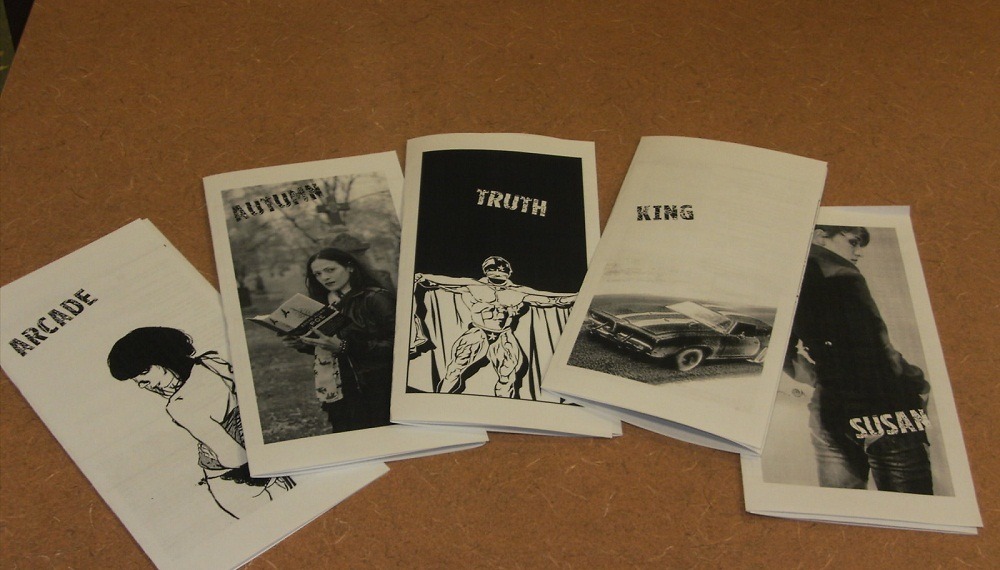
    I can make my own pdfs now, which means that I've turned my response to the Solace into a trifold pdf: the Wolf

    I also made a Basic Moves playbook that includes the descriptions for the advanced versions of the basic moves, I called the file Advanced Moves

    Another member of the AW community is really active and always posting his ideas to the google+ forum, and I took his concept of character with a pack of animals into a pdf: the Wrangler

    The MC of my Sunday game wrote up notes for a Boy And His Dog playbook, but when she posted her ideas to the Barf Forth Apocalypica forums it seems the conversation derailed away from her ideas and another user supplanted a lot of his own ideas, then somebody else turned that into a playbook. I asked Willow for her notes and I put what she had into a new version of the playbook: the Boy & His Dog

    I asked Johnstone Metzger if I could get a copy of the Heralds of Hell playbooks, mainly because I was curious about seeing them and in many forums they were described as print-only, but it turns out he had them in a pdf and he sent them to me. When I asked him if I could turn them into trifolds and distribute them he said "do whatever you want with them" and so I started turning them into playbooks: the Damned, the Haunted, and the Sorcerer

    Finally, the author of the Wrangler and I worked together to make a different kind of playbook: the Beast Master

    All of which have been quietly added to my omnibus page of playbooks.

    It's actually incredibly easy for me to make trifolds. I have a generic playbook file set up and all I have to do is copy-paste text into the boxes. Empty space is the hardest part because it needs to be filled with info boxes for gear and barter, and these usually need to be custom-made for the spaces that the text fills up. But the longest this takes is two hours. Making the portrait that accompanies the playbook can take another one or two hours, depending on the complexity of the image. I'm slowly going through the potential playbooks that are talked about in the forums and turning them into trifolds, but in the meantime I've also made custom character trifolds for my gaming group.

    Friday, February 1, 2013

    Adventure World: notes

    When you play Adventure World, your GM is called the Oracle.

    Why the Oracle? Because an oracle is a predictor and counselor, divining for knowledge from the unknown. An oracle is a guide, not a dictator.

    two 6-sided dice

    Just like Apocalypse World, the Adventure World hack uses 2d6. But the success threshold is 8-11 for partial successes, and 12+ for total success. The maximum a single ability can be raised to is +5. This means there is greater difficulty to achieve complete success in areas a character is not specialized in, but the specialized areas where a character is maxed to +5 have less chances of failure.
    A +3 still misses on a roll of 2 or 3, a +5 only misses on a roll of 2.

    Race separate from class.


    race playbooks
    NAMES Name suggestions come from race, not class
    STATS always balances to zero: one stat at +1 and another at -1
    MOVES get one automatically; extra racial moves become improvements
    GEAR sometimes, not always; gear primarily comes from class
    HX only describes "on other players' turns" effect
    SPECIAL sex move comes from race

    class playbooks
    STATS always balances to +1: two stats at +1 and another at -1
    MOVES get one automatically; extra class moves become improvements
    GEAR gear primarily comes from class
    HX only describes "on your turn" effect
    SPECIAL death move comes from class

    Basic Moves

    These are only slightly changed from the original rules. I'm still toying with the idea of expanding some of the choices by separating the descriptions. I'll probably keep this the way it is though.

    When you face danger, attempt to sneak, or act defensively, roll +Valor.
    When you embark upon a journey, roll +Valor.
    When you threaten someone, roll +Power.
    When you inflict violence against someone, roll +Power.
    When you seduce, charm or manipulate someone, tell them what you want and roll +Moxie.
    When you read a person or examine your environment, roll +Alert.
    When you attempt to discern the unnatural from an object you can touch, roll +Magic. (this is essentially a limited form of Detect Magic / Legend Lore, but the key aspect is that everybody has access to it)
    When you attempt to commune with the shadows, roll +Magic.

    Language Wheels

    One of the things I wanted to add to my Adventure World hack was languages. Old school fantasy RPGs always relied upon languages for communicating properly and some character classes even had abilities for deciphering ancient languages. I wanted to convey the process of learning a language or attempting to translate something into a relatively easy to understand mechanic. It was suggested that I use the countdown clock and I thought this was a capital idea, so I turned what I had written into the Language Wheel.

    When you try to understand speech, roll+moxie. On a 12+, choose 2. On a 8-11, choose 1:
    • you make yourself understood
    • you understand more-or-less what they're saying
    • you don't come off looking like a fool

    When you try to translate script, roll+alert. On a 12+, choose 2. On a 8-11, choose 1:
    • you understand the basic message of the script
    • you translate the script quickly
    • you learn another facet of the language, mark 1 segment of your language wheel

    LANGUAGE WHEELS
    Every time you roll to understand a language you will mark 1 segment of the Language Wheel. Having at least 1 segment in the wheel means that the PCs can communicate simple ideas like "where is food?" or "can I sleep here?" or "do you have flint and steel?" but complex ideas like "can you help me scout this mountain?" or “let me show you how we should ambush those bastards in the valley!” or "don't kill him, he's the only one who knows how to get out of here!" need a roll until the Wheel is completely filled in. Once the Language Wheel is full and one more failed roll occurs the character understands the language and doesn't need to roll anymore, they've learned the Language.

    Health

    Attempting to make a realistic system leads to headaches (see GURPS, see Deadlands). Hit Points are fine.
    Everybody starts with 10. You can get more, but since there is no leveling up, you have to sacrifice potential skill for more health. Armor is still going to work like AW. If you have 4-armor then it prevents 4 points of damage, etc.

    Death Moves

    One of the things I've been toying with is the concept of PC death affecting the other characters. This kind of move would either give a permanent bonus to those who don't die, or a temporary shift of power that lasts for the rest of the session.
    Examples:
    When Obi-Wan Kenobi died: When you die your body disappears and everybody witnessing this gets +1 Valor for the rest of the session.
    When Gandalf died: After you die, you may return at the start of the next session as an angelic version of yourself. You may not take Improvements anymore.
    When Buffy died: When you die everybody else improves examine an environment.
    When Charlie (on LOST) died: When you die tell the MC to reveal a secret, or a secret threat.

    You can kind of see how this works. For actual death moves, the move would be something beneficial but keyed into the character type that is dying. A fighter or barbarian who dies gives everybody else a dot of experience. A thief who dies causes a distraction or reveals a secret as they fall. Stuff like that.

    Extras

    I've tried to come up with a list of "regular" extras that characters might pick up through the course of play. While these are not complete, this is a listing of ones I have already written. I suspect I might end up writing a few that are custom to races.

    Laboratory: Choose which of the following your laboratory includes. Choose 3: a stable, a tower, a well-stocked pantry, a cellar, a private garden, skilled labor (apprentices), a mine of raw materials, a forge, a fortified carriage, carpentry tools, alchemical equipment, gemstones and crystals, a target range, a relic of the ancient past, booby traps.
    When you go into your laboratory and dedicate yourself to making a thing, or to getting to the bottom of some mess, decide what and tell the Oracle. The Oracle will tell you “sure, no problem, but…” and then 1 to 4 of the following:
    • it’s going to take hours/days/weeks/months of work;
    • first you’ll have to get/build/fix/figure out ___;
    • you’re going to need ___ to help you with it;
    • it’s going to cost you a ton of gold;
    • the best you’ll be able to do is a crap version, weak and unreliable;
    • it’s going to mean exposing yourself (plus colleagues) to serious danger;
    • you’re going to have to add ___ to your laboratory first;
    • it’s going to take several/dozens/hundreds of tries;
    • you’re going to have to take ___ apart to do it.
    The Oracle might connect them all with “and,” or might throw in a merciful “or.”
    Once you’ve accomplished the necessaries, you can go ahead and accomplish the thing itself. The Oracle will stat it up, or spill the beans, or whatever it calls for.

    Hideout: By default, your hideout is in a secluded location, with food and lodgings for a half-dozen people for a week (more at a stretch). Then, choose 2:
    • Your hideout is large (lodgings for several dozen)
    • Your hideout is well-stocked (food for a month)
    • Your hideout is hidden and guarded by traps
    • Your hideout is guarded by five loyal retainers (3-damage small band)
    • Your hideout is defensible (3-armor for a band defending it)
    And choose one:
    • Your hideout’s location is well-known (+famous)
    • Your hideout is difficult and dangerous to reach (+hazard)
    • Your hideout is filthy and ill-kept (+disease)
    • You share your hideout with someone you don’t command (+rivalry)

    Musicians: you have two to five musicians that follow you around, write songs about you, and play instruments. At the beginning of the session, roll+music. On a 10+, your band have surplus. On a 7–9, they have surplus, but choose 1 want. On a miss, they have no surplus and are in complete want. If their surplus lists gold, that’s your personal share. These are loyal to you but not fanatical, and they have their own lives apart from you (surplus: 1-gold, music +1, want: desertion). Name them. Characterize them.
    Choose 2:
    • the musicians are dedicated to you. Surplus: +1gold, and replace want: desertion with want: idle.
    • the musicians are educated and worldly. Surplus: +insight.
    • the musicians are dedicated to their craft. +1music.
    • the musicians are joyous and celebratory. Surplus: +party.
    • the musicians are shrewd and frugal. Surplus: +1gold.
    • the musicians are hard-working, no-nonsense. Surplus: +1gold.
    • you travel with a full compliment. Add four more musicians. Surplus: +2gold, Add want: hunger.
    Choose 2:
    • the musicians aren’t really yours, more like you’re theirs. Want: +judgment.
    • the musicians rely entirely on you for their lives and needs. Surplus: -1gold.
    • the musicians are sloppy and simple. -1music.
    • the musicians disdain fashion, luxury and convention. Want: +disease.
    • the musicians disdain law, peace, reason and society. Surplus: +violence.
    • the musicians are decadent and perverse. Want: +savagery.

    Workshop: you have tools and the space to make some kind of craft. Choose 1:
    • leatherworks (projects: clothing, armor; cost: 1 gold; wants: skins, coal)
    • carpentry (projects: furniture, shelter; cost: 2 gold; wants: wood, skins)
    • smithy (projects: armor, weapons; cost: 2 gold; wants: metal, coal)
    • jeweler (projects: rings, necklace; cost: 3 gold; wants: metal, gems)
    During downtime, you may attempt a project provided you have the materials needed by paying the cost. Roll+alert. On a 12+, you make the project in the time allotted and have items worth twice the cost. On a 8-11, you’re lacking in materials and need to fulfill one of your wants before you can finish. Your final project will be worth as much as the cost to build it. On a miss, the project is a disaster and you lose all the materials associated with the project.
    You can take Smithing multiple times, specifying a new craft each time you take it.
    needs work

    Warband: By default, your warband consists of 5 violent bastards with low quality weapons and armor (3-damage band small 2-armor). They are not fanatical or mindless, but they are impressed by you and pretty much do what you say. Then, choose 2:
    • your warband consists of 15 more violent bastards. Size: medium instead of small.
    • your warband’s well-armed. +1damage.
    • your warband’s well-armored. +1armor.
    • your warband will not betray you. +loyal.
    • your warband is well-educated. +insight.
    • your warband will fight to the death. +brave.
    • your warband’s self-sufficient, able to provide for itself by raiding and scavenging. It gets +rich.
    And choose 1:
    • your warband’s weapons are makeshift and crude. It gets -1damage.
    • your warband disdains armor (why?). It gets -2armor.
    • your warband is a pack of undisciplined hyenas. It gets +savage.
    • your warband’s loose-knit, with members coming and going as they choose. Vulnerable: desertion.
    • your warband is in significant debt to someone powerful. Vulnerable: obligation.
    • your warband is filthy and unkempt. Vulnerable: disease.
    • your warband is lax about security and likes to drink and brag. Vulnerable: reprisals.
    • your warband depends entirely upon you for their needs. Vulnerable: poor.

    Any kind of followers who die will not be gradually replaced, but new followers can be acquired by visiting towns and impressing the locals. If mistreated they might leave, but in time you might be able to recruit replacements. Consult your Oracle for details.

    ideas for improvements

    XP buys improvements

    gold

    1 gold will cover a month's living expenses, if your tastes aren't extravagent
    100 silver can be converted to 1 gold

    Wednesday, January 30, 2013

    "You are a failure!"

    Nobody likes to dwell on their past mistakes, so I'm going to give you the opportunity to revel in some of mine. I've fucked up plenty of times as a GM, whether I was having a bad day, or railroading a plotline, or not effectively communicating with the players, there have been plenty of times where I've done something at the gaming table and looked back on it thinking "Why did I do that? What is wrong with me?"

    The empty crypt!
    I ran a fantasy game for a long time where the PCs had set themselves up as pseudo-permanent guests in a castle far off the common trade routes. I had established that before the castle was a farming outpost it had been initially constructed as a prison, and the lower cells had been sealed up. In one particular session there was a big, bad magical field that sprang up out of the castle's ground, however it was invisible and only the resident wizard could see it. (In my notes I had written that this was a pathway to another realm and weird ghostly entities were now squeezing through it.)
    The players decided they needed to know where this thing was coming from and wanted to stop it. Since it wasn't really coming from anywhere I didn't have any information to give them, but fumbling about led them to the blocked off prison cells and in my notes I had an elf ghost laying dormant down there. They spent at least an hour at the table and a couple of days in game time trying unblock the prison pathways and all of my efforts to make the attempts fruitless went unheeded and ignored. Eventually I just gave up at trying to make it hard and said "Look guys, there's nothing down there. Your solution is elsewhere."
    What I should have done: Is run with it. I should have chucked my notes aside and just let them find something causing the rift. It didn't need to be movable, and it didn't need to be indestructible either, but it would have been something to discover that would have made their time worthwhile and it would have given them a new focus.

    The mini-nuke
    I ran a GURPS sci-fi game for about a year where one player had min-maxed his stats starting out so he had tons of money and equipment. He asked if he could purchase a mini-nuke from the Ultra-Tech sourcebook and at first I balked then I re-considered and said "Sure! Why not?" all the while thinking "It doesn't have to be a working mini-nuke." The player would always refer to his mini-nuke as a last ditch weapon that he could use, but at the same time his character kept it secret from all of the other characters. Eventually I got tired of him bringing up it's existence and a psionic entity probed his mind, discovered where it was, and stole it from him. He wasn't pleased.
    What I should have done: Give him a reason to use it. I had already established in-game that a well-funded group of criminal scientists were hiring assassins to take them down. This was a planet-hopping science fiction campaign, so I could have easily put them in a situation where they were outgunned by other starships chasing them and he could have finally had an excuse to use his mini-nuke and save the day while destroying all of the enforcers this group was sending after them.

    The poisoned patient
    I ran another sci-fi game, a much shorter one, where the PCs had just given refuge to a dissident from a cult. Before they could leave, another cultist had poisoned the defector and after they left the planet the poison began to take hold. His condition became noticeable when he began to suffer from mania which eventually turned violent. The PCs sedated him and put him in sick bay hoping to rid him of the toxins coursing through his system. He was an unimportant character and I narrated that he was dead, but one of the characters was a medic and wanted the opportunity to save him. I allowed a dice roll and success after success kept the patient going. I think we rolled the dice six times and he just wouldn't die, until I made a Luck check for bringing him out of stasis and he finally bit the dust. In that moment I forgot about serving the needs of the players and was focusing on trying to get the game back to where I wanted it to go.
    What I should have done: Just let the bastard live. He wasn't important in the grand scheme of things and could have easily just disembarked the ship at the next port, but I was being short sighted, because the character could have also become a reliable NPC contact for the group later on.

    Nothing happened today
    I ran a Deadlands game once where I planned out all of the events surrounding the players and I would write then print off the front page of the local paper to show them all what was happening in their town. Except I never had anything interacting with the players, and I relied upon them to interact with the town and create drama. I realized a little too late how boring that could be.
    What I should have done: Let the players be the stars, not the spectators. This was an early attempt at GMing and at that time I believed I had to create elaborate stories and backstories for all of my NPCs and the events around them. Instead of letting it fall out of the playing organically, I had written a script which the players could interact with but really couldn't change anything. In that sense, I was merely showing off.

    Roll to climb a rock
    One of my very first experiences as a GM, I had people rolling dice for everything. There was a chase in a tunnel and the PCs had to climb over a rock to keep going. I made them roll dice, and when somebody failed their pursuers caught up to them and I suddenly didn't know what to do because they were being chased by violent guys who could easily kill them. The whole session lost steam halfway through because I broke out the dice for, literally, everything.
    What I should have done: Not be so nervous. I really wanted to impress everybody at the table and I could tell I was making the game exciting, but the excitement of the players fed into my nervousness and my brain just started to shut down. If I called for a dice roll then that meant I didn't have to think, until I was faced with the ultimate worst possible result of one of those dice rolls.

    After I first started GMing, I ran a D&D game for several years, but for the life of me I can't think of anything specific I did that was bad. But from what I can remember, I can't imagine it was a very fun game and I don't understand why any of those guys played with me for as long as they did. At least in high school when I ran a game there was seemingly nobody else to play with.

    The 5 Rules for GMing

    I apologize that these have a strong fantasy flavor to them. I initially wrote all of this in a series of emails as advice to fellow GMs who run D&D or OSR games. I've rewritten it, tried to polish it up, and put it into a concrete list of rules that I can quote later primarily for my own edification and use. I've been GMing wrong for a long time, and I think I'm finally beginning to understand how a good GM operates.

    #1: The rules, and the dice, are to be ignored whenever it is necessary.
    When Joseph Goodman wrote "Let the rules bend to you not the other way around" he encapsulated a key philosophy in playing a tabletop RPG without actually giving it lip service. We're all here to have fun. If the rules get in the way of that fun, then they deserve to be ignored. Rolling for everything is bad too, because sometimes a character should just succeed. Every time somebody wants to do something, ask yourself "Would failure here be fun for them?" and if the answer is "No." then skip the roll. Climbing a tree to get a better view of the forest? Navigating the southern coastline? Studying to find a vital clue? Or even, examining the mountain range to find the best place to camp for the night and avoid an ambush? Ignore the dice and just get on with the game.

    #2: No adventure survives contact with the players.
    An oldie but a goodie. Don't construct an elaborate meta-plot meant to be uncovered over the course of a campaign, just chuck it all out the window. You might start with an initial plotline or story or threat, but if the players are smart enough to come up with something that seems like a reasonable (or better) explanation for everything you've already established then just change things up mid-game and use a twisted version of what they think up. No heavy lifting necessary, and the players will think they're brilliant for guessing something that turned out to be more or less "correct." Don't ever expect the players to follow your path or go for your bait either. Their ingenuity in the face of conflict should drive the story, not a list of bullet points you wrote five weeks before they all made characters.

    #3: No lying, motherfucker!
    You can have deceitful contacts, betraying employers, and allies with their own greater self interests. But the players deserve honesty. You can have secrets, but you can't have tricks. You can have traps, but their spider-sense should be tingling. You can have double-crosses, but they should know they couldn't trust that back-stabbing bastard! Always drop plenty of clues about the real intentions of your characters, you don't need to tell players outright what you're planning, but they should have plenty of opportunities to notice that something smells fishy.

    #4: Don't make hard decisions when the players or the dice could do it for you.
    You really want that noble to survive this assassination attempt. You don't want the players to fell your boss monster quite so quickly. You don't want the players following those gypsies to the west because what you have planned lies in the east. We've all felt these moments as GMs where what we have planned, or what we expect, is not happening the way we would like. Our story is being twisted, our awesome NPC is about to be killed, or our plot points are being ignored. Close your eyes, take a deep breath, now abandon those feelings. They're wrong. We're not sitting at this table to hear your story, or reach the foregone conclusion that you've decided between sessions, we're here to create a story together. In those moments you need to sit back and let the players' actions dictate the course of the story. Your prized NPC may die, but they have family that might seek revenge, don't they? Your dragon has just been killed and his treasure plundered, but nothing paints a target on somebody's back like spending a lot of money, right? If you abandon the story too much the action will begin to falter, and if the players aren't decisively plotting a course for themselves then you'll need to break out the dice and start cracking some skulls.

    #5: Be a fan of the players' characters.
    This comes from D. Vincent Baker word for word. Your job as a GM is not to be adversarial, your job is to make things fun and interesting. You can do this more effectively by giving them difficult decisions and adding consequences to their actions than you can by simply challenging them with dice rolls or taking away their stuff. Let the characters bask in glory and never deny them the success they've earned. When they've changed the landscape through their actions let those changes radiate out into the world. You're not playing from an "official campaign guide" so you can let your world adapt to the PCs in positive ways when they succeed and in worse ways when they fail, and even if you were using some "official campaign guide" that thing is just a guide not a bible. Put the fucking thing down once in a while! When the PCs do something important then every threat should be seeing them with fresh eyes, either appraising their new strengths and giving themselves pause or finding respect in their accomplishments and forgiving past grievances. Your world should be a dangerous place, but they don't need you constantly headhunting them too.

    This is a personal preference more than a rule, and doesn't really need to be heeded
    #6: Magic is unpredictably strange and deadly, let it be both without being crippling.
    This is pretty self-explanatory, even if it is a longer rule, and a little confusing. Magic is the ultimate hammer for any nail, but it's a hammer that can only ever be swung wildly. If a player uses magic, they should get what they expect out of it, sometimes more than they want or expect. Fireballs should incinerate things, and set nearby objects aflame, and little contrails of sparks should shoot off of metal objects. IT'S A FUCKING FIREBALL! EXPLODE SOME SHIT WITH IT! Detect Magic should detect magic but maybe it's also detecting cheese around here, or detecting the last time somebody bathed. Invisibility seems to work but any nearby dogs end up curiously following them around. WARNING: If you're playing some version of D&D, magic is a scientific formula that players will rely upon with the precision of a calculator. Just tell them they're in a wild magic zone where weird things happen or some bullshit explanation like that. You might end up running an entire adventure where the PCs just try to find out where all of the wild magic zones begin and end, and man, if that happens, you should look at that as an opportunity to constantly fuck with them!

    Tuesday, January 29, 2013

    Superworld! (notes)

    I had this idea last weekend of a superhero hack for Apocalypse World. Something that included the classic archtype characters as playbooks, and as my brain percolated I started getting elaborate in some of the details. Now, here is my attempt to get some of them down.

    no changing types: you pick the Psi then you are stuck playing a Psi
    more than one type, but no more than three: the first Psi is as written, the second Psi has reduced abilities, the third Psi has bad abilities
    choices of powers, but few new powers: starting out you get one power, then choose one or two powers, then take a disadvantage, only one improvement gives a new power
    no sex moves: instead these would be replaced with tag team powers
    roll 3d10: roll three and keep one, 10s explode, 6-9 is a partial success, 10+ is a success, 16+ is a power surge

    TYPES
    the Brick:
    the hulk/tick type, super strong, invulnerable, stupid/socially incompetent or prone to anger
    the Psi: the professor X type, telepathy or cosmic awareness, crippled or secret criminal
    the Quirk: the spider-man/daredevil/robin type, multiple choice transport (swinging, wall-crawling, acrobatics, leaping), paralysis, evasion, combat abilities, damage resistant, danger sense, teenager or social outcast
    the Speedster: the flash/quicksilver type, super-speed, fighter or scientist, rapid aging or family secrets
    the Paragon: the superman/captain marvel type, gets flight, invulnerability or energy manipulation, extreme vulnerability, oath or alien
    the Mystic: magic-user, summons allies or warps perceptions, performs rituals, teleportation, often vulnerable or has a family
    the Suit: the iron man/steel type, suit of armor, flight, weapons, public figure or stolen tech

    Secret Santicore 2012

    I participated in the Secret Santicore of 2012.

    The article I requested, "something involving time travel. Nothing fancy, but think creepy and strange ala Twilight Zone, not smarmy and cute like Doctor Who," can be seen by CLICKING HERE.

    The article I wrote, "a d100 table of off-the wall transformations which might take place when drinking a polymorph potion which has spoiled or been made incorrectly," can be seen by CLICKING HERE.

    Sunday, January 27, 2013

    my first MCing session

    I ran my first one-shot of Apocalypse World this weekend for a group that normally plays D&D 3rd edition (almost religiously). I sent them the playbooks I was willing to use and asked them to decide what they wanted to be before I got there, and then wrote generic love letters for each chosen playbook.

    When I first sat down to make characters with them, the biggest thing was that they didn't understand Hx. In trying to explain it one player in particular kept trying to push for ways of maximizing their Hx, and seemed really confused that you could choose to give somebody's Hx a -1. Going around the table for Hx was also a sticky point because everybody thought it worked differently. I eventually walked them through it step by step and I think it clicked for them.

    Another player was confused as to why he could choose to have armor or not.
    "Why wouldn't I wear armor?"
    "Because you wouldn't like it, maybe? Or it gets in the way? It's not your style?"
    "That seems stupid to not wear armor."
    *shrug "That's cool."
    (It didn't occur to me to say "Well, an Angel who wears armor might not be trusted by everybody he meets." but then he also failed every healing roll he made, so he was more like an angel of death.)

    They all asked about the countdown clocks, and after I explained how they work they all seemed a bit upset that they only had 6 hit points effectively. I told them "It's really hard to die. In the game I'm playing we had a building fall on a character at the end of a gunfight and he's still alive." This seemed to mollify them temporarily, and by the time we started playing they had forgotten it completely.

    We ended up with:
    a Skinner named Dusk who specialized in being a con artist and tricking people out of their money and food, everybody else thinks she's a stripper though nobody can ever remember seeing her strip
    an Angel named Doc (not his real name) who really liked to drink booze and received his Angel Kit from his mother
    a Maestro'd named Francois who ran a restaurant and brothel, the Mouton Noir, out of an old,huge dilapidated bookstore
    a Grotesque named Blakesly who ran around town with a musician, performing dances with her drones alongside the music
    and a Savvyhead named Oliver, who had been set up in the hold of Lynnback for five years now and was an often relied upon member of the community

    I went around the table and found out who these people were.
    Oliver was hit on by an enforcer named Foster but she turned him down cold.
    Foster found Doc examining a break-in and was about to arrest him, but Doc's lack of tools slowed him up.
    Blakesly shared some of her food with an old crone and some kid started a fight with her about it.
    Dusk defused the situation, and she and Francois spent some time distracting enforcers who were insistent on searching the Mouton Noir.
    Almost everybody fell in love or lust with Dusk.

    Then I took a little break, treating it like the end of a session. The Skinner was the most active with everybody else and she had set up two of her Hx at +3, which means when everybody said she knew them better she got two experience. When I came back from my break, I handed out the love letters and instructed them to re-highlight stats as if this were a new session.

    It turns out Francois the Maestro'd had the highest Hx with everybody and he got a little overwhelmed. Most everybody highlighted the best stat they had, so I tried to push for Doc and Dusk to fight a little with Hard, and everybody else I either marked Sharp or Cool.

    Doc had been invited to have dinner with the leader of their hold. I went around the table asking the players "What's his name?" "What does he look like?" "Does he have a family?" "Why does he keep so many enforcers around his mansion?" and got some great answers. Rosebottom is a slovenly and overweight guy with a bald head and a scarred face, he doesn't have a family because everybody thinks they got killed when he set this place up, or maybe he killed them, but he's paranoid and protective of his house, he keeps the guards running around 24-7 because he doesn't like unexpected visitors.

    Dusk was invited to this dinner as the entertainment and she fumbled around trying to keep the focus off of her because she didn't want to have to dance for Rosebottom or any of his enforcers. Doc was keeping an eye out for Foster since they had bad blood but he wasn't around. Odd that. At the end of the festivities Rosebottom told Doc there was a patient he needed seeing to and they took Doc downstairs into the basement, where the entrance to an underground mine was hidden. In the mine, Rosebottom had slaves digging up some sort of coal that electrified the air around it. One of the slaves had these weird white lines along his skin, almost like they were scars but growing out from the inside of his body. Doc sat down to work on the patient.

    Dusk meanwhile was rousing Francois because she knew Doc was being held prisoner. While Dusk was trying to convince Francois that they needed to go up and save Doc, a fight was brewing at the entrance to the Mouton Noir. When I asked Francois "What do you do?" he said "Nothing. This is why I hired Rum to be the doorman, he can handle it."
    "Cool. You hear a gunshot and when you look up Rum is flat out on the floor, looks like his face is gone."

    Blakesly's musician friend, Krin, was fighting with Rum about their unborn baby and didn't shine to his dismissive attitude towards her, and Rum had just split her face open. (None of the players ever learned this because they never took the time to properly interrogate her.) She was now losing blood and it looked like her lips and nose were permanently fucked. Dusk and Francois disarmed Krin, and Blakesly insisted on taking her to Doc, at this point also learning that Dusk thought he was being held prisoner. They took Krin to Oliver, because they knew she had an infirmary in her workspace, and after patching up a now-unconscious Krin they headed back to Rosebottom's mansion. (There was some confusion about Krin because I had named another NPC Crine, something I'll have to keep better track of in the future.)

    Dusk had hypnotized one of the guards earlier and was now calling favors. They were let into the mansion and found most of the guards sleeping off the party from earlier. In the basement, they found Doc being guarded by an enforcer who was also in love with Dusk (she had been busy). They managed to get him out of the building just as a rival gang was rolling into town and shooting the place up. I ended with the Savvyhead acting under fire and trying to escape, she rolled an 8. Because nobody got hurt throughout the whole game, I asked "You can either take a bullet in the back as you're fleeing, or you'll have to kill one of Rosebottom's guards with your crowbar in order to sneak away." She chose to kill the enforcer.

    If we could have kept going with these characters I was left with a lot of great leads.
    Foster is hurt really bad in the fighting and Doc is called upon to heal him.
    It's pretty obvious that Oliver killed one of Rosebottom's guards and they would be pissed about that.
    Dusk has left a trail of broken hearts and compromised enforcers, who are all going to be scratching their heads about why they suddenly don't feel so loyal (read as: hypnotized) anymore.
    Blakesly managed to keep her head down, but she was seen along with the rest of them wen they were all over Rosebottom's place, so that makes her an accomplice in the enforcers' eyes.
    Francois's entourage were basically escorting them all to go get Doc and Rosebottom saw them all. Like I said, he's going to be pissed.

    All in all, everybody had a great time. And it's always a little scary to play with new people but refreshing to play with people who are eager to play.

    Friday, January 18, 2013

    Initiative vs. Reaction

    The real beauty of Apocalypse World, and the thing that has most changed my outlook, is that there's no initiative. Since the GM never rolls dice but only reacts to players' rolls, initiative is a non-entity. If somebody declares they want to do something, they simply do it, unless asked to roll for it. Then they either succeed and do it, partially succeed and get a little fuckery on the side, or they fail and the GM gets to make their own move against the PC. There's no binary of succeed/failure. I may actually adopt this GMing technique for every game I run from now on, because now I can't shake the feeling that initiative is a cudgel used to parse the story into a sequence of actions that don't really make any sense.

    The "GM only reacts to rolls" style would seem to massage what a player wants to do with their character as well. If a player wanted to attack somebody and the GM called for initiative, what would happen if he rolled the lowest? An entire turn of combat would happen around him in reaction to an attack he had yet to make. The narrative of the story is now forced into "Everybody could tell Baker was about to attack Gogol, and so everybody started shooting around Baker, leaving him and his gun useless." when the story should be "Baker pulled his gun and shot Gogol in the face, and that's when all hell broke loose..."

    Friday, December 14, 2012

    ALL of the Playbooks

    If you want to contact me to share a new playbook, inform me of a dead link, or anything about this page, put "AW page" in the subject heading and send it to nerdwerds AT gmail dot com

    Keep checking back! Last updates...

    December, 2021 = moved my own playbooks to itch
    November 22, 2021 = I'm getting rid of all of the non-AW links on this page. I gave up following all of the individual PbtA hacks a long time ago, and it's not my place to support games that in most cases I know nothing about. This page has gotten entirely too long and bloated, and it's already quite large with all of the playbooks that have been made! (also, I haven't been playing AW for several years, but I am set to start a new game soon, and hopefully that will push me to finish converting more of the 1st edition playbooks into 2nd edition.)
    September 29, 2021 = it's been awhile! Google Drive has updated their service twice over and it changed all of the sharing options on the pdfs, I want to find a new place to host the pdfs and until then trying to download a pdf requires me to "approve" the download, sorry about this, I'll try to get it fixed soon
    October 1, 2017 = Added the Dog playbook, removed 1st edition version
    August 31, 2017 = Added flipbook-style playbook links

    If you download anything from this page, please donate a little money to Doctors Without Borders. Thanks!

    2nd edition!
    "old school" legal-size playbooks
    link to download
    includes Angel, Battlebabe, Brainer, Chopper, Driver, Gunlugger, Hardholder, Hocus, Maestro d', Savvyhead, Skinner, Child-Thing, Faceless, News, Quarantine, Show, Waterbearer, and Landfall Marine


    Unnofficial Playbooks

    The Beemaster, by Zach Staads
    In olden days, folks told tales of fantastic places and bold adventurers. Some fought with steel, some with smarts, and some through furred, scaled, or feathered friends, animalistic companions bold and loyal.

    Aint no one telling fantastic tales any more, but the real weird makes up for it; you might not have a direwolf or a chimera, but you've sure got a hell of a lot of bees.


    Inspired by Drawfee and the Beeforged fan class from 5th edition D&D.

    legal size


    The Damned, by Johnstone Metzger
    The apocalypse came and went, now its leftover terrors lie across the land like a plague of fear. The weak cower in their hovels, content to eke out a meager life, praying that demons in the guise of men will pass them over. For those demons have no fears, they refuse to kneel, they want your crowns. And how will you threaten them from atop your thrones? How can you reason with a fiend when all it knows is hunger?


    Johnstone Metzger once granted me permission to convert his Heralds of Hell playbooks into a legal-size format, and he granted me permission again to revise those same playbooks to the second edition rules for Apocalypse World.

    LINKS
    letter size
    legal size
    full book size


    The Dog, by Patrick Mallah
    Man's best friend.

    If they only knew.


    A playbook for Apocalypse World that puts the player into the role of a psychic dog, heavily inspired by the novella A Boy and His Dog by Harlan Ellison.

    The dog is a telepath, and is supported by their own human companion and/or the other players. If you've ever wanted to play a psychic dog, this is the playbook for you. Warning: you are still just a dog, and all that implies.

    letter size


    The Grotesque, by Avery Adler
    They talk about the apocalypse like it’s a curse. They talk about the apocalypse like it took something from them - the golden age of once upon a time. They talk about the apocalypse like it’s an act of betrayal, perpetrated by some malign entity.

    They talk about the apocalypse as if they don’t realize you’re standing right there.


    Thanks to the generous permission granted by Avery Alder, I have revised the Grotesque playbook to fit with the second edition rules for Apocalypse World, with all new artwork provided by Marie Ann Mallah!

    LINKS
    letter size
    legal size
    full book size


    The Haunted, by Johnstone Metzger
    Everything we have is robbed from graves, from corpses entombed in their own homes, from the dead cities buried under dirt and water, from the past and its memories. Do you think they see you, with their crowpicked eye-holes? Can you hear them speak, with their black and bloated mouths? Yeah, go ahead, son. Brush it off. But there’s more things under these shattered heavens than you think. The dead far outnumber the living now. And I have to wonder: is there still room enough in hell?

    Once upon a time Johnstone Metzger granted me permission to convert his Heralds of Hell playbooks into a legal-size format, and I asked him again for permission to revise those same playbooks to the second edition rules for Apocalypse World, which he granted.

    LINKS
    letter size
    legal size
    full book size


    The Horseman, by Johnstone Metzger
    Those seals are broken and the end has come.
    Seems like we didn't all get the message, huh?
    Well, somebody has to break the bad news to the fools gone deaf.
    Better be one tough sonofabitch though.
    These motherfuckers are likely to kill the messenger.


    Johnstone Metzger once granted me permission to convert his Heralds of Hell playbooks into a legal-size format, and now he has granted me permission again to revise those same playbooks to the second edition rules for Apocalypse World.


    The Red Shirt, by Patrick Mallah
    They say some people were born to lead. They weren't talking about you.

    The red shirt is a henchman to someone else's agenda, an expendable but not forgettable character. Play a red shirt if you want to be a support character. Warning: prepare to die, but give yourself permission to change allegiances if you need to.


    letter size


    The Unstitched, by Patrick Mallah
    You're on a crusade to save your home, you've stepped sideways through the maelstrom to fulfill your duty, only to find yourself dancing with death. You're here now, unstuck from your own time, and you know that all of this happened already, more or less.

    An ingratiating infiltrator who knows too much, struggling to find their own peace. Play an unstitched if you want to have access to the most dangerous knowledge about anyone else, or anywhen. Warning: failing your mission from the future can seriously change your plans, unless that IS your plan.


    letter size


    The Wolf, by Patrick Mallah
    The world is a dangerous place filled with smoke and mirrors, it's a steaming pile of crap where others bicker and fight over meaningless twaddle. They circle each other like dogs, waiting to bite the closest friend with a leg up. You're in this world too, but you see through the smoke, you're above the crap, and you have the leash. You just have to teach them who's really in charge.

    The wolf is a villain. It gives a player the opportunity to be an additional threat impulse, but still has to contend with threats the MC throws at them. Play a wolf if you want to stir up shit and start trouble. Warning: you will be considered a threat and a nuisance by everybody else.


    letter size


    LINKS
    letter size
    legal size
    full book size


    The Last Child, by Johnstone Metzger
    We knew we’d never live enough to grow old, but our children never even grow up. Between cannibals, plague and the black wind howling in our minds, the souls of our young are snatched from our homes nearly every day.

    Except for that one, the youngest. The last one born, who looks at you like they say the sun used to, before all of this. Don’t speak of kill or be killed, this one has other means, so strange to see. Is this child really the last of us, or the first of something else?


    Johnstone Metzger once granted me permission to convert his Heralds of Hell playbooks into a legal-size format, and now he has granted me permission again to revise those same playbooks to the second edition rules for Apocalypse World.

    LINKS
    letter size
    legal size
    full book size


    1st edition!
    Apocalypse World - tri-fold pdfs of player-made Playbooks

    the Agent, by Madu - the 3rd version, but if the pdf doesn't work for you HERE is a link to the 1st version

    this playbook was originally posted to the AW forum HERE

    the Beast Master, by Tim Franzke & Patrick Mallah


    the Behemoth (original)
    , by J. Walton (alpha, possibly subject to change)

    the Behemoth (trifold), by J. Walton (alpha, possibly subject to change)

    the Boy and his Dog, by Dragonraven (seems incomplete)

    the Boy & His Dog, by Willow Palecek

    the Coot, by Dan Hull

    the Damned, one of the Heralds of Hell playbooks, by Johnstone Metzger

    Basically a vampire but they feed on sin, they get close to people find the worst ones then feed their hunger. If you want to be sneaky and have moral ambiguity, play a Damned. Warning: your hunger dominates everything you do, and it is also your greatest sin

    the Feral Kid, by Mike Sands

    the Giant & the Kid, by Davide

    the Grotesque, by Avery Mcdaldno - follow instructions at the link, IT'S WORTH IT!

    Basically a mutant. Unpredictable and alien, the Grotesque is sometimes defined by their mutations but they also have something good to offer the community that accepts them. If you want to be a capital-W weird outsider, then play a Grotesque. Warning: being grotesque doesn't make you a threat, but it does make threats zero in on you

    the Haunted, one of the Heralds of Hell playbooks, by Johnstone Metzger

    the Horseman, one of the Heralds of Hell playbooks, by Johnstone Metzger

    the Juggernaut, by Mike Sands

    the Kid, author unknown, based on Mike Sands' the Feral Kid

    the Last Child, one of the Heralds of Hell playbooks, by Johnstone Metzger

    the Man in the Box, a not very serious playbook by Yragaël Malbos

    the Orphan, by Jamie Fristrom & Matt Strickling

    the Radio, by Monte Lin

    the Rat-Pack, by Gerald C.

    the Ruin Runner, by Jeff Russell

    the Scholar, by dheeney


    the Shieldbearer
    , by Markus Öhman

    Basically a sheriff. They exude authority and people listen to them. If you want to push people around just by being canny and smart, play a Shieldbearer. Warning: by setting yourself up as the authority who can muscle into anybody's shit, and everybody will be coming to you looking for help with their shit

    the Shieldbearer - Officer Dangle artwork, by Markus Öhman

    the Sorceror, one of the Heralds of Hell playbooks, by Johnstone Metzger

    the Spectacle, by Sean Musgrave

    Basically a gladiator. They're decent fighters all on their own, but mostly for show and adulation. If you want people to love you and still be a badass, play a Spectacle. Warning: being in the limelight is not always the best place to be, and fans can also be fickle if they feel mistreated

    the Synthetic, by Nathan Roberts (noofy)

    the Tribal, original artwork, by Dragonraven

    the Tribal, by Dragonraven

    the Turncoat, by Nick Doyle

    the Witch, by Christopher Weeks

    the Wolf, by Patrick Mallah

    Warning: you will be considered a threat and a nuisance by everybody else

    the Wrangler, by Tim Franzke

    Basically an animal handler. They own a pack of animals and have a strange connection to them, which means security, happiness, and peace, as long as your pack is fed and alive. If you want to do awesome and weird things and still keep others at a distance, play a Wrangler. Warning: your pack is awesome, but you’ll be at a pretty significant disadvantage when they aren’t around, plus people will think you smell funny


    Apocalypse World - Expansion Playbooks
  • the Broodmother - a Brainer expansion, by Jonathan Walton
  • the Catalyst - a Battlebabe expansion, by Jonathan Walton
  • the Devoted - a Brainer expansion, by Dylan Boates
  • the Fallen - a Quarantine expansion, by Jonathan Walton
  • the Living God - a Hocus expansion, by Johnstone Metzger
  • the Loner - a Gunlugger expansion, by Jonathan Walton
  • the Maelstrom Incarnate - a universal expansion, by Joshua Bailey
  • The Mendicant - a Touchstone expansion, by Jonathan Walton
  • the Valkyrie - a Battlebabe expansion, by Jonathan Walton
  • the Witch King - a Hocus expansion, by Ben Wray
  • the Wurm - a Hoarder expansion, by Jonathan Walton

    Apocalypse World - Party Favors
  • Advanced Moves - basic moves playbooks with the advanced versions of the moves added into their descriptions
  • The Afterborn - an MC and player resource for role-playing young adults in Apocalypse World, by Jonathan Walton
  • Blank Cards - for Customs Moves, +1s, and Mysteries, by Patrick Mallah
  • Blood & Guts - an alternative to and more detailed version of the Harm move, by Simon C.
  • generic playbook - a Scribus file for creating your own trifold playbooks
  • Harm Moves - alternate or extra harm moves, by Paul Taliesin
  • the 11 Core Playbooks + Moves - the core playbooks and pamphlets as single-page sheets, by John Harper
  • MC Toolkit - random settlements, NPCs, hazards, etc., by Michael Bay
  • NPC Generator
  • Playbook Template
  • Supplemental - a trifold containing information from the Mysteries and Walkingsuit supplementals
  • What is Apocalypse World? - an informational brochure for introducing new players to the game

    Apocalypse World - downloads or forum posts where a new playbook is described but no tri-fold pdf exists (yet)
  • the Abacus
  • the Firebug
  • the Hound
  • the Revenant
  • the Swashbuckler
  • the Transmitter
  • the Traveller
  • the Wildcard


    ORIGINAL POST
    Many of the player-created playbooks for Apocalypse World are hard to track down, and that's kind of annoying. I'm actually surprised at how many comments I've seen online from people saying "I don't have that one" or "I only have these."
    It looks like about a year ago there was this trading community happening with a handful of people on a few forums, probably because there was no single place to upload files to, but as somebody who is relatively new to Apocalypse World it feels like there are players hoarding playbooks and not sharing them with the rest of us who are late to the party, and that attitude seems really childish.
    When I do searches for playbooks the first page almost always links back to multiple forums where one person is spam-asking for the same playbooks over and over again, yet he refuses to share what he's acquired unless somebody else trades him something new. Today he offered to sell me all of the playbooks he's accumulated for $15. So, you know, if you wrote a playbook that you intended to share with other players there's one guy out there trying to profit from your work without sharing the profit with you. In contrast, the stuff that I spent the last few weeks working on I make publicly available on my blog for anybody to use.
    I feel that this whole trading and keeping it hard to find attitude also runs counter to the spirit of encouragement D. Vincent Baker wrote into the game by asking people to hack the game and make it their own. I think there needs to be a unified place for those who've contributed to AW, even in a small way, to share their work and get recognition for it. The Barf Forth Apocalyptica forums are difficult to navigate at times, there isn't a list of links to others' work, and there isn't a single sticky-ed thread that lists all of the great work that's come out of the community.
    I'm making this post in the hopes that other people with player-made custom playbooks will upload their work to the internet and share their work with the rest of us. Here are links or instructions for getting all of the playbooks I've managed to find online. (If I know who wrote it, I also credit them.)

    UPDATED, November 2013
    When I first started this page I thought there were only about a dozen playbooks that had been made by other players. I'm truly surprised at the abundance of work that has been done, the shared enthusiasm so many people hold for the Apocalypse World rules, and the generosity so many of the creators of these links have shared. There are also TONS of hacks!

    edit edit edit

  • Thursday, December 13, 2012

    Adventure World: of elves and regents

    Okay, I'm just going to put this out there: I don't like elves. The fact that they're wedged into every setting as these mysterious, nearly-immortal beings with access to ancient and otherworldly magics and then a player is allowed to just take one as a character seems dumb. If the elves are awesome then the player's character should be equally awesome, which signifies one of two things:
    1) that elf character is not awesome and therefore elves are dumb
    2) that player just wants to play an awesome character and wants to fast track it with an elf, which is dumb
    I'll eventually sit down and write up an elf playbook for my Adventure World hack, but right now I have no interest in it. It feels like a chore.

    Chalk it up to personal experience but I've only seen two players choose an elf in any game I've run before.
    One was a player with no imagination, and every character he played was an elven fighter-mage. As a fellow player, it was kind of annoying because he was always just playing the same guy no matter what happened.
    The other player used his status as an elf to halt the adventure. I was GMing the classic GDQ1-7 series of modules and when we got to the first drow section he said "Nope, these guys are elves, I'm leaving."
    Soured, doubly so.

    And as for the Regent? I'm not going to post the stats here, because 95% of the playbook is just taken from the Hardholder playbook. Leadership and Wealth play off of Valor (as opposed to Power), so that starting stats are:

    STATS
    • Valor+2 Power=0 Alert=0 Moxie+1 Magic=0
    • Valor+2 Power+1 Alert+1 Moxie-1 Magic=0
    • Valor+2 Power+1 Alert-1 Moxie+1 Magic=0
    • Valor+2 Power=0 Alert+1 Moxie+1 Magic-1

    And the
    REGENT SPECIAL
    If another character swears fealty to you, they immediately change their sheet to say Hx+3 with you. At your option, you mark +1Hx with them at the start of every session. If they ever break their fealty, you mark experience and they can never be trusted by you ever again, change their sheet to say Hx-3 with you and it will never change from this point forward.
    When another character does what you say and they haven’t sworn fealty to you, you get +1Hx with them.

    I thought about giving the Regent playbook a Bloodline from Birthright, but that might dramatically alter the playbook. That's a little too much work for me right now, I want to focus on getting the basics of the game down now and tweak the playbooks as needed.

    That's about it.

    ADDED: A friend of mine thought that Regent special was too powerful, saying "Why not just order all non-vassals to do what they were going to anyway?"
    I think intention is important for this kind of move, plus if the fiction doesn't support it than common sense dictates that that wouldn't work. Right? Here are a few examples:

    #1:
    Klepto (a thief):
    I failed to pick Pluto's pocket.
    Pluto (a warrior): I punch Klepto in the face
    Bitch-trog (a regent): I command Pluto to attack Klepto
    MC: Um... Pluto was already going to punch Klepto.
    Bitch-trog: Yeah, but now I'll get History.
    MC: No you won't! He was going to punch him before you told him to, stop being such a bitch Bitch-trog!
    Bitch-trog: Awwww!

    #2:
    Bitch-trog:
    I command Pluto to attack Klepto
    Pluto: I'm not going to do that!
    Klepto: Well, I *did* steal your gold.
    Pluto: You what?! I punch Klepto in the face!
    Bitch-trog: Yay! I get History!
    MC: Um... no you don't. He's punching Klepto because he stole, not because you told him too.
    Bitch-trog: Awww!

    #3:
    Bitch-trog:
    I command Pluto to attack Klepto
    Pluto: Yeah, why not? I stab Klepto in the face with my knife.
    Klepto: What?
    Bitch-trog: Yay, I get History!
    MC: Yes. Yes you do Bitch-trog.

    Wednesday, December 12, 2012

    Adventure World: the Dwarf

    Introducing THE DWARF

    NAME
    Azag, Bain, Dalin, Durin, Gimin, Khaz, Nogre, Telchar, Thorli
    Akrip, Azduk, Kilild, Nalre, Nodred, Nurre, Ovbryn, Vulthra, Yurun

    STATS
    Choose one set:
    • Valor+1 Power+2 Moxie-1 Alert+2 Magic-2
    • Valor=0 Power+2 Moxie+1 Alert=0 Magic=0
    • Valor+1 Power+2 Moxie=0 Alert+1 Magic-1
    • Valor+1 Power+2 Moxie=0 Alert+1 Magic-1

    DWARF MOVES
    You get this 1:

    Stoneheart: when you come within melee range of a stone structure or any kind of stonework, it’s as if you examined the environment and rolled a 10. You notice unusual stonework, such as sliding walls, stonework traps, new construction (even when built to match the old), unsafe stone surfaces, shaky stone ceilings, and the like. As long as it’s made of stone or rock, you can ask questions as if you rolled a 10. Something that isn’t stone but that is disguised as stone is instantly recognizable as NOT-stone, but that is all you know until you examine the environment as normal. You can also intuit depth, and always know exactly how far underground you are and which way is up.

    Then choose 2:

    Commander: when you help or interfere with someone, roll+power instead of roll+Hx.

    Know the Land: you never get lost in the wilderness, and you avoid all natural hazards, such as quicksand, rockslides or foul weather.

    Master Your Craft: any project you finish in your workshop is worth +1gold.

    Never Run Away: if you go straight into danger without knowing what you’re up against, you get +1armor. If you happen to be leading a warband or followers, they get +1armor too.

    Never Trust Magic: you get +1ongoing when you defy magical danger. All uses of magic on you suffer -1ongoing or +1armor, depending on what was used the MC will declare where the penalty falls (magical healing would suffer -1 to the roll or the effect, +1armor would apply to a spell but not a magical weapon, etc.)

    Stout Hands and a Solid Swing: when wielding a 2-handed melee weapon you get +1armor, when wielding an axe of some kind you deal +1damage, and yes you get both if you’re wielding a 2-handed axe.

    Venom in Your Blood: you cannot be poisoned. You don’t get drunk either.

    Workshop: you have tools and the space to make some kind of craft. Choose 1:
    • carpentry (projects: furniture, shelter; cost: 3gold; wants: wood)
    • leatherworks (projects: clothing, armor; cost: 1gold; wants: skins)
    • smithy (projects: armor, weapons; cost: 2gold; wants: metal, coal)
    • jeweler (projects: rings, necklace; cost: 3gold; wants: metal, gems)
    During downtime, you may attempt a project provided you have the materials needed by paying the cost. Roll+alert. On a 10+, you make the project in the time allotted and have items worth twice the cost. On a 7-9, you’re lacking in materials and need to fulfill your want before you can finish. Your final project will be worth as much as the cost to build it. On a miss, the project is a disaster and you lose all the materials associated with the project. You can take this move multiple times, specifying a new craft each time you take it.

    GEAR
    You get:
    • 1 weapon
    • oddments worth 1-gold
    • custom armor

    Choose weapon:
    • bastard sword (4-damage 2-hand melee messy)
    • battleaxe (3-damage 2-hand melee area messy)
    • handaxe (2-damage melee messy) + shield (+1armor)
    • morningstar (3-damage melee) + shield (+1armor)
    • spear (3-damage 2-hand reach)
    • trident (3-damage 2-hand reach)
    • warhammer (3-damage 2-hand melee)

    Custom armor (2-armor and choose 1):
    • ancient (+rare)
    • masterwork (+valuable)
    • military (+military)

    HX
    Everyone introduces their characters by name, look and outlook.
    Take your turn.
    List the other characters’ names.
    Go around again for Hx. On your turn:
    • Choose whether you are by nature generous with your trust and resources, or reserved. If the former, then tell everyone Hx+1. If the latter, then tell everyone Hx=0.
    On the others’ turns, choose 1 or both:
    • One of them has been with you since before. Whatever number that player tells you, give it +1 and write it next to the character’s name.
    Everyone else, whatever number they tell you, write it next to their character’s name.
    At the end, find the character with the highest Hx on your sheet. Ask that player which of your stats is most interesting, and highlight it. The MC will have you highlight a second stat too.

    DWARF SPECIAL
    If you escort another player out of danger and to safety, make something for them, or give them or receive from them a gift worth 1-gold or more, you both mark +1Hx with each other.
    When you die, everybody else marks experience.