
> bonebox = nerdwerds AT gmail
Thursday, February 10, 2022
empathy!

Sunday, February 14, 2021
Luck, it's useless
Every game I've ever played that had a Luck mechanic, a spendable resource used to modify rolls or situations, it's been useless. Primarily because players forget they have it, and even with constant reminders that it exists they grow scared of using a resource they think they may not recover. Even if the Luck mechanic replenishes quickly, I've seen players avoid using it for fear of "wasting" it on the wrong things. The players end up not receiving rewards because they don't use their Luck, it just sits there.
In Dungeon Crawl Classics, Luck is so difficult to recover that players are always reluctant to use it, even when they remember it's there. Playing a halfling can help recover Luck faster, but I've seen players refuse to spend Luck past certain levels, usually just enough that they know they'll recover it all before the next session.

The boldest use of Luck I've seen, and the most egregious, was in a 1st-level adventure. The PCs were sneaking through a cave where a giant was sleeping, there were several traps and enemies meant to increase the risk of waking the giant, and when one player missed a roll and woke the giant another player decided to spend all of their Luck to cast a spell, ensuring that it would be cast at maximum effect.
Similar to Luck, but basically just Luck...
In the many World of Darkness games, Willpower is often used as a boost for rolls. I would argue this is just the same mechanic with a different name and explanation for it's use and recovery. And again, I've played and run a lot of World of Darkness games and players just straight up forget that it's a resource they can use, unless you remind them.
I once built a character in Mage who relied upon using Willpower for a lot of his spellcasting, and the first time I used it the GM informed me that he changed how it worked. It's already an unreliable mechanic and this guy changed it to work almost exactly like Mana. Had he even read the rulebook? Who knows, I left that game after one session because he also introduced Doctor Who as a helpful NPC.
I don't have a resolution for this, I'm just saying Luck is dumb and designers shouldn't include it in their games because it gets neglected, abused, and modified into unrecognizable house rules.
Thursday, May 26, 2016
fighting goons

This was the point where I felt that combat should be taking up less of the game, and XP should not be coming from combat at all.
I've run into this problem a few times in previous games as well. The players just get up to a certain level and low-level challenges become boring and tedious because the enemy simply cannot hurt the characters. There is always a way to make these fights interesting or challenging, but when you're running a module your available palette of colours is quite limited. For example, I could have replaced the gargoyles with something else, but the gargoyles were part of a faction and their existence was predetermined by certain story elements from the module I was running. Changing what the gargoyles were would have changed other elements from the module that I wasn't prepared for, and in the moment I found a different solution. In retrospect, I could have just moved the gargoyles to somewhere else in the dungeon that was more interesting, where the fighter wouldn't be able to box them in and their attacks could be more meaningful.
When faced with a truly one-sided battle with enemies who are not a serious threat I've tried to think of other ways I might dispense with drawn out fight scenes and try to sum up the challenge with a single roll, or a simpler solution. The word "goons" could really be defined by anything that the PCs encounter that they are also willing to kill: low-level bandits, gargoyles, orcs, kobolds, goblins, possessed children, city guards, tax collectors, etc.
THE SINGLE ROLL
Roll as normal vs the enemy's Armor Class
...if the PC hit then the goons are all killed and they never got a hit in
...if the PC misses by a margin of 5 points the goons got a hit in before they all got killed
...if the PC misses by a margin greater then 5 then the goons got a hit in and they aren't all killed
THE NARRATIVE CHOICE
The goons hit one, some, or all of the PCs before they are defeated. Ask the player (or players) to decide one:
• some of the goons survived and ran away, but the characters are not inconvenienced by the fight
• none of the goons got away, but the characters have spent a lot of time here possibly wasting resources
POWERED BY THE APOCALYPSE METHOD
Roll 1d20 and add your attack bonus. On 20+, choose 2. On 11-19, choose 1.
• you kill all of them
• you don't get hit
• you don't get slowed down by them
On a miss, you don't kill any of them, you get hit, and you are most definitely inconvenienced by them.
Tuesday, May 17, 2016
bribery doesn't always work
Some rules allow you to attempt to bribe NPCs and one of the things I've always taken for granted with bribery is that it is not just a matter of how adroitly a character offers a bribe but also whether or not the NPC accepts the bribe. Trying to bribe a paladin to let your criminal character go loose when you're in the wilderness far from a civilized township might be difficult, but is still a lot easier there then bribing that same paladin when you're on a major street in the capital city of his Theological empire. Some people have principles, after all, and try to live by them even when they know they could break their own internal code.

how much?
I dislike bribery in Apocalypse World because it's too easy. If you've got 1 Barter you simply offer to it an NPC for something and they do it, or they give you what you want. That's boring. Failure is always more interesting. Principles can take a back seat to greed, and with a system like Apocalypse World the barter involved is so loosely defined that it doesn't seem like it should always work. If the barter were clean water then maybe that would work all the time but if you've established in your game that barter is comprised of pristine dildos then offering one in exchange for everything makes little to no sense.
I've worked in a hotel as a night auditor for eight years now, and there's this thing that drunk people do where they're looking for food and I'm telling them what pizza places deliver to the hotel at 3 in the morning and they'll hand me the menu I've shown them and say "You order it for me." Imagine a drunk man, he's always white, pushing a menu at you and with an annoyed drawl bordering on belligerence commanding, not asking, you to "Order me a pizza." Fuck you drunky! Order it your goddamn self. I did this for a guest once, and it was such a convoluted game of getting information from the guest and the pizza employee, and relaying it to both of them back and forth that I will never do it ever again. Unless that drunky pays me first.
The size of the bribe is also important. Two gold might convince a guard to look the other way, but two copper is likely to make him clobber you upside the head before you have a chance to increase your offer. How much is a copper worth though? Because if it buys his food for the day, maybe its enough. Most people could probably be bought quite easily, these same people probably work jobs they don't really like in order to take money home to pay bills or buy things they want. Nobody ever really wants to be as a garbage collector, but garbage collectors can potentially make a lot of money and it unskilled labor. Garbage collectors in Long Island can make six figure salaries. I bet you're thinking about becoming a garbage collector now. Shit, I'd do it for less than that! But some people, you couldn't pay them a million dollars to pick up other peoples' trash.
the thin green line
There's a fine line between greed and principles. As a GM, you can ask yourself how much a particular NPC could be bought for, and ask yourself honestly: are they willing to accept the bribe offered? If you can't decide, that's what a roll is for. If the roll is purely one of character skill, apply it like a Charisma check. If the roll is a narrative choice, then success could give the PC a new NPC contact or open up a new story. But just throwing money at an NPC shouldn't get them to accept a bribe. Failure is a very real part of bribery that makes the whole exchange interesting.
I'm not a thief, but technically I have stolen from an employer by allowing a customer to steal. I worked at a shitty clothing store more than two decades ago and we kept tip jars next to our registers. Working for minimum wage was pretty bad and the tip jar usually paid for lunch, or sometimes a night out drinking. I had a couple come through my register and they were buying more than $100 worth of clothes and as the man pulled out his wallet, thumbing through his cash, I said "If you put a 20 in my tip jar I won't charge you for these two items" pointing at two things that were essentially half of what they were buying. They looked at one another, shrugged. There was a moment where he paused, like he was weighing his options. It occurred to me in that moment that he could just take the items and threaten to report me to my boss if I objected. Perhaps he was considering his own level of risk in simply taking the clothes without putting money into my tip jar. Then he put a 20 in my tip jar. A bribe. Or did I bribe them?

failure
This is the part that I find most interesting. In Bob Zmuda's book, the woman can't be bribed into taking her clothes off, it doesn't matter how much money she's offered. When the drunk guys try to get me to order their pizza, I refuse citing my own personal liability for handling their credit card. If nobody were willing to be paid to pick up trash we would live in a very messy world. And if that man in the clothing store had simply taken the clothes what can of worms would have been opened? That last scenario could have played out in so many ways because we both essentially wanted something from the other person, free clothes versus 20 bucks. Have you noticed that the last scenario described is really the only one where the bribe worked?
Bribery is very close to begging, and begging doesn't always work, but we have systems for that too.
Tuesday, December 8, 2015
Powered by the Dungeons & Dragons
I've been running Freebooters on the Frontier for the last few weeks, which could be described in one of three ways:
1) it's a narrative based roll system that seeks to emulate D&D
2) it's a Dungeon World hack
3) it's the closest feeling to classic D&D that any game Powered by the Apocalypse has achieved
Somewhere between D&D and Apocalypse World is my sweet spot for gaming.
The 1-minute round
The 1st edition AD&D Player's Handbook states (on page 105) that each combat round is supposed to last 1 full minute. Often there is much confusion as to why only one attack can be attempted during sixty seconds. Apocalypse World has the answer when it instructs you, as the GM, to zoom out of the action. Every time I play Apocalypse World I imagine that each individual roll during a fight is accounting for a series of maneuvers and feints and parries, much the same way AD&D accounts for a minute passing during each round of a fight. Somewhere between 1st edition and 3rd edition, a Turn went from being 10 minutes to 1 minute as the combat round was shortened to 6 seconds. The 1st edition rules had some other issues which are related to timekeeping.
gang warfare VS. NPC army
When a large group of people fights another large group of people in Apocalypse World, it uses the same combat system that is present in the normal rules except that damage is applied to the group as a whole. A confusing aspect since many players don't know how to determine who in that group should suffer harm specifically. The gang fighting rules in Apocalypse World allow a GM to fall back from the specifics of who attacks where and how and sum up the fighting with a single roll, but it also requires that the GM be coherent and creative enough to narrate exactly what is happening with those gang members. In AD&D, when a PC has several followers that they want to coordinate attacks with, often it is the GM left rolling dice over and over again for each individual hireling/follower.
seeking solutions
Rolling a lot of dice is boring. Especially if the GM is doing all of the dice rolling. I played in a game once where the GM spent literally eight minutes (I timed it) just rolling dice for things that were happening before our PCs showed up, when he could have just rolled once and extrapolated the events that occurred from a single result. I really like the economy of the Apocalypse World system because it allows the players to focus on what they want, and it allows a GM to interrupt that focus with problems easily, but every time the dice are rolled I feel this intense pressure to make something interesting happen regardless of the result and I think I get burned out pretty quickly from it.
Funnily enough, I think Freebooters could be a superior D&D-like game if it used combat moves that more closely emulate Apocalypse World.
Unlike most PbtA games Freebooters asks the GM to roll for followers and hirelings, and I think keeping the straightforward combat move of Freebooters works for NPCs. Yes, it may involve rolling for a lot of 2d6 results, but only if there are a lot of NPCs and since NPCs tend to go down with 1 hit it doesn't make it terribly time-consuming. One round of combat and pretty soon the PCs will see that they need to protect their fragile helpers.

Apocalypse World calls everything a PC can do a Move. There are Basic Moves which everybody has access to and then there are Playbook Moves which essentially function as Class Abilities. These last few sessions I've had non-Thief characters trying to sneak around like Thief characters and it doesn't feel right because the Thief has their own Move for sneaking around and not being seen, and the way I've been having players roll for sneaking around is technically better then how the Thief does it, but it also somehow takes away from the Thief anyway if everybody is sneaking from place to place with the same frequency. This got me to thinking that sneaking around is not an inherently Thiefly thing to do, it's an inherent thing that anybody will do when confronted with overwhelming opposition. I decided that Thieves shouldn't have a Sneak ability, they should just be better at sneaking then anybody else.
Thieves therefore get the Stealth specialty from Tricks of the Trade for free.
2d6 or 1d20
Apocalypse World uses a very balanced 2d6 system, and in contrast D&D uses a wild 1d20 that always has to be vaguely high. What if D&D used the 1d20 roll in a balanced way? If you look at the percentages in AW and compare them to D&D then you have partial successes happening on rolls of 9 or higher and you have complete successes happening on rolls of 18 or higher. This would mean that every roll of 9 or higher is always some kind of success, and the natural 20 roll would no longer give some extra special effect. Without looking at probabilities, I would be inclined to make rolls of 15 or higher successes, and rolls of 10 to 14 partial successes, everything else below that is a miss but the GM could always choose to offer a partial success with a cost.
This would take a little more work, and might as well be it's own hack by the time I'm done.
gang warfare again
One of the glaring issues I've had when using Apocalypse World is that gangs tend to trump combat. This means that PCs often can't be heroes, even though the AW rules make it pretty clear that the PCs are central and important characters who are difficult to kill. Surround a fighter with five goblins in D&D and there's a lot of dice to be rolled, surround a fighter with five thugs in AW and there's a small gang fighting that character. It simplifies things, but it also makes it deadlier and a little one-sided.
Freebooters gangs roll 1d6 damage and have 0 armor for small gangs, 1d8 damage and 1 armor for medium gangs, and 1d10 damage and 2 armor for large gangs. Instead of +1harm for size differences, the damage die types adjust along with armor (up to a maximum of 4 armor).
what next?
I'll have to playtest some of this to see how it works.
Tuesday, July 14, 2015
I think level drain is stupid.
The way level drain was first described to me, and the way I've always envisioned it ever since, was that when your character gets drained they don't lose xp. Instead your level drops but your xp is still used to calculate when you level up. If you don't see a cleric and get a Restoration spell cast then you're simply stuck at that level as you level up. So if you're a 7th level fighter (125k xp for level 8) and you get drained down to level 1, if you manage to acquire 125,000 xp afterwards then you go up to level 2 - until you see a cleric, if ever.
But it turns out that was a houserule.
It would be fair to say that I have never played with a GM who used level drain as described by the rules. Either the GMs I played with didn't understand exactly how it was supposed to work, or they understood it but modified it to fit their personal style. The only time I have encountered level draining monsters were as a cheap way of stripping a PC of their levels. When I started GMing I never used monsters that had level drain abilities, and the one time I had a vampire NPC I just houseruled it as a Constitution drain that would heal the vampire of hit points.
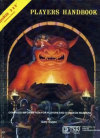 1st edition Advanced Dungeons & Dragons
What the rules say: Referred to as energy drain, it causes the character to lose a level without a saving throw. Hit points and abilities from the experience level are lost, and xp is dropped to the mid-point of the next lower level. Characters reduced to zero level can never gain xp again, and zero level characters die when they are drained of a level.
Monster descriptions: Brief summaries of the effect, but descriptions assume you have access to the PHB and DMG.
Recovery options: 7th-level cleric spell recovers a single level by restoring lost experience points to the minimum needed to recover the lost level. There is a time limit of effectiveness based on the cleric's level.
The first time I had a character get level drained, the GM basically isolated my character and forced me into a one-on-one encounter with a spectre, and he only realized as I was about to die that I didn't have a single weapon that could have hurt the thing. I have only ever seen level drain used in this manner, as a personal "challenge" or as a punishment by a pisspoor DM (with one exception, the original Ravenloft module and the third time I ever played D&D). But even if that weren't my experience, the concept is pretty flawed simply because it's not very elegant.
Let's assume an 8th level fighter is going up against a vampire, an 8 HD creature. Seems like a pretty even match, right? But the vampire wins initiative. Suddenly the fighter is 6th level and it's no longer an even match, and if the circumstances of that situation mean the fighter is trapped or was forced into this fight then you're basically playing a game of "Who wins initiative?" followed by a game of "How long can we keep this character alive through sheer luck of dice rolls?" and all because you lost the first round of initiative.
I can't imagine where this might be an acceptable game mechanic because it ranks right up there with "let's have your 14th-level character make this saving throw or else they die" in terms of how fun it is.
Zak Smith has told me that I just need to play smarter, but this statement assumes the GM is smart too (and also assumes the GM isn't some sadistic dickhead who GMs with something to prove). The GM is responsible for setting the stage and delivering information to the players about their environment, and if the information is paltry or even nonexistent, or the GM deliberately ambushes the player, then you're never given the opportunity to play smarter. I've played games where I've never even been given the opportunity to run away, or running away was simply not an option from how the GM described the scenario.
Let's say my character has been asked to hunt down a vampire that's tormenting the little town of Barovia and I ask the GM how he uses level drain, the GM says "vampires have traditional level drain." I would likely try to do everything in my power to avoid confronting the vampire directly. I'd turn his servants against him rather than face him head on. From my personal experience, no GM would ever allow such tactics to work, they would always force a direct confrontation with the main villain or simply allow all of your schemes to spoil in some way.
The same Zak Smith uses level drain for his vampires in Red & Pleasant Land and in that adventure it seems completely appropriate, there are no ambushes or Gotcha! moments written into R&PL. A good GM with smart players could have a grand olde tyme evading the dark machinations of the vampire lords in Voivodja, but if it were me I still wouldn't use level drain as its written.
Let's examine my reasons why.
Exhibit A: Absurdity
A character's xp and level are meant to be an abstract way of determining how skilled and learned a character is, just as hit points is an abstract way of determining overall health and fatigue. Levels are not just a way of giving your character hit points but they also represent stuff your character knows. Fighters know better moves, wizards learn better spells, thieves learn how to sneak and pickpocket better, and so on. When those things disappear because a wight touched your skin it just doesn't make sense because it's not called memory drain.
There's a counterargument that levels don't represent memory but overall skill. When your level is drained you are becoming sluggish and less skilled, hence the loss of skills. Then why doesn't level drain actually do that by draining skills and abilities? Why the abstract overall level? My answer to that is: see Exhibit D.
Exhibit B: Houserules + Paperwork
I have never seen a GM, nor heard of a GM, who uses level drain by the book. Why keep using level drain if nobody actually uses it the way it's written?
The DMG suggests that to be truly accurate when PCs level up you should instruct players to write how many HP they earned as a string of numbers on their character sheet. This was back in 1st edition when you didn't have proficiencies and skill checks and you also had level-based saving throws that weren't tied to ability scores. In both 1st and modern editions, unless you're doing that with every aspect of levelling up then the paperwork involved slows down play, and I would want the mechanic to be elegant and simple. I suspect the reason most people houserule level drain is because of this complexity, the tedium of rewriting a character stops the action at the table.
Exhibit C: Recovery is a bitch!
Unconsciousness and petrify have magical solutions which can end them in one casting. Death is a variable because some GMs don't allow Raise Dead or Resurrection in their games, but according to the rules a single spell can still solve that problem. In comparison Level Drain is not simple, recalculating HP, losing abilities and erasing xp and on top of that Level Drain requires multiple castings of Restoration to correct, and even then you've lost the xp forever so you can't recover completely.
The Restoration spell will only bring the character back up one level per casting, and even then your xp is only restored to the bare minimum of what was necessary to get to that level. That's lame all by itself. The mechanic is simply a way to divest a PC of experience points. The xp lost is completely and utterly unrecoverable. I don't even mind the rule that it might require multiple castings of Restoration to return to the level at which you once were, but the permanent loss of xp is just unacceptable to me. That is primarily why I find the effect so tiresome and nobody seems to want to argue a case for justifying or overlooking this part of the rules.
If a single Restoration could bring you back to what you were at pre-draining (without any loss of xp) then I would likely have less of an issue with it. But then I'm just houseruling it, aren't I?
Exhibit D: Cheap
How do you know it's cheap? There's no save. It just happens. This is the biggest factor about why I think it's dumb. Level drain isn't even in the same category as a save-vs-death or vs-unconsciousness or vs-petrify. Those things suck, but at least they're still simple effects and you get to roll dice.
It's not scary to lose xp and levels permanently, it's eye-rollingly boring. Especially if you're less than 1000 xp away from your next level and some GM springs a level drain on you then you're basically fucked. It's a cheap shot, and Gygax was the king of cheap shots!
In summation
I'm already playing RPGs to have fun and cut loose and I don't like the idea of tracking each individual HP roll every time I level up, or tracking my skills either. Just playing as a wizard and tracking my maximum ability scores in DCC was pretty time-consuming (but not to the point of making that game completely unfun). Furthermore, if I'm playing a high level fighter and I'm only 1000 xp shy of level 9, get drained to 7, then still manage to defeat my enemy and get a Restoration spell, I would still have permanently lost hundreds of thousands of experience points. That's stupid. I would rather play a houserule where I can still recover that lost xp, or in a different game altogether.
More comparisons & addendum
 2nd edition Advanced Dungeons & Dragons
What the rules say: Virtually identical to 1st edition rules except the effect is clarified for all classes with extra paragraphs.
Monster descriptions: Simple descriptions that assume you have a DMG.
Recovery options: Identical to 1st edition, however Wish is made note of as a spell that can cure all lost levels with a single casting.
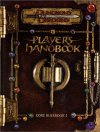 3rd edition Advanced Dungeons & Dragons
What the rules say: Energy drain is simplified into a cumulative negative effect applied to ability/skill checks, attack rolls, saving throws, hit points, and character level. Saving throws now apply to avoid the energy drain and experience points are unaffected. The rules are completely absent from the PHB and the entirety of the effect's description is in the DMG.
Monster descriptions: Simple summaries which refer to the effect and explain what the saving throw is to avoid.
Recovery options: The cleric spell, Restoration, has been brought down to 4th level but otherwise is identical to the 1st and 2nd edition versions of the 7th-level spell Restoration. A new 7th-level spell, Greater Restoration, recovers all lost levels from an energy drain with a time limit measured in weeks rather than days.
I was expecting there to be a bit more variation between 1st and 2nd editions, but this just shows that 1st and 2nd edition rules changed only in miniscule ways while 3rd edition introduced the first radical departures from the original ruleset.
 4th edition Advanced Dungeons & Dragons
What the rules say: Never mentions level draining in either the PHB or the DMG.
Monster descriptions: Previously level-draining monsters have direct damage attacks with names that are called "life drain" or "soul siphon" but the words level drain and energy drain are never mentioned anywhere. Just reading the Vampire entry without the context of an undead lord it reads like a blood sorceror with tons of attacks that can only damage a single target. Lame.
Recovery options: Rest for an hour and you'll probably be fine (I fucking hate 4th edition).
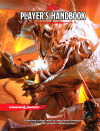 5th edition Advanced Dungeons & Dragons
What the rules say: Nothing. It doesn't exist anymore.
Monster descriptions: Monsters that used to have energy drain have been replaced with abilities that lower hit points permanently. This is, to me, scarier than the traditional level drain, however the effect is nerfed right out of the gate since every ability describes that the permanently lost hit points can be recovered after a Long Rest, 5th edition's mechanic for "sleeping it off." The vampire in the 5e Monster Manual just seems like a crude version of Lugosi's Dracula.
Recovery options: Restoration no longer exists. Lesser and Greater Restoration still exist as 2nd- and 4th-level spells, but they now apply healing to different damaging effects.
Losing level drain from the rules completely doesn't seem right. Powerful undead, especially vampires, should have some kind of special attack that you can frighten PCs with. The whole concept behind level draining is that a character drained below zero level becomes an undead version of themselves. You can leave a similar attack in place of level drain and still have an ability to frighten PCs into picking their battles and running away if they need to.
Let's take a look at how some of the OSR systems handle level drain starting with the ones most similar to, or mimicking, the original AD&D rules...

Labyrinth Lord
What the rules say: Alternately refers to effect as energy drain, drain energy, or level drain. Rules are explicit that there is no saving throw and the character loses HD and abilities associated with levels lost, but doesn't mention xp loss.
Monster descriptions: Repeat incomplete summaries of level drain rules, and some descriptions are explicit about losing xp to the minimum of the new level.
Recovery options: Restoration spell recovers one level but with a time limit based upon caster level, also recovers xp to minimum of restored level.

Adventurer Conqueror King
What the rules say: Rules are explicit, calling the effect energy drain. There is no saving throw and the character loses abilities associated with the levels lost, including reducing xp to minimum of new level. Rules also explicitly call out that only ritual magic can reverse the effect.
Monster descriptions: Do not summarize rules but simply refer to the effect as energy drain.
Recovery options: There is no Restoration spell. Wish is called out as an appropriate ritual spell for recovering levels but there is no mention of recovering xp.

Castles & Crusades
What the rules say: Calls the effect energy drain and allows a Constitution-based saving throw to avoid. Explicitly calls out loss of abilities and HD associated with levels lost, and xp is reduced to halfway point toward next level. Characters can be drained to zero level, but drained below zero level causes death.
Monster descriptions: Each monster description gives a brief but comprehensive summary of how the energy drain works.
Recovery options: Restoration spell recovers one lost level, and Greater Restoration spell recovers all lost levels and abilities. Both have time limits based on the level of the spell caster, and neither mentions recovering xp.
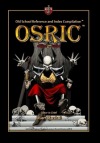
OSRIC
What the rules say: Rules are explicit, calling the effect level drain. The character loses abilities associated with the levels lost, including reducing xp to minimum of new level.
Monster descriptions: Alternates between calling it level drain and energy drain, but otherwise simply lists the effect and doesn't repeat a summary of the rules.
Recovery options: Restoration spell recovers one level, has a time limit based upon caster level, and brings the character back to minimum xp for level restored.

Adventures Dark and Deep
What the rules say: I don't own the Game Master's Toolkit
Monster descriptions: I don't own the Bestiary
Recovery options: Restoration spell recovers one lost level, has a time limit based on the level of the caster, and doesn't mention recovering xp.
Adventures in the East Mark
What the rules say: No explicit description within the rules.
Monster descriptions: Referred to as energy loss, it causes a loss of HD and abilities but there is no mention of losing xp.
Recovery options: Restoration recovers all lost levels but must be performed within 24 hours of losing them.
The following OSR systems deviate in significant ways from the original AD&D rules...

Swords & Wizardry
What the rules say: No rules given and no mention of xp loss.
Monster descriptions: Describes effect as level drain, and adds whether the characters dies or becomes the monster in question if reduced to zero level. Effect is described as if level is just another separate set of hit points.
Recovery options: Restoration spell recovers all lost levels.

Dungeon Crawl Classics
What the rules say: No section explicitly describes it.
Monster descriptions: Some monsters have a "drain xp" or "vampire bite" ability that drains xp if a Will save is failed, and nothing describes what happens if xp drops below the current level - probably nothing because in DCC losing 1 point of experience can be potentially devastating. Ironically, there is no vampire in the monster section of the rules.
Recovery options: The Restore Vitality spell only recovers lost ability scores and there is no apparent way of recovering lost xp.

Lamentations of the Flame Princess
What the rules say: Describes the traditional effect of level drain but offers a fairly powerful and brutal Constitution drain rule as an alternative time saving rule.
Monster descriptions: There are no monsters in the rulebooks.
Recovery options: There is no spell for recovering lost levels or lost attribute points.
I really like the way LotFP handles level drain because losing Con is a simple way of tracking the loss of energy and your maximum HP will degrade as you lose Con, plus in the LotFP rules the draining is actually more brutal for a high level character and could be used with a low-level character and still be an equal challenge because it only takes a few drains to die from it but it's always based on the character's Constitution, which rarely goes up and down from level to level.
Unexpectedly, I also really like the DCC method where the character loses 1 xp per drain, even though that's a devastating effect and it's still permanent the character won't lose levels from the effect and will only be pushed back from earning new levels - and ironically, the opposite of how the rule was first explained to me.
How I would bring back Level Drain while running 5th edition D&D
I would let my players decided between two options:
1) use LotFP's alternative system for Con draining. This still gives most characters a lot of breathing room since it only drains 2 Constitution at a time, but give the Vampire double the effectiveness and you've restored a monster to a semblance of brutality that modern players will gasp at. The 4th-level spell Greater Restoration is required to recover this lost Constitution, a Long Rest simply won't cover it.
2) modify the monster entries in the 5th edition Monster Manual so that instead of permanently draining hit points or ability scores convert the damage dice to an XP loss multiplier. 1d4 Strength damage? No, 1d4 x 100 experience points. 4d8 hit points? No, 4d8 x 100 experience points. These effects all have saving throws built in so if you fail the save then the experience points are lost permanently, just like in DCC. This way spells don't need to be modified to accommodate the new rule and a Long Rest still just won't cut it!
Yup, a house rule!
Why not? Everybody else does it.
Wednesday, September 24, 2014
playtesting to hit Armor Class 0
Normally, you attack and you either hit or you miss. In a PbtA game when you attack you exchange damage, doing it well means you potentially hit harder and take less damage yourself, doing it poorly means you could take more damage or inflict none.
What if...? You attack, and one of three outcomes occurs: you hit and your opponent misses you, you and your opponent hit each other, you are hit by your opponent.
The traditional calculation in D&D is: Class attack bonus + ability modifier + 1d20 versus 20 - armor class
But if I'm changing the rules to be level-less and armor reduces damage rather than makes it harder to be hit, then...
Ability score + 1d20 versus 20 (too easy, probably good to experiment with at some point though)
Ability score + 1d20 versus 30 (not sure, experiment!)
Ability score + 2d6 versus 20 (hard difficulty, some rolls will just never be outright successes though)
Ability modifier + 3d6 versus 15 (moderate to hard, the curve is shallower and more predictable than a 2d6 which might lead to less fun)
Ability modifier + 1d20 versus 20 (very difficult, wilder results but potential for critical successes and failures!)
Thursday, September 4, 2014
perception rumination
There are several games that use perception as a risk-taking procedure, and supply a rule that gives players a mechanic with which to gain an advantage or simply to be warned of impending danger. 3rd edition D&D invented the much abused Spot check, World of Darkness has a derived Perception skill check, Apocalypse World has the Read A Situation move, and many times I've seen a GM who in the absence of a rule for it simply has a PC make a saving throw or a luck check or similar oddity. Using these checks as ways of doling out information is where the inspiration for Trail of Cthulhu came from.
It's a two-way street though, it's important for players to ask questions and prod for more information. Generally, I've noticed that if players just take the scene as described it's because they think their GM gave them all the information they needed. As a player, I am always asking for more details "Is the ceiling a dome or is it flat? How far does the curve in the wall go, all the way to the ceiling? Does it look like there might be a crack or crease where the wall meets the floor?"
Character perception requires player communication.
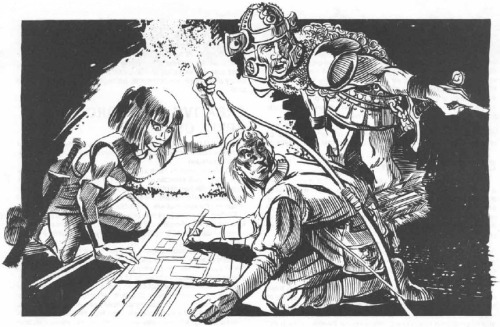
If a room is trapped, how do detect it if the GM assumes you will just roll dice to discover it? Different games handle discovering traps and pitfalls in different ways. In old school D&D you better have a Thief to search for traps, otherwise you're hosed. In 3rd edition and in Dungeon World anybody could potentially search for traps, some are just better at it than others since in both games it almost entirely relies on your Wisdom bonus. In Dungeon World the existence of a trap might be determined by the dice roll to detect it.
In this same vein, if an NPC is lying to your character how do you detect it? Depending on the GM they might make this obvious, no roll required, but there are mechanics in games for having this kind of interaction with a skilled bluffer. Deadlands made a huge (but broken) mini-game out of the Bluffin' and Scrutinize skills. In some versions of D&D this might just be a saving throw but it could easily be a Sense Motive roll. In Apocalypse World the Read A Person move becomes a catchall for this kind of interaction, which I have noticed most players don't even actually use unless they think violence is imminent.
Sometimes pulling out dice to determine the answer to a question can answer the question for the player, and since the act of rolling might give the players information their characters shouldn't be privy to then how do you imbue that dice roll with failure and success?
Careful scrutiny still requires the possibility of failure.
Tuesday, June 10, 2014
hit points
The game HOL, Human Occupied Landfill, had a rule that every living thing has 20 "hit points" and damage had different thresholds which were adjusted by size and damage type. Hit a bunny with a hammer and you'll cripple it if you don't kill it outright. Hit a man with a hammer and you'll do some damage. Hit a man in powered armor with a hammer and he'll laugh at you. In theory it made a lot of sense but in practice it tended to be wonky and weird and too much math, thus no fun. But the idea really appealed to me and has stuck with me ever since I first read it.
 There's a need players have to gain in strength and power as they advance their characters, and there's also a need for some level of realism that allows a suspension of disbelief. It occurred to me the other day that it would be very easy to fulfill the two by returning to the idea that everybody starts with the same amount of hit points but relative to who they are they can increase, without the need to alter anything in the rulebooks.
Every PC has 5 hit points and adds their current level. Constitution modifiers now count as double, but are only applied once.
Let's look at it in practice:
1st level Wizard with CON 10 = 6 HP
1st level Fighter with CON 10 = 6 HP
1st level Wizard with CON 15 (+1) = 8 HP
1st level Fighter with CON 5 (-1) = 4 HP
Now there's a real incentive to NOT have a low Constitution starting out. But this equation does create one obvious problem: How do you compensate for monsters' hit points? All those stats with varying levels of Hit Dice? Another simple equation that can be done just by looking at HD under a monster's stat block. Monsters get 1d8 for HD, so their equation is MAXd8+level. But this creates another question: what about when a monster has a +1 or +2 next their HD number? Just add it to the total. A monster with HD 3+2 would then be 8+3+2 = 13 hit points.
How would this look?
Ogres have HD 4+1 = 13 HP
Trolls have HD 6+6 = 20 HP
Young Red Dragons have HD 13 = 21 HP
Adult Red Dragons have HD 17 = 25 HP
Armor Class becomes a much bigger factor at higher levels now. Ogres have AC 5, Trolls have AC 4, and those Dragons have AC -2 (Young) and -4 (Adult). This greatly enhances the perceptual value of seemingly "low powered" magic items as well. Having a +1 sword suddenly becomes really valuable to the PC wielding it. I haven't looked at books or tables beyond 1st or 2nd edition AD&D so I'm not sure how it work with 3rd edition books, I know some monsters are given different die type so I would have to account for that, and I think magical damage probably needs to be adjusted to compensate for the low numbers but for now I think this works pretty solidly as a simple and elegant system to build off of. Leaving it as is means that Wizards become MUCH more powerful earlier on (casting Magic Missile at 3rd level is possibly deadlyand 5th level Wizards basically become murder machines), and 5th level or higher Clerics can basically heal anybody instantly (maybe kind DMs would allow healing to "bleed" off onto multiple targets).
* - in 1st edition AD&D some monsters were given HUGE modifiers to their hit points, probably to ensure they were difficult to kill regardless of what the DM rolled
Thursday, May 29, 2014
diphikulte
Numenera is a really awesome setting! I feel like I should point that out right now since all I'm ever going to do is bitch about the game's mechanics. I hate the rules, I don't find them intuitive to use at all. But the setting, the history, the technology, and the peoples and creatures are all great. As I read further into the rulebook I really enjoyed immersing myself in this strange new world and I really wanted to try playing it. The rules just get in my way. I've thought about matching the setting to something else, like World of Darkness or Stars Without Number or Dungeon World or something, but it seems like a lot of work to do for something I might only play for a couple of sessions before everyone involved wants to play something else.
But here's a thing about difficulty levels that I think is stupid: there is always some level for "routine" tasks. Not just in m&m but also in Numenera and in 3rd edition D&D and in Deadlands and in Shadowrun. Shit! Just about any RPG that uses levels of difficulty has a trivial or routine level. What's the point? Nobody is ever going to roll for a routine task, and if they do it's going to be incredibly lame when you ask them to roll the dice to brush their teeth and they roll a 1 because now you have to come up with some reason for why they failed at brushing their teeth. I guess in Numenera's case it is there to illustrate how low you can reduce the difficulty of a task before it becomes practically a routine task, but if the game doesn't allow for adjustable difficulty then there's almost no reason for it to be in there.

Friday, April 11, 2014
Mitch the Dwarf
I started with 1st edition because I knew it was the most random, and ended up making a dwarf fighter. Each edition afterwards was simply an attempt to recreate the character from the previous edition, using the rules and character creation methods of the later editions. Here are the stats, straight up, along with some notes I added for explanation.
Mitch the dwarven fighter!
1st edition
the Player's Handbook does not give any specifications on how to roll up a character, it just says The range of these abilities is between 3 and 18." so I'm just using the classic method of rolling 3d6 and putting them in the abilities as I roll them. Rolled 15, 11, 5, 8, 11, 8, the stats after racial modifiers are in the order the book ascribes to them.
Strength 15 = weight allowance +200, Open Doors 1-2 on d6, Bend Bars/Lift Gates 7%
Intelligence 11
Wisdom 5 = magical attack -1
Dexterity 8
Constitution 12 = system shock 80%, resurrection survival 85%
Charisma 7 = maximum number of henchmen 3, loyalty -10%, reaction -5%
Dwarf = saving throws vs. wands/rods/staves & spells +3, poison saves equal to wands/rods/staves, infravision 60 feet, detect grade or slope or new construction 75%, detect sliding/shifting walls 66%, detect traps or depth underground 50%, to hit half-orcs goblins hobgoblins or orcs +1, ogres trolls ogre magi giants and titans have -4 to hit dwarves
Fighter = Hit Points 9, Alignment: Lawful Neutral
Languages: Dwarven, Lawful Neutral, Common, Elvish
Money: 190 gold (before buying equipment), 5 gold and 3 silver (after buying equipment)
Weapon Proficiency: Axe, Dagger, Mace, Sword (non-proficiency penalty is -2)
Equipment: Banded Armor, Large Shield, Great Helmet, Battle Axe (speed 7, damage 1d8), Dagger (speed 2, damage 1d4 vs S/M, 1d3 vs L), Boots (high hard), Belt, Cloak, Leather Backpack w/ 100' rope & 20 large iron spikes & 10 torches, Small Belt Pouch w/ mall silver mirror & 3 wax candles, Draft Horse ("Smythers")
Movement 9"
And that is ALL of the information the 1st edition Player's Handbook gives the player!
2nd edition
I thought about just transferring the stats as is, but that wouldn't be fair to each version since I know 3rd edition uses a completely different method and I'll end up with much higher numbers. Using Method V from the rulebook (roll 4d6 dropping the lowest and assign where you like), since that's the one most 2nd edition games I've ever been in used.
Strength 16 = damage +1, weight allowance 70, maximum press 195, Open Doors 9, Bend Bars/Lift Gates 10%
Dexterity 15 = defensive adjustment -1
Constitution 17 = hit points +3, system shock 97%, resurrection survival 98%
Intelligence 13 = languages +3, spell level 6th, chance to learn spell 50%, spells/level 7
Wisdom 13 = bonus spells: one 1st, spell failure 0%
Charisma 11 = maximum number of henchmen 5
Languages: Common, Dwarf, Elf, Orc
Dwarf = saving throws vs. wands/rods/staves, spells & poison +4; 20% of magic item failure if not made for dwarves; +1 to hit orcs, half-orcs, goblins, and hobgoblins; ogres, trolls, ogre magi, giants, and titans are at -4 to hit dwarves; infravision 60 feet; detect grade or slope in passage or new tunnel/passage construction 1-5 on ld6; detect sliding/shifting walls or rooms 1-4 on ld6; detect stonework traps, pits, and deadfalls or determine approx. depth underground 1-3 on ld6.
Height: 4'2" , Weight: 150 lbs, Age: 53, Maximum Age: 347
Fighter = Hit Points 11, Alignment: Lawful Neutral
Weapon Proficiencies: Battle Axe, Dagger, Broad Sword, Halberd (non-proficiency penalty is -2)
Non-Weapon Proficiencies: Animal Handling Carpentry, Rope Use
Money: 100 gold (before purchasing equipment), 9 gold & 1 silver
Equipment: Splint Mail, Battle Axe (size M, type S, speed 7, damage 1d8), Backpack w/ 100 feet hemp rope & 20 pitons & 10 torches, Small Belt Pouch w/ flint & steel (total 109.5 lbs)
Armor Class 3 (Splint + Dex), THAC0 20
Encumbrance: Light, Movement: 5"
Saving Throws: Paralyzation/Death Magic 14, Rod/Staff/Wand/Poison 12, Petrification/Polymorph 15, Breath 17, Spell 13
And now that's it.
3rd edition
Third edition rules use the Method V dice-rolling equation from 2nd edition, with the option of re-rolling if your scores are too low (i.e. if no score is above 13). So here I go, rolling again:
Strength 15 (+2) = to melee attack rolls, damage
Dexterity 12 (+1) = to ranged rolls, armor class, Reflex saving throws
Constitution 15 (+2) = bonus Hit Points, Fortitude saving throws
Intelligence 10
Wisdom 10
Charisma 8 (-1) = checks to influence others
Dwarf = Medium size, speed 20 feet, darkvision 60 feet, +2 Search stonework, +4 to resist bull-rush or trip attacks, +2 to saving throws against poison and spells, +1 to hit orcs and goblinoids, +4 dodge bonus to Armor Class vs giants, +2 to Appraise stone or metal, +2 to Craft stonework and metalwork
Languages: Common, Dwarven
Fighter = Hit Points 12, Base Attack +1, Fortitude +2, Martial Weapon Proficiency, Simple Weapon Proficiency, Proficient with ALL Armor
Skills (8 points at 1st level): Handle Animal +2, Ride +2, Use Rope +4
Feats (one for 1st level, one bonus Fighter feat): Mounted Combat, Power Attack
Alignment: Lawful Neutral, Age 57, Height 4'2" , Weight 170 lbs.
Money: 140 gold (before purchasing equipment), 2 gold (after)
Equipment: Dwarven Waraxe (damage 1d8 vs S, 1d10 vs M, crit x3), Chain Shirt (check penalty -2), Backpack w/ 100 feet hempen rope & 20 pitons, Belt Pouch w/ flint & steel (total weight 65.5 lbs)
Armor Class: 14 (15 w/ Dex); Attack: Melee +3, Ranged +2; Initiative +1
Saves: Fortitude +4, Reflex +1, Will +0
4th edition
The 4th edition rules ask you to choose race and class before determining ability scores, so...
Dwarf
Height 4'6" , Weight 170 lbs., Size: Medium, Speed: 5 squares, Vision: Low-light
Languages: Common, Dwarven
Ability Bonuses: +2 Constitution, +2 Wisdom
Skill Bonuses: +2 Dungeoneering, +2 Endurance
Cast-Iron Stomach: +5 racial bonus to saving throws against poison.
Dwarven Resilience: You can use your second wind as a minor action instead of a standard action.
Dwarven Weapon Proficiency: You gain proficiency with the throwing hammer and the warhammer.
Encumbered Speed: You move at your normal speed even when it would normally be reduced by armor or a heavy load. Other effects that limit speed (such as difficult terrain or magical effects) affect you normally.
Stand Your Ground: When an effect forces you to move—through a pull, a push, or a slide—you can move 1 square less than the effect specifies. This means an effect that normally pulls, pushes, or slides a target 1 square does not force you to move unless you want to. In addition, when an attack would knock you prone, you can immediately make a saving throw to avoid falling prone.
Got all that? Okay, Fighter
Armor Proficiencies: Cloth, leather, hide, chainmail, scale; light shield, heavy shield
Weapon Proficiencies: Simple melee, military melee, simple ranged, military ranged
Bonus to Defense: +2 Fortitude
And now, finally, I determine starting ability scores. The method for randomly generating ability scores is downplayed in the rulebook with the words "On average, you’ll come out a little worse than if you had used the standard array. If you roll well, you can come out way ahead, but if you roll poorly, you might generate a character who’s virtually unplayable. Use this method with caution."
I find it amusing that they are actually trying to encourage you to not roll dice.
So using the standard method that they describe, I would assign ability scores as I see fit from the following numbers: 16, 14, 13, 12, 11, 10; adjusting for racial modifiers after placement. What I find even more amusing is that the numbers here are already arranged exactly in the order I would want them to be!
Strength 16 (+3) = melee attacks, Fortitude defense
Constitution 16 (+3) = bonus hit points, bonus healing surges, Fortitude defense
Dexterity 13 (+1) = ranged attacks, Reflex defense
Intelligence 12 (+1) = Reflex defense
Wisdom 13 (+1) = Will defense
Charisma 10 (+0) = Will defense
Alignment: Unaligned (because there's no Lawful option anymore and Unaligned is the clossest to Neutral you can get, go figure!)
Trained Skills (from the class skills, choose three): Athletics (Str), Endurance (Con), Streetwise (Cha) This is the first part that forcibly diverges from previous editions. Mitch has no animal handling or rope use equivalent amongst the class skills.
Fighter Abilities: Combat Challenge, Combat Superiority, Two-Handed Weapon Talent
I start with one feat, and there is one for Mounted Combat but it doesn't look like it's very useful or appropriate to the original concept, and there's one for Power Attack, but I'm taking something that fits the original concept better.
Feat: Dwarven Weapon Training: +2 bonus to damage rolls with axes and hammers
Class Powers:
At-Will Powers (2): Cleave - Standard Action Melee weapon, Reaping Strike - Standard Action Melee weapon
Encounter Attack Power (1): Passing Attack - Standard Action Melee weapon
Daily Attack Power (1): Brute Strike - Standard Action Melee weapon
Finally, we're on to equipment. The one thing that could clearly be improved about 4th edition is that all of this information is disorganized. The sequence of character creation has me flipping back and forth through the book, literally from chapter 3 to 4 then 2 then 5 to 6 back to 4 and then ahead to 7.
Starting Money: 100 gold (this is no longer randomized or determined by class), 4 gp (after purchasing equipment
Equipment: Plate Armor (wow! it only costs 50 gold pieces in 4th edition), Greataxe (+2 to hit, 1d12 damage, high crit.), Standard Adventurer's Kit (and with that I've already got a magic item in the form of Sunrods - the fantasy equivalent of glowsticks), 10 torches (total weight 105 lbs. = no penalty to movement)
And with that I just have to add all of the modifiers together to figure out the final stats.
Hit Points 18, Bloodied 9, Healing Surges 12 at 4 HP
Speed 5 squares, Initiative +1
Armor Class 18, Fortitude 15, Reflex 11, Will 11
Whew! And now I'm done.
The 4th edition version is obviously the most powerful, he is clearly defined as a powerhouse of destruction. The text blocks for 4th edition tend to come fairly simplified so despite the enormous amount of text written above 3rd edition is actually the most complex. It seems like 4th edition was trying to streamline 3rd edition, but in the process became a game of superheroic adventurers with very little connection to the original sulking and scavenging game that once was D&D.
Surprisingly, and I can only speak for myself, the 2nd edition version seemed the most interesting - it's the most concise and simplest version, and the character has some obvious flaws. I also found it surprising that the 1st and 2nd edition versions of the Player's Handbook led me to creating a character that was nearly identical, but also the weakest in terms of sheer power. The 1st edition book is very vague in some places, and what's most interesting is that the player is not given their character's combat scores. But you can clearly see in the 2nd edition rulebook where they were simply streamlining a proven process and putting a lot of the nuts and bolts of the system into the player's hands, likely to free up the DM so he could focus on the challenges of the adventure.
So, if you are limiting yourself to using only one version of Dungeons & Dragons for your role-playing group, a summary of what each set of rules exemplifies might be:
If you want action with superheroic characters, play 4th edition.
If you want complexity and rules headaches yet clearly defined equalities and powers across all classes and races, play 3rd edition.
If you want weak PCs with obvious inequalities and no sign of modern or innovative rules that enhance PCs, play 2nd edition.
If you want even weaker PCs, vague but complex rules and a lot of arbitrary randomness, play 1st edition.
Each has their own strengths and weaknesses for style and ease of play. Convoluted or confusing creation process notwithstanding.
Or maybe you will draw your own conclusions.
Wednesday, February 5, 2014
Bargaining, or The Partial Success
Worse Outcome. Ugly Choice. Hard Bargain. It sounds like three things, but it's actually four. Let me give you a few examples to illustrate this:
We're going to follow Cyril for a bit. He's a bit of an untalented goon with no real skills to speak of, but he's got a knack for being in the right place at the right time and he's got a tongue that's as sharp as a cleaver. One big thing he has going for himself is that he's a Hocus, so he's got his own personal cult of about 15 devotees who worship him, hang on his every word, and follow him around like lost puppy dogs.
A biker gang is moving through the town where Cyril preaches to his flock and before they leave town they've decided to have a little fun. The gang's leader is trying to lasso Cyril with an old plastic rope that looks hand woven. When Cyril tries to escape he's acting under fire and rolls a 9. The MC can offer...
- a worse outcome: Cyril will take 4 harm as he runs into another biker and gets knocked down to the ground, unconscious, but he will get left alone afterward as the gang laughs their asses off in the assumption that he got accidentally killed.
- an ugly choice: Cyril will dive through a window, taking 2 harm, and escape through the back of the building losing sight of the gang and his followers, or get away down an alleyway but drop something important/valuable, like the wrought iron staff that he uses to focus his followers' attention during his sermons.
- a hard bargain: Cyril will get away, but his loyal followers will definitely not avoid the gang's attention.
The gang makes camp in a grassy ravine near town and Cyril, upon learning that 2 of his flock have been kidnapped, decides to sneak into their camp to liberate them. The closest thing to a sneak move in Apocalypse World is acting under fire so that's what Cyril is doing, and he rolls a 9 again. The MC offers...
- a worse outcome: Cyril is caught and captured, but not harmed, by the gang.
- an ugly choice: Cyril was followed by some of his enthusiastic cultists and they get caught but the distraction will allow him to sneak in undetected, or Cyril is spotted by the camp lookout and gets shot, taking 3 harm, but his enthusiastic followers make it into the camp from his distraction.
- a hard bargain: Cyril sneaks in, but his kidnapped followers have been tortured and killed and there's nothing he can do for them now.
Cyril takes the ugly choice this time and tells the MC that his enthusiastic followers get caught. The MC declares them dead, but Cyril is in the camp and his other followers who were kidnapped are there, and relatively unharmed.
The MC declares that the whole gang's encampment is now on high alert, it's going to be pretty tough sneaking out of here so Cyril is going to need to do something tricky to get his kidnapped followers to safety. Cyril is now keenly aware that 4 of his people got killed today and he might get 2 more killed, he's resolved not to let anybody else from his cult die. Cyril frees his followers and instructs them to get out of the camp and back home while he creates a distraction. Cyril runs out of hiding straight for the gang leader with his staff, and declares he wants to use the focusing power of the staff to heel the leader of the gang to Cyril's will. The MC decides that this isn't a manipulation and it doesn't fall under Cyril's normal use of his Hocus powers, she declares that this is another use of acting under fire but Cyril is being inventive and taking a huge risk, she lets him roll his best stat this time, but he still rolls a 9. The MC offers...
- a worse outcome: Cyril is shot, point-blank, by the gang's leader. 5-harm. His followers will get away clean.
- an ugly choice: He creates enough of a distraction that his followers get away, but they've been seen fleeing and he's captured, or he has the full attention of the gang leader but his followers won't leave without him and all eyes in the camp are on Cyril right now.
- a hard bargain: Cyril has the gang's leader under his command, but that doesn't sway the rest of the gang at all.
Regardless of where you're sitting at the table, this is my favorite mechanic. As a player it gives you a brief moment of control, like rolling with a punch or flipping between two choices in a Choose Your Own Adventure novel. As an MC, it offers a challenging moment of looking at ugly/hard/worse options and offering them up as a meal. It is really hard to pull off well as a MC, since a partial success is still fundamentally a success, but I believe that mastering this on-the-spot thinking is what can make or break GMing properly.
Monday, January 13, 2014
How to cast a spell
At first it was just a simple roll to see if the spell went off, a wizard PC would roll a d20 and add their Intelligence modifier. I rated the level of the spell as the difficulty, added to 10, so a 1st level spell needed an 11 or higher to cast and a 19th level spell needed a 19 or higher. Fail the roll and the spell fails, but you didn't spend the spell slot either.
During 3rd edition, I changed it to be more similar to combat. Casting a spell had a DC of 20 and the PC could add both their Spellcraft skill and their Intelligence modifier to their roll. Failing a roll still meant the spell didn't go off and you just had to try again.
I only ever had one player walk out of a game because of this houserule because anybody who played for more than one session learned about my other two houserules for wizards.
#2: Spell slots were directly translated to spell levels and could be spent like points to cast spells, so a 5th level wizard would have 10 spell levels to cast spells with while a rules-as-written 5th level wizard would have three 1st, two 2nd, and one 3rd level spell slots.
#3: Wizards could cast any level of spell as long as they had learned it and had enough spell levels to cast it, during 3rd edition days the DC for learning was based on spell level but during 2nd edition days it was a percentage roll based off Intelligence.
I forget how I adjusted 0-level spells, but players rarely used them anyway.
All of these together made wizards a lot more powerful earlier on, and it also freed the typical wizard player from focusing all of their time on strategizing their spell lists. Something else happened, during later sessions other PCs started thinking about picking up a level or two in wizard. Which made me start thinking "why do I even need a wizard class? couldn't I just let anybody with Spellcraft attempt to cast a spell?" But then I stopped GMing and sat on the player's side of the screen for the next decade or so.
Enter: World of Darkness
When I returned to GMing a longer campaign I attempted to splice my favorite setting of Birthright into the rules of World of Darkness. Instead of using the Mage rules straight from the book, I picked apart spells and applied them to the D&D tropes of spells. I had a short list of available spells that were detailed from top to bottom. And all of that was a mistake. Often my players cast spells expecting them to work just like their D&D counterparts, even though I wasn't trying to emulate them exactly but marry them to the low magic and gritty feel I was going for, or they simply forgot they had the spells.
World of Darkness combat is also a slog so many optional and house rules were introduced, but this is a different subject for another time.
Enter: Dungeon Crawl Classics
I really enjoy this system. It feeds the nostalgia of my days playing and learning the rules of 1st edition AD&D, but it's rules-light emphasis with 3rd edition mechanics means it is also very easy to learn and utilize and build upon. It's also a system that requires a wizard to roll a d20 to cast their spell. The only thing I didn't like about it was that the spells were sometimes written across 3 or 4 pages. Half of the rulebook is literally the spells many varied results, and I couldn't help but feel there is a way to simplify them, or there should be.
Enter: Apocalypse World

We played a short campaign of this and it changed the way I view role-playing games. The mechanics of the partial success are simple and evocative and can apply to anything. But the rulebook offers ideas for applying them to your favorite game. From page 279
Magic User: Cast a spell (intelligence)
Arcane magic comes from the use of formulae, ritual, and the magic user’s own life force.
Roll 7–9: Player chooses 1
Roll 10+: Player chooses 2
• the spell is not forgotten
• the spell has a powerful effect (maximize dice)
• the spell has a large effect (double range, duration, or number
affected)
• the spell does not misfire
The implication being that if you roll a 10+ and choose for the spell to have a powerful effect and it doesn't misfire, that the spell also doesn't have a large effect and you forget the spell.
Enter: OSR influences
In a low magic, dark fantasy setting, where I want ability to take precedence in defining characters, how do I apply these lessons to make spellcasting costly but powerful and evocative of old school randomness but simple to use without charts or levels?
Blood magic. Power the spell with your blood or somebody else's, roll 2d6 and add Magic.
Roll 12+: success
Roll 8-11: success, but choose 1
Miss: all 3 are true
• the spell is lost until you rest
• suffer a cumulative -1 to Magic until you rest
• the spell fails or is cast and misfires, Oracle's call
Identify
Allows the caster to know all of the magical properties of a touched magical item.
Cost: 1 hit point, +1 hit point for +1 to Magic roll
Invisibility
Turns the caster invisible to sight until they interact physically with another object or person.
Cost: 2 hit points, +1 hit point for +1 to Magic roll, +2 hit points for the invisibility to last until dismissed (or loss of consciousness)
Fireball
A magical energy bolt flies from the caster's hand and hits another living target, causing 1d6 magical damage.
Cost: 3 hit points, +1 hit point for +1 to Magic roll, +1 hit point for +1 damage, +3 hit points for +1d6 damage
Teleport
Instantly transports caster to a location they have been to before.
Cost: 4 hit points, +1 hit point for +1 to Magic roll, +4 hit points to bring another living creature and what it's carrying
Rune magic. Take the time to draw the rune with the appropriate ink, roll 2d6 and add Magic.
Roll 12+: success, choose none
Roll 8-11: success, but choose 1
Miss: all 3 are true
• working carefully, it takes twice as long to draw the rune
• your work is sloppy, use twice as much ink to draw the rune
• the rune is drawn wrong, it either works strangely or it works in a very bad way
A typical vial of ink holds 4 uses. A typical bottle of ink holds 12 uses. An entire jug would hold 36 uses.
Trigger
When another living creature steps over, or passes by, this rune the caster instantly knows.
Cost: 5 minutes and 1 use of ink
Alarm
When this rune is activated by a Trigger rune it makes a loud noise, determined by the writing of the rune.
Cost: 5 minutes and 1 use of ink, +10 minutes and +1 use of ink for the sound to come from somewhere other than the rune, +5 minutes and 1 use of ink to designate a person to hear the sound regardless of distance from the rune
Wall of Fire
This rune creates a wall of flames that does 1d12 damage per round. These flames must be set by a Trigger and last indefinitely or until the rune is broken, unless another Trigger is applied to cease the flames.
Cost: 4 hours and 6 uses of ink, +4 hours and 6 uses of ink for +1d12 damage per round
Protection from Heat
This rune protects the object it is written on from fire, flame, and heat. Completely.
Cost: 10 hours and 20 uses of ink
Tattooing a rune onto somebody's body always adds +4 hours and +8 uses of ink to the Cost.
These are just ideas at the moment. I'm going to flesh out Blood Magic a bit more and make it less D&D-y, but I wanted to work out how some spells I know would work in such a system before I start making really unique pain-worshiping blood throwers.
Monday, January 6, 2014
OSR comparison / review
I wanted to see exactly how some OSR games differed in rules and mechanics, and rather than try to write down how the mechanics differed from book to book I decided that I would make the same character in each system to see how they stacked up. These six systems lend themselves to this comparison rather easily because they all include the same basic six attributes during the first step of character creation, and the first step is described in each as rolling 3d6 and keeping them in the order they were rolled. The systems are:
 Adventurer Conqueror King system (ACKS): Provides an epic fantasy game with an old school atmosphere. The big feature touted on the back cover is that characters can eventually move into the worlds of politics, finance, and leadership.
"Will you survive the perils of war and dark magic to claim a throne? Or will you meet your fate in a forgotten ruin beyond the ken of men?"
 Adventures Dark and Deep (ADaD): Builds off of 1st edition Advanced Dungeons & Dragons and imagines what the 2nd edition had been like under a different authorship.
"What if Gary Gygax had not left TSR in 1985, and had been allowed to continue developing the world's most famous fantasy role-playing game?"
 Castles & Crusades (C&C): Uses a rules-lite and backwards-compatible approach to deliver a game written as a love letter to the nostalgia of discovering Dungeons & Dragons for the first time.
"A Game That Is Yours To Command"
 Labyrinth Lord (LL): An emulation of basic D&D using a few modern touches in a slim book.
"Back to the Basics of Fantasy Roleplaying"
Lamentations of the Flame Princess (LotFP): An often horrific re-write of old school D&D that has become infamous for both it's brutally unforgiving rules, and it's violently graphic artwork. File this one under: dark fantasy."Weird Fantasy Role-Playing. Mystery and Imagination. Adventure and Death."
 Swords & Wizardry (S&W): An emulation of D&D that emphasizes and fixates on the sword & sorcery epics of the quintessentially influential Appendix N.
"Light your torches, don your helmets, and ready your spells..."

Keep in mind, I am not including optional rules or alternate methods of playing outlined in these rulebooks, the comparison of systems is strictly by their "official" rules as written. Apart from this, keeping the same scores I rolled for all six characters and thus making the exact same character in each game is the only rule I'm following.
Some of these games arrange the ability scores in differing orders, but the ability scores are still the same. I learned AD&D with the 2nd edition rules, which arranges the scores from top to bottom as Strength, Dexterity, Constitution, Intelligence, Wisdom then Charisma, so that's the order I'm rolling them. I get a 5, 11, 12, 10, 13, and 7
Not the best.
Exceptions: LotFP allows you to swap one score with another in order to get a high ability score to play the character you want. None of the other systems allows for this. LotFP also allows the player to reroll all of the scores if the total modifiers added together are below zero. My rolls qualify, but the other games wouldn't allow this so I'm going to keep the scores as they are.
With 13 Wisdom being my highest stat, I've got a cleric. If the game allows for race selection outside of class than I'll also make this guy human to keep it simple. I've decided to name this guy Cyril.
Here's where the first real differences come into focus. Each system has a very different method for determining clerical spells, there are a few similarities but mostly different. Right out of the gate C&C is emulating 3rd edition D&D a lot more than 1st edition. What I find very interesting about this character is that every single system uses a different means or level of potency for Turning Undead, a staple of clerical magic.
ACKS ADaD C&C LL LotFP S&W
# of spells no one 1st three 0-level one 1st one 1st no
at 1st level spells + WIS bonus one 1st spells
Turning 1d20 1d20 1d20 2d6 2d6 2d10
Undead to 4 HD to 5 "types" WIS check to 3 HD requires spell to 5 HD
I'm surprised how little variation there is amongst some of these systems. The Saving Throw categories are identical between LL, LotFP and ACKS, and the starting numbers for a 1st-level cleric jump around quite a bit, yet retain very similar quantities. Even ability score bonuses and what is doled out with the different modifiers is virtually identical between different rule sets. S&W seems to be the clearest and simplest system to get acquainted with, even the character sheet evokes a minimalist style.
The next major difference I find is with carrying capacity and encumbrance, each game makes a different system out of it and I am beginning to think this is where you can see how each designer thinks the game should operate. Before I get into the meat of how encumbrance works, first I must have some basic equipment.
Though each game seems to have unique rules for monetary exchange rates, starting money for a cleric always seems to be 3d6x10 coins, except for C&C (2d10x10) and LL (3d8x10). For my own personal taste, I never like my characters to be encumbered so depending on the system I would choose different armor.
However, we don't have time for rational thought!
This is a comparison of how each system stacks up with an identical character, so without rolling for money I'm simply going to give my cleric Leather Armor and a Shield. Some systems use a descending Armor Class system, while others use ascending numbers, I've marked these by showing what the AC would be for leather armor first and then with shield second. I find it interesting that only two of these systems are identical.
ACKS ADaD+ C&C+ LL LotFP S&W
Armor Class 2/3 8/7 12/13 8/7 14/15* 7/6**
Warhammer d6/d8 d4+1/d4 d8 d6 d8 d4+1
Total Cost 35gp 14gp 21gp 23gp 55sp 21gp
* shields in LotFP give an extra +1 to AC vs missile attacks
+ these systems only allow shields to be employed against a certain number of attacks per round
** S&W gives both descending and ascending AC values, but ascending is an optional rule so I used the descending values
"This is all very good, but what do those Armor Class values really mean?"
A fair question, and could be adequately illustrated by explaining how Cyril might attack an exact replica of himself in each system. Cyril only wears Leather and carries a shield, but he's also a weakling, so each roll is going to come packaged with extra penalties.
In ACKS characters have Attack Throw numbers which vary based on class and level. A 1st-level Cleric has an Attack Throw of 10+ so with Cyril's -2 to hit and his AC of 3 he would need to roll a 15 or higher to hit his duplicate. That's a 30% chance of success.
C&C is one of the newer, simpler systems that uses ascending Armor Class, and it's basically right there. AC 13 with -2 Strength, Cyril needs a 15 to hit here too.
ADaD, LL, and S&W all use a descending Armor Class system and rather than keeping things simple the rules replicate the old combat matrix of 1st edition AD&D in varying levels of complexity. In ADaD you have to consult two different tables to learn what your base chance to hit is before you can start applying modifiers. Interestingly, Cyril only needs a 13 to hit his clone in Labyrinth Lord, but otherwise there's a lot of chart searching to find that Cyril still needs a 15 to hit his doppleganger.
Back to ascending Armor Class in LotFP, and that makes this simple because the number he needs to roll iS RIGHT THERE! But the (slight) brutality of LotFP is also revealed, Cyril needs a 16 or higher to hit his replicant in this system (25% chance of hitting is still less than 30%).
I should point out that both Labyrinth Lord and Swords & Wizardry have little tracks on their character sheets to help the player track what they need to roll in order to hit different values of Armor Class. Which is nice and thoughtful but I'm starting to be really confused as to why people like to make this more complex. Looking at these systems side by side it's hard for me to comprehend why gamers embrace these hurdles in the rules since it only serves to slow down the game for people who don't want to to do the math and it alienates new players who might be turned off by rules that don't make sense. (speaking from experience in both cases)

Back to equipment! Cyril's going to want a backpack, a bedroll, 10 torches, 10 days worth of rations, 50 feet of rope, one flask of oil, and a holy symbol, preferably made of silver. Pretty standard fare for a dungeon delver, not overly prepared but definitely not an amateur either. I'm ignoring the actual costs but limiting myself to purchasing the cheapest items when price differentials are available. With a 5 Strength I'm going to have an encumbered character in some of these systems, if not all of them. Let's explore these rules in each system individually, since a side by side comparison wouldn't reveal the intricacies of each difference. These examples will include both the money spent and the weight of the weapons and armor listed above.
ACKS: Weight and encumbrance is measured by stones which is roughly 10 lbs. (4.5 kg) but is left purposefully vague. Various items and objects relate to this stone measurement. A thousand coins weigh one stone; armor doesn't have weight, but every point of Armor Class that a suit gives your character counts as one stone; every six items carried counts as one stone, unless they are large or unusually heavy. A character can carry about 20 stone modified by their Strength.Poor old Cyril can only carry 18 stone, but after spending 65 gold and 5 silver he's only carrying 7 stone (about 70 lbs).
ADaD: The total encumbrance of a character is equal to the character's weight adjusted by a special modifier under Strength, which makes figuring it out simple enough but weight is randomly determined and stats don't play any role in it. Finding the page, I roll and get 176. With Cyril's Strength penalty he can only carry 151. This system limits how much can be put into backpacks and sacks, so in order to carry everything Cyril will have to purchase an extra small pouch. It doesn't matter much because all of that gear weighs less than half that. After spending 66 gold, 22 silver and 15 copper, Cyril is carrying 72.7 lbs of gear.
C&C: They try to simplify things by giving every character an Encumbrance Rating (ER) and equipment has both weight and Encumbrance Values (EV). I'm not sure why weight is listed unless the authors wanted the reader to have a frame of reference for using ER and EV. If the total EV of all of your equipment exceeds your ER then your speed starts to slow while you begin to suffer penalties to Dexterity-based rolls. There are several categories of encumbrance based on how much you've exceeded your ER by. Every character gets an ER of 10 modified by Strength, but since Cyril is a little scrawny twit he only has an ER of 8, and just with weapon and armor Cyril is already carrying 9 EV worth of gear. C&C also has one interesting feature related to ability scores and this comes into play now because it can modify my ER. When you're making your character you choose three of your abilities to be primary attributes, and your class will require one or two abilities to be designated as primary abilities (Wisdom for Clerics, duh!) and if you choose Strength or Constitution as primary attributes then you can add +2 to your ER. Without knowing this ahead of time I selected Constitution as one of Cyril's three primary attributes so his ER is back up to base 10.
After purchasing the rest of the gear he wants, Cyril has spent 28 gold, 1 silver and 10 copper and he's under Heavy Encumbrance with an ER of 33. The real killer here are the torches which are listed as 1 ER each, but the rules don't specify why that is or even how long the average torch should last before a new one is needed.
LL: Encumbrance is an optional rule for LL, so Cyril has no worries. But LL still manages to have the simplest system. A character can carry up to 40 lbs of gear before they are slowed down, and the maximum that any character can carry is 160 lbs. No Strength modifiers, no Encumbrance Values, and no fiddling with numbers - other than calculating the weight your character is carrying. Using this optional rule, however, Cyril would be carrying 57 lbs of equipment and thus be slowed by one-fourth of his movement rate. Total cost? 51 gold and 5 silver.
LotFP: Another system that uses Encumbrance points rather than weight, though it asks you to use common sense when it comes to the total weight of gear carried. Every six items carried counts as 1 point of Encumbrance, with larger items and heavier armors counting a point themselves. Carrying more than 1 point of Encumbrance will slow a character down, to a maximum of 5 points. If I'm reading this correctly Cyril is carrying 4 points worth of gear, his shield counts as 1 and his multitude of torches and rations add 3 more points, thus he is severely encumbered. Again, no rules for how long torches last or what they actually weigh. Also, Cyril spent 60 silver and 47 copper.
S&W: Another attempt at simplicity, all characters can carry 75 pounds before they are encumbered and their Strength score will have a Carrying Capacity modifier. S&W instructs the player that a normal level of general equipment will weigh about 10 pounds. They actually use the word "normal" with quotation marks. The only items with weights listed are weapons and armors. After all of that, Cyril isn't encumbered at all. He spent 58 gold and 4 silver, and is carrying 55 lbs of gear.
ACKS ADaD C&C LL LotFP S&W
Gold Spent 65 66 28 51 - 58
Silver Spent 5 22 1 5 60 4
Copper Spent - 15 10 - 47 -
Carry Limit 18 stone 151 lbs 10 ER 40 lbs 1 E 70 lbs
Weight Carried 7 stone 72.7 lbs 33 ER 57 lbs 4 E 55 lbs
Encumbered? no no heavy 1/4th severely no
I think that's the meat and potatoes of the different rule systems. I'm not getting into spell lists or higher-level characters because I wanted to compare what a beginning character would look like; freshly made, rolled up randomly, and applied equally across every system. There are more OSR systems out there than these six, and I might add comparisons to those as an addendum to this post at a later date. For now, this was a lot of work and I spent as much time double-checking rules and flipping through pages as I id just writing up the character(s).
In conclusion
Below you can click on the thumbnails of each character sheet and see Cyril the Cleric as I wrote him up.
 Adventurer Conqueror King System: With a 5-page long character sheet I was expecting a game that was absolutely comprehensive and exacting in detail, but it seems to be lacking in some essential organization. (Please note I only scanned in the first 2 pages of Cyril's sheet because the rest of the pages were blank.) Nothing is more frustrating than looking up some info about your character class or equipment and getting mired in pages and pages of unnecessary data. Not the worst offender of this, but the character sheet itself shows a lack of organization and a disconnect from the rules as they are doled out to the reader which left me flipping back and forth through the back in order to fill it out. I like the artistic style of this game, and despite my misgivings I'm curious about exploring some of the more complex rules, but the use of stones for encumbrance is jarring and not very intuitive to me. Weird interior layout too. A lot about this can be forgiven because the index is amazing, and if you have the pdf the page numbers are linked for quick referencing, which is double awesome!
 Adventures Dark and Deep: The first thing I thought while constructing Cyril was that the rules were comprehensive and boldly written. As I dug deeper into the rulebook I found myself flipping back and forth between pages a lot. A LOT! I think this system takes too much inspiration from 1st edition AD&D because I remember feeling the exact same way when I had to flip between three different pages for the stats of one item. It is comprehensive, but it's perhaps too complex. Deliberately? I'm not sure, but it definitely feels as disorganized as anything else Gygax ever wrote. In that sense, it could be a stunning success for what the author intended! I will say that I was blown away by the character sheet, and I think it's missing a few things but it's still a great piece of work. Not since I first started playing have I seen something crafted with such delicate care and exhaustive detail. I wouldn't call this Gygax'es 2nd edition of AD&D, but I would say that it's a very good collation of 1st edition's disparities into a cohesive whole. I like a lot of what is presented here even if it's not presented in the best way. The weapons table should be on one page, together, and there's also no index, which I consider a cardinal sin!
 Castles & Crusades: The rulebook is well organized but some rules seem to be lacking. There's a little too much emphasis on DIY aesthetics in some areas of the system when one considers how many supplements the same company has produced. In that regard, they're following TSR's footprints very well! Encumbrance, which is a major issue in this game, isn't expressed anywhere on the character sheet. A major oversight! Otherwise, if C&C got together with ADaD and had a baby, that game would likely be the gold standard of OSR games.
 Labyrinth Lord: It doesn't feel like a rulebook but more like some old school gamers got together and attempted to reconstruct their old rulebooks from memory. The rules jump around a fair amount and some things seem thrown together while the rules are also missing a few things that might seem crucial to the average player familiar with D&D. The game is simple, which is not a bad thing, this game would be ideal for teaching a new person role-playing or perhaps gaming with children or young teens. Which makes sense because Labyrinth Lord does also have an advanced supplemental rulebook to expand upon the concepts introduced in the core game. The character sheet is equally charming in both it's simplicity and brevity. Everything you need to play a game is right here!
 Lamentations of the Flame Princess: Organized and simple, yet complex enough that the unfamiliar will be perplexed by some of the inspired but unintuitive turns in the rules. Out of all of the games I looked at here, this one is by far the most brutal and unforgiving, but also the most interesting and enticing. It's probably not the easiest system to use right away, but it definitely leaves a lot to the imagination and has open spaces for expanding and complicating the skeleton of rules presented. If I were going to GM tomorrow, I would run this system.
 Swords & Wizardry: THIS GAME HAS NO INDEX! Two of the games above don't have indexes either, but they do have comprehensive or intricate tables of contents and that makes up for the lack of index. This game has neither and my copy is supposedly the "fourth edition," this is an unforgivable sin in my mind. (It does have an index of it's tables, but no page numbers, so why is it there? Ugh!) I absolutely hate when a game doesn't have a way to find relevant information quickly (I'm looking at you White Wolf!) and so I got frustrated quickly with this game while writing up Cyril. However, I would put this in the same wheelhouse as Labyrinth Lord as a starter set of rules for newer players. It simplifies a lot of concepts that the other games make a lot of unnecessary noise about. The character sheet is pretty decent too, though it's missing a few concepts introduced by the ability scores and I don't think the equipment section is big enough, but it's the only character sheet here that comes on one page and I consider that a boon.
Final statement
I wanted to see how these systems stood up to one another on the fly and without much prep. I've never played any of these six titles nor have I ever read through them cover-to-cover. I did this for my own enlightenment, to really explore each rulebook on it's own and have a decent measuring stick in the form of a single character. I just happen to be sharing what I've found with you dear reader.
Out of these six systems, I am most intrigued by Lamentations of the Flame Princess. I think that's the one I like the most. Swords & Wizardry might be the best of the bunch for introducing new players to D&D, but it's lack of an index and a decent table of contents makes me think Labyrinth Lord is better suited to a learning player. The average gamer is likely going to be attracted to Castles & Crusades or Adventurer Conqueror King, depending on their play style but also because the art is higher quality and just makes those games look more professional. I am most disappointed by Adventures Dark and Deep, which I could only recommend to the most hardcore of grognards, who likely already own it, and this surprises me because starting this comparison I expected to feel almost the exact opposite about both ADaD and LotFP.