I had the idea that since I'm looked up in my house now is probably the best time to sign up for InDesign and see if I can convert some of my Apocalypse World playbooks into InDesign. I gotta say, InDesign feels like a very slick and user-friendly interface for somebody who wants to work quickly and easily, but the obscurity of their terminology is absolutely frustrating. Every time I want to do something I have to google it, literally. The interface is so unintuitive that I spend several minutes scrolling through every option and still can't ever find what I'm looking for.
I just started building the second page of this pdf, and only just discovered (on accident) how to create wider margins for the columns. When I try to go back to the first page and adjust, it changes nothing. Which means I can do one of two things:
1) google several tutorials on how to adjust text, images, and preserving the layout since adjusting the margins doesn't automatically do all of that
2) just rebuild the first page with wider margins
2 sounds easier, but both are ridiculous options. Scribus, at least, just moves things around when you change the spacing of objects.
Everything about Adobe's monopoly on these sorts of tools is stupid, and I hate it. And now I'm part of the problem too. Cheers!
|... Support Me by Buying Games ...|... Support Me on Patreon ...|... ALL of the Apocalypse World playbooks! ...|... free stuff that I made ...|
Showing posts with label rant. Show all posts
Tuesday, April 7, 2020
Sunday, August 6, 2017
state of the nerdwerds
I stopped blogging about my individual games, mostly because the history is getting too convoluted for both. Characters are running around the map, doing their own things, sometimes a player doesn't show up and we just ignore that part of the game world's drama, and I just found relaying a lot of that information tiresome. Especially for two games!
I run two games, and we've been playing every week. Every Saturday and Sunday I've just been busy MCing these two Apocalypse World games.
Last week one of the players finally used the lost move. This is Apocalypse World and lost does something funky: when you whisper someone’s name to the world’s psychic maelstrom, on a hit they come to you, with or without any clear explanation why. The player had been thinking that when he used the move, it would call the person to you in real time, and they would have to travel that distance to get to you. He used lost on another PC and I had the other PC just show up, next to his Skinner's side. He hit a 10+, so I just treated the result similar to bonefeel. The psychic maelstrom cracked a little and brought the other PC through.
That was fun!
I'm going to need a break from MCing soon. I've been buying components to build my own PC and once they've all arrived I want to spend a weekend just putting it together and setting it all up. I haven't had a really decent PC in almost a decade, and this one will be, well, if you know anything about computers you can see my part list on pcpartpicker - the only thing I have left to buy is the monitor.
New computer means new games. Most importantly, it will be fast enough to run the programs I want to use to make my own games. I have ideas for making little test games using gamemaker and unity. I used to make mods for Neverwinter Nights, way back in 2002 and 2003, and I want to get back into making things. I have ideas.
Consider this a state of the union for my blog. I've neglected this blog quite a bit because I'm not always gaming, and even when I am gaming it feels exhausting to just write up game sessions. I haven't been writing for the last month, and I don't want to lose that mental muscle. I want to get back into the habit of writing, even if it's just once a week. Going forward when I write something I'm going to talk about it here, when I work on my video games I'm going to write about it here, and when I play a game - even just a video game - I'm going to share that here.
Meanwhile, I have been working on this one project...
...I'll share more about it once its finished.
Monday, July 10, 2017
apocalypse worlds
I've been running two Apocalypse World games for several months now, one is on Saturdays and the other is Sundays, different players, different worlds, different plots. I've really struggled with the Sunday game, half of the threats have been eliminated and I'm at a loss for what to do. I started to make some of the minor NPCs more relevant in the last session, but the players tend to forget the NPC names a lot too, makes it more difficult to really suck the players into that world. Though now that I think about the Saturday group took some time to create interesting developments as well, most of the NPCs were easy to ignore at first, and the biggest threat was one of the players. But we've also had some player migrations with the Saturday group, cycling through the cast of characters a little, making it hard to form lasting relationships.
I really enjoy playing both games for different reasons, but feel like I might have to drop one soon. The creative energy needed to run two games has been cutting into my standup comedy, and I already felt I needed more momentum to write material. I've started doing a weekly interview podcast and I try to stay two episodes ahead of schedule, and I'm part of a monthly show now as well, though I often feel like I'm just a little too slow compared to the other writers. I probably just need to get more sleep.
Joesky tax? Here's something I just wrote this weekend
the Fetch ⚥ - idea from Zak Sabbath's blog
Grotesque: Perversion (craves overthrow)
pick an NPC and ask a player "where do you think they hang out?" their fetch is in that location
all rolls in the presence of the Fetch (including help/interfere) are made with roll+weird instead
Countdown:
3 o'clock - the Fetch offends someone important
6 o'clock - the Fetch invites violence
9 o'clock - the Fetch actively starts shit
10 o'clock - the NPC is killed and the Fetch replaces them, new threat!
Thursday, May 26, 2016
fighting goons
This one time, during D&D, the players were trying to strategically retreat from the dungeon and they had to go through a series of rooms where gargoyles were guarding the passageway and preventing anything from moving through them. The gargoyles ambushed the characters and the lead fighter engaged them head-on. After about 3 rounds, I realized that the only way the gargoyles could hit the fighter was if they rolled a 20, which made the battle quite lopsided. Because we were playing 5th edition D&D, there were no specific rules for pulling unique tactics and the whole fight just turned into a slog. Featureless hallway, an enemy that refuses to retreat, players who insist on killing their adversaries however boring the process. A perfect cocktail for traipsing through a swamp of dice rolling. I figured out that it would take about 16 rounds, on average, for the fighter to work his way through the gargoyles and then just rolled 32d20 for the gargoyles to see if they would ever get a hit in. On average, they should score at least once, but they didn't roll a 20 at all and so I simply said "it takes you a few minutes, but eventually you defeat the gargoyles and continue onward."
This was the point where I felt that combat should be taking up less of the game, and XP should not be coming from combat at all.
I've run into this problem a few times in previous games as well. The players just get up to a certain level and low-level challenges become boring and tedious because the enemy simply cannot hurt the characters. There is always a way to make these fights interesting or challenging, but when you're running a module your available palette of colours is quite limited. For example, I could have replaced the gargoyles with something else, but the gargoyles were part of a faction and their existence was predetermined by certain story elements from the module I was running. Changing what the gargoyles were would have changed other elements from the module that I wasn't prepared for, and in the moment I found a different solution. In retrospect, I could have just moved the gargoyles to somewhere else in the dungeon that was more interesting, where the fighter wouldn't be able to box them in and their attacks could be more meaningful.
When faced with a truly one-sided battle with enemies who are not a serious threat I've tried to think of other ways I might dispense with drawn out fight scenes and try to sum up the challenge with a single roll, or a simpler solution. The word "goons" could really be defined by anything that the PCs encounter that they are also willing to kill: low-level bandits, gargoyles, orcs, kobolds, goblins, possessed children, city guards, tax collectors, etc.
THE SINGLE ROLL
Roll as normal vs the enemy's Armor Class
...if the PC hit then the goons are all killed and they never got a hit in
...if the PC misses by a margin of 5 points the goons got a hit in before they all got killed
...if the PC misses by a margin greater then 5 then the goons got a hit in and they aren't all killed
THE NARRATIVE CHOICE
The goons hit one, some, or all of the PCs before they are defeated. Ask the player (or players) to decide one:
• some of the goons survived and ran away, but the characters are not inconvenienced by the fight
• none of the goons got away, but the characters have spent a lot of time here possibly wasting resources
POWERED BY THE APOCALYPSE METHOD
Roll 1d20 and add your attack bonus. On 20+, choose 2. On 11-19, choose 1.
• you kill all of them
• you don't get hit
• you don't get slowed down by them
On a miss, you don't kill any of them, you get hit, and you are most definitely inconvenienced by them.
Saturday, May 7, 2016
I hate Rite Publishing
Every publisher on DriveThruRPG has an option where you can choose to follow them, which essentially just means you get blasted with advertisements from them about new products. I funded a few of dtRPG's charity driven bundles and I think doing that caused me to automatically follow any publisher who released product within the charity bundles, so I get a lot of email from publishers on dtRPG and I would estimate I delete about half of them without looking at them. But Rite Publishing always sends out these emails for inane products like 101 3rd-level spells and Monster Template: Headless Horseman... like, how the fuck is that a monster template? Isn't that just a ghost with no head? Why does somebody need to spend three dollars to read a 4-page pdf that probably is just summarized as "add a ghost template and then take away it's head"?
This publisher seems to be the acme of slapdash throwing shit together to make a quick buck. Some of the descriptions for these products seem as lazily written as the concepts themselves. I have a couple of their books, specifically 101 NPC Grudges and Wyrd of Questhaven, and if the names of those two books don't send a shiver down my collective readers' spines then you are reading the wrong gaming blog. 101 NPC Grudges does not even list potential grudges an NPC can have, and the number of NPC ideas it does give you is only 48, so right away with the title they're lying! The book is so sloppily put together that it's difficult to understand how anybody thought it would be a good idea to publish this trite piece of crap, and there were four people listed in the credits who all could have said "You know, I don't think this is that good of a product, maybe we should work on it a bit more" but instead it's a 17 page pdf, 5 pages of which are used for credits, ads, and the OGL so really its only 12 pages, listing 48 NPCs. The most detailed of whom seem to have very specific backgrounds and justifications for their existence within what is supposedly a generic RPG product (a city guard captain who is also a gargoyle, points for originality but this guy just screams I'M A GM WHO TROLLS MY PLAYERS WITH THINGS THEY DIDN'T EXPECT OR CAN'T ACCOUNT FOR).
This week I opened my email to see an ad from Rite Publishing for their new 10 Barbarian Magic Items pdf. A buck fifty for a list of items that you could probably write yourself since they list the items (without stats) in the product description, and I think I'm going to just show you the product description and write my own stats (spelling errors are not mine).
Adversity's Bulwark armor and shield special ability: Use your rage to overcome detrimental effects, so you can get on with the beat down you are giving.
Okay, a suit of armor that prevents an enemy's special attack or magic. When you successfully hit an opponent you can make another saving throw against any spell or magic affecting you that hasn't ended it's duration.
Felling Storm weapon special ability: If you hit an opponent while raging perform a bonus combat maneuver, because you want to do more than just exchange blows.
A warhammer that when you hit an opponent with it they must save vs spell or be knocked prone, if they're capable of being knocked prone.
Boots of the Wild Rust: Be the first to reach your opponents, charge through rough terrain, or even across vast chasms.
When you declare a charge as your first action in combat, your movement is increased by x4.
Bracers of Epic Deeds: Perform unique combat manevuers with great alacrity to astound friend and foe alike.
When you hit an opponent, all of your other opponents who see this must make a spell save of be dazed for 1 round.
Gauntlets of the Breaker: Hinder an opponents natural attacks, natural armor, and an opponents full plate, plus deal more damage to objects. Because sometimes its more fun to maim than to kill.
+3 AC vs attacks from natural weaponry, +3 to hit against enemies with natural armor or anyone wearing full plate mail, +3d6 damage when striking inanimate objects
Helm of the Nomad: Take a 10 or sometimes even a 20 on some of the barbarians most useful class skills, even in the most dire of circumstance it my just save your (or your allies) life.
You can always find 1 ration worth of food from hunting and can always build suitable shelter from the elements for 1 person with only 40 minutes of work, also you never get lost.
Ring of Spritual Spite: use your rage to protect you from magical damage, so you can show spellcasters the power of hate.
Every time you successfully hit, the amount of damage you deal out can be removed from the next magical attack that hits you - this resets with every successful hit.
Baldric of Restraint: Sacrifice your rage to heal your wounds, and live to hate another day.
A belt that heals you of 1d8 hit points whenever you take a completely defensive action during a fight, in other words declare that you are defending yourself and get 1d8 healing.
Mantle of Thorns: Do you like to grapple or are you tired of being grappled, swallowed or raked, then this garment is for you.
A cloak that makes you immune to being grappled. Simple.
“The Fell Hammer” Legacy Item: Let your magic item level up with you, and provide you with the ultimate tool of savagery!
Add your current level as a damage bonus to this weapon.
There. Save yourself a buck fifty and use those.
And if you're running 5th edition D&D just use "spend 1 use of Rage" instead of "hit an opponent" for any item that is described as "Use your rage"
Tuesday, December 22, 2015
I blame Fallout 4
I've been slacking in many of my creative efforts lately. I still haven't finished drawing the maps for Hexvouna and I've started to beat myself up over it, but I also just can't get into the habit of sitting down and working on the dungeon. Too many other distractions. Fallout 4 is one of them, but it's really the only thing I'm doing that's leisurely and everything else occupying my time is either stressful or time consuming or both.
Yesterday I picked up a graph paper notebook at the art store and resolved to draw one map every night while I'm at work. Primarily for the practice, but also just to get into the habit of drawing and working. This is what I'm currently drawing...
...the Dysonized lines around the edges take 2 to 3 times longer to draw than the actual map. I'm already trying to think of shortcuts to this process as I experiment with different ways of drawing them. Every time I have a map finished, I'll scan it properly then release it to the blog here. I'm not going to promise that I can keep up the pace and post four maps every week, but I will certainly try.
Tuesday, December 8, 2015
Powered by the Dungeons & Dragons
I apologize for this post. I'm mostly just ranting because I'm trying to formulate some coherent thoughts of my own about my game, and since I have few people to discuss it with I'm just going to vent here and maybe come up with something.
I've been running Freebooters on the Frontier for the last few weeks, which could be described in one of three ways:
1) it's a narrative based roll system that seeks to emulate D&D
2) it's a Dungeon World hack
3) it's the closest feeling to classic D&D that any game Powered by the Apocalypse has achieved
Somewhere between D&D and Apocalypse World is my sweet spot for gaming.
The 1-minute round
The 1st edition AD&D Player's Handbook states (on page 105) that each combat round is supposed to last 1 full minute. Often there is much confusion as to why only one attack can be attempted during sixty seconds. Apocalypse World has the answer when it instructs you, as the GM, to zoom out of the action. Every time I play Apocalypse World I imagine that each individual roll during a fight is accounting for a series of maneuvers and feints and parries, much the same way AD&D accounts for a minute passing during each round of a fight. Somewhere between 1st edition and 3rd edition, a Turn went from being 10 minutes to 1 minute as the combat round was shortened to 6 seconds. The 1st edition rules had some other issues which are related to timekeeping.
gang warfare VS. NPC army
When a large group of people fights another large group of people in Apocalypse World, it uses the same combat system that is present in the normal rules except that damage is applied to the group as a whole. A confusing aspect since many players don't know how to determine who in that group should suffer harm specifically. The gang fighting rules in Apocalypse World allow a GM to fall back from the specifics of who attacks where and how and sum up the fighting with a single roll, but it also requires that the GM be coherent and creative enough to narrate exactly what is happening with those gang members. In AD&D, when a PC has several followers that they want to coordinate attacks with, often it is the GM left rolling dice over and over again for each individual hireling/follower.
seeking solutions
Rolling a lot of dice is boring. Especially if the GM is doing all of the dice rolling. I played in a game once where the GM spent literally eight minutes (I timed it) just rolling dice for things that were happening before our PCs showed up, when he could have just rolled once and extrapolated the events that occurred from a single result. I really like the economy of the Apocalypse World system because it allows the players to focus on what they want, and it allows a GM to interrupt that focus with problems easily, but every time the dice are rolled I feel this intense pressure to make something interesting happen regardless of the result and I think I get burned out pretty quickly from it.
Funnily enough, I think Freebooters could be a superior D&D-like game if it used combat moves that more closely emulate Apocalypse World.
Unlike most PbtA games Freebooters asks the GM to roll for followers and hirelings, and I think keeping the straightforward combat move of Freebooters works for NPCs. Yes, it may involve rolling for a lot of 2d6 results, but only if there are a lot of NPCs and since NPCs tend to go down with 1 hit it doesn't make it terribly time-consuming. One round of combat and pretty soon the PCs will see that they need to protect their fragile helpers.
naming conventions
Apocalypse World calls everything a PC can do a Move. There are Basic Moves which everybody has access to and then there are Playbook Moves which essentially function as Class Abilities. These last few sessions I've had non-Thief characters trying to sneak around like Thief characters and it doesn't feel right because the Thief has their own Move for sneaking around and not being seen, and the way I've been having players roll for sneaking around is technically better then how the Thief does it, but it also somehow takes away from the Thief anyway if everybody is sneaking from place to place with the same frequency. This got me to thinking that sneaking around is not an inherently Thiefly thing to do, it's an inherent thing that anybody will do when confronted with overwhelming opposition. I decided that Thieves shouldn't have a Sneak ability, they should just be better at sneaking then anybody else.
Thieves therefore get the Stealth specialty from Tricks of the Trade for free.
2d6 or 1d20
Apocalypse World uses a very balanced 2d6 system, and in contrast D&D uses a wild 1d20 that always has to be vaguely high. What if D&D used the 1d20 roll in a balanced way? If you look at the percentages in AW and compare them to D&D then you have partial successes happening on rolls of 9 or higher and you have complete successes happening on rolls of 18 or higher. This would mean that every roll of 9 or higher is always some kind of success, and the natural 20 roll would no longer give some extra special effect. Without looking at probabilities, I would be inclined to make rolls of 15 or higher successes, and rolls of 10 to 14 partial successes, everything else below that is a miss but the GM could always choose to offer a partial success with a cost.
This would take a little more work, and might as well be it's own hack by the time I'm done.
gang warfare again
One of the glaring issues I've had when using Apocalypse World is that gangs tend to trump combat. This means that PCs often can't be heroes, even though the AW rules make it pretty clear that the PCs are central and important characters who are difficult to kill. Surround a fighter with five goblins in D&D and there's a lot of dice to be rolled, surround a fighter with five thugs in AW and there's a small gang fighting that character. It simplifies things, but it also makes it deadlier and a little one-sided.
Freebooters gangs roll 1d6 damage and have 0 armor for small gangs, 1d8 damage and 1 armor for medium gangs, and 1d10 damage and 2 armor for large gangs. Instead of +1harm for size differences, the damage die types adjust along with armor (up to a maximum of 4 armor).
what next?
I'll have to playtest some of this to see how it works.
Friday, November 6, 2015
meme
A meme is an idea, behavior, or style that spreads from person to person within a culture.
Imagine the radioactive hazard symbol. The fact that you are imagining a yellow circle with a black center circle and three trapezoidal shapes at even intervals is a testament not only to the visibility of the ionizing radiation symbol but also to the definition of a meme. A symbol is a meme. It can communicate a vast array of ideas with its seemingly simple imagery. A word is similar to a symbol. A symbol is composed of lines and shapes and sometimes colors in order to communicate a complex concept within a small space, a word is composed of lines shaped into various letters when arranged in the correct combination communicates a concept. Words need to be known before they can be read, as is the case with symbols, but what if simply seeing a symbol instantly communicated what it was?
Imagine a word that doesn't exist. Flabonic. That's a word that doesn't exist. Except now it does, it exists now as an example of a word that doesn't exist. But it exists. Flabonic communicates nothing, other than it doesn't mean anything. We don't want to use an example word and I don't want you imagine a word anymore, we want to escape the language barrier, so instead: imagine a symbol that doesn't exist. I'm going to tell you what it means. When you see this nonexistent symbol your conscious mind reads it and tries to make sense of it and perhaps you dismiss it as a scribble or graffiti or garbage, but it plants an idea into your brain, the idea that your death is imminent and that it could occur at any moment. Seeing the symbol is simple and causes no reaction, but as the symbol is absorbed by your brain it dissolves into its component parts and attacks your thought process. Within a few minutes you start to fear that something bad is about to happen. Within an hour every movement and sound is causing you to flinch in fear as you await your death. You might try to accept this fate and just relax, this is going to happen and you can't stop it so what is the point in worrying about it, but this thought will be coupled with the thought that you might just have a chance to escape your death if you pay very close attention to what happens next and if you react quickly enough you can save your life for one more day. You may try to fight these thoughts, telling yourself it's all in your mind and you're jumping at nothing, but this thought leads you to think that it is while you are not paying attention that death will strike most painfully. Only if you pay attention carefully will you have a chance to evade your fate, which you know is certain and cannot be avoided, but if you don't pay attention then your fate will be slow and drawn out and you will suffer in agony. You are in a dungeon where the walls are scribbled with this symbol. As you venture farther down the symbol begins to take hold, and your progress is slowed by your own inability to act rationally, soon you have very little ability to act as you find yourself sitting in a corner of the dungeon awaiting what will happen next. The room you are in is littered with the bones of previous explorers who were all killed by something terrible in this room, and now you are here awaiting something terrible and it hasn't happened yet but it will any minute now, and you grow hungrier as the days pass but it could happen any minute and you need to stay alert. Best to just sit here and wait.
This is the terror meme. It paralyzes it's victims with fear and uncertainty. It is not magical, it is not a curse, it's a meme.
Of course, there are other memes. There is the one that tells your brain you need to run as fast as you can and if you slow down for any reason you're going to die, you better keep moving whatever the cost. There's the one that tells your brain if you take one more step then your heart will stop. The one that tells your brain if you urinate again your soul will slip out of you leaving your body an empty husk. The one that tells your brain if you dance you'll live forever, and can actually spread to anybody who approaches you and tries to make you stop dancing, and soon whole villages are dancing. There's one that tells your brain you need to share it with everybody you meet and you do this by talking about the weather, and soon everybody is talking about the weather, what it's like right now and what it will be like tomorrow and what it was like last year and how that's different from now. Sometimes, instead, you share the meme by talking about what a meme is.
Perhaps you've encountered one of these memes, perhaps you will encounter a new one soon. Flabonic.
Tuesday, July 14, 2015
I think level drain is stupid.
I love Dwarf Fortress! It's brutal, unforgiving, and it doesn't care about helping you learn how to play. The lesson of Dwarf Fortress is that eventually, no matter what, you will lose. You will learn from losing, you will grow into a better player, and you will become better and stronger and smarter. But I do not want to play that as a tabletop RPG. That is the closest comparison I can make of what level drain embodies for me, an inescapable death spiral for the character and a "reset button" for the player.
The way level drain was first described to me, and the way I've always envisioned it ever since, was that when your character gets drained they don't lose xp. Instead your level drops but your xp is still used to calculate when you level up. If you don't see a cleric and get a Restoration spell cast then you're simply stuck at that level as you level up. So if you're a 7th level fighter (125k xp for level 8) and you get drained down to level 1, if you manage to acquire 125,000 xp afterwards then you go up to level 2 - until you see a cleric, if ever.
But it turns out that was a houserule.
It would be fair to say that I have never played with a GM who used level drain as described by the rules. Either the GMs I played with didn't understand exactly how it was supposed to work, or they understood it but modified it to fit their personal style. The only time I have encountered level draining monsters were as a cheap way of stripping a PC of their levels. When I started GMing I never used monsters that had level drain abilities, and the one time I had a vampire NPC I just houseruled it as a Constitution drain that would heal the vampire of hit points.
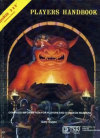
1st edition Advanced Dungeons & Dragons
What the rules say: Referred to as energy drain, it causes the character to lose a level without a saving throw. Hit points and abilities from the experience level are lost, and xp is dropped to the mid-point of the next lower level. Characters reduced to zero level can never gain xp again, and zero level characters die when they are drained of a level.
Monster descriptions: Brief summaries of the effect, but descriptions assume you have access to the PHB and DMG.
Recovery options: 7th-level cleric spell recovers a single level by restoring lost experience points to the minimum needed to recover the lost level. There is a time limit of effectiveness based on the cleric's level.
The first time I had a character get level drained, the GM basically isolated my character and forced me into a one-on-one encounter with a spectre, and he only realized as I was about to die that I didn't have a single weapon that could have hurt the thing. I have only ever seen level drain used in this manner, as a personal "challenge" or as a punishment by a pisspoor DM (with one exception, the original Ravenloft module and the third time I ever played D&D). But even if that weren't my experience, the concept is pretty flawed simply because it's not very elegant.
Let's assume an 8th level fighter is going up against a vampire, an 8 HD creature. Seems like a pretty even match, right? But the vampire wins initiative. Suddenly the fighter is 6th level and it's no longer an even match, and if the circumstances of that situation mean the fighter is trapped or was forced into this fight then you're basically playing a game of "Who wins initiative?" followed by a game of "How long can we keep this character alive through sheer luck of dice rolls?" and all because you lost the first round of initiative.
I can't imagine where this might be an acceptable game mechanic because it ranks right up there with "let's have your 14th-level character make this saving throw or else they die" in terms of how fun it is.
Zak Smith has told me that I just need to play smarter, but this statement assumes the GM is smart too (and also assumes the GM isn't some sadistic dickhead who GMs with something to prove). The GM is responsible for setting the stage and delivering information to the players about their environment, and if the information is paltry or even nonexistent, or the GM deliberately ambushes the player, then you're never given the opportunity to play smarter. I've played games where I've never even been given the opportunity to run away, or running away was simply not an option from how the GM described the scenario.
Let's say my character has been asked to hunt down a vampire that's tormenting the little town of Barovia and I ask the GM how he uses level drain, the GM says "vampires have traditional level drain." I would likely try to do everything in my power to avoid confronting the vampire directly. I'd turn his servants against him rather than face him head on. From my personal experience, no GM would ever allow such tactics to work, they would always force a direct confrontation with the main villain or simply allow all of your schemes to spoil in some way.
The same Zak Smith uses level drain for his vampires in Red & Pleasant Land and in that adventure it seems completely appropriate, there are no ambushes or Gotcha! moments written into R&PL. A good GM with smart players could have a grand olde tyme evading the dark machinations of the vampire lords in Voivodja, but if it were me I still wouldn't use level drain as its written.
Let's examine my reasons why.
Exhibit A: Absurdity
A character's xp and level are meant to be an abstract way of determining how skilled and learned a character is, just as hit points is an abstract way of determining overall health and fatigue. Levels are not just a way of giving your character hit points but they also represent stuff your character knows. Fighters know better moves, wizards learn better spells, thieves learn how to sneak and pickpocket better, and so on. When those things disappear because a wight touched your skin it just doesn't make sense because it's not called memory drain.
There's a counterargument that levels don't represent memory but overall skill. When your level is drained you are becoming sluggish and less skilled, hence the loss of skills. Then why doesn't level drain actually do that by draining skills and abilities? Why the abstract overall level? My answer to that is: see Exhibit D.
Exhibit B: Houserules + Paperwork
I have never seen a GM, nor heard of a GM, who uses level drain by the book. Why keep using level drain if nobody actually uses it the way it's written?
The DMG suggests that to be truly accurate when PCs level up you should instruct players to write how many HP they earned as a string of numbers on their character sheet. This was back in 1st edition when you didn't have proficiencies and skill checks and you also had level-based saving throws that weren't tied to ability scores. In both 1st and modern editions, unless you're doing that with every aspect of levelling up then the paperwork involved slows down play, and I would want the mechanic to be elegant and simple. I suspect the reason most people houserule level drain is because of this complexity, the tedium of rewriting a character stops the action at the table.
Exhibit C: Recovery is a bitch!
Unconsciousness and petrify have magical solutions which can end them in one casting. Death is a variable because some GMs don't allow Raise Dead or Resurrection in their games, but according to the rules a single spell can still solve that problem. In comparison Level Drain is not simple, recalculating HP, losing abilities and erasing xp and on top of that Level Drain requires multiple castings of Restoration to correct, and even then you've lost the xp forever so you can't recover completely.
The Restoration spell will only bring the character back up one level per casting, and even then your xp is only restored to the bare minimum of what was necessary to get to that level. That's lame all by itself. The mechanic is simply a way to divest a PC of experience points. The xp lost is completely and utterly unrecoverable. I don't even mind the rule that it might require multiple castings of Restoration to return to the level at which you once were, but the permanent loss of xp is just unacceptable to me. That is primarily why I find the effect so tiresome and nobody seems to want to argue a case for justifying or overlooking this part of the rules.
If a single Restoration could bring you back to what you were at pre-draining (without any loss of xp) then I would likely have less of an issue with it. But then I'm just houseruling it, aren't I?
Exhibit D: Cheap
How do you know it's cheap? There's no save. It just happens. This is the biggest factor about why I think it's dumb. Level drain isn't even in the same category as a save-vs-death or vs-unconsciousness or vs-petrify. Those things suck, but at least they're still simple effects and you get to roll dice.
It's not scary to lose xp and levels permanently, it's eye-rollingly boring. Especially if you're less than 1000 xp away from your next level and some GM springs a level drain on you then you're basically fucked. It's a cheap shot, and Gygax was the king of cheap shots!
In summation
I'm already playing RPGs to have fun and cut loose and I don't like the idea of tracking each individual HP roll every time I level up, or tracking my skills either. Just playing as a wizard and tracking my maximum ability scores in DCC was pretty time-consuming (but not to the point of making that game completely unfun). Furthermore, if I'm playing a high level fighter and I'm only 1000 xp shy of level 9, get drained to 7, then still manage to defeat my enemy and get a Restoration spell, I would still have permanently lost hundreds of thousands of experience points. That's stupid. I would rather play a houserule where I can still recover that lost xp, or in a different game altogether.
More comparisons & addendum
2nd edition Advanced Dungeons & Dragons
What the rules say: Virtually identical to 1st edition rules except the effect is clarified for all classes with extra paragraphs.
Monster descriptions: Simple descriptions that assume you have a DMG.
Recovery options: Identical to 1st edition, however Wish is made note of as a spell that can cure all lost levels with a single casting.
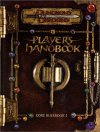
3rd edition Advanced Dungeons & Dragons
What the rules say: Energy drain is simplified into a cumulative negative effect applied to ability/skill checks, attack rolls, saving throws, hit points, and character level. Saving throws now apply to avoid the energy drain and experience points are unaffected. The rules are completely absent from the PHB and the entirety of the effect's description is in the DMG.
Monster descriptions: Simple summaries which refer to the effect and explain what the saving throw is to avoid.
Recovery options: The cleric spell, Restoration, has been brought down to 4th level but otherwise is identical to the 1st and 2nd edition versions of the 7th-level spell Restoration. A new 7th-level spell, Greater Restoration, recovers all lost levels from an energy drain with a time limit measured in weeks rather than days.
I was expecting there to be a bit more variation between 1st and 2nd editions, but this just shows that 1st and 2nd edition rules changed only in miniscule ways while 3rd edition introduced the first radical departures from the original ruleset.
4th edition Advanced Dungeons & Dragons
What the rules say: Never mentions level draining in either the PHB or the DMG.
Monster descriptions: Previously level-draining monsters have direct damage attacks with names that are called "life drain" or "soul siphon" but the words level drain and energy drain are never mentioned anywhere. Just reading the Vampire entry without the context of an undead lord it reads like a blood sorceror with tons of attacks that can only damage a single target. Lame.
Recovery options: Rest for an hour and you'll probably be fine (I fucking hate 4th edition).
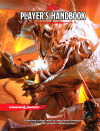
5th edition Advanced Dungeons & Dragons
What the rules say: Nothing. It doesn't exist anymore.
Monster descriptions: Monsters that used to have energy drain have been replaced with abilities that lower hit points permanently. This is, to me, scarier than the traditional level drain, however the effect is nerfed right out of the gate since every ability describes that the permanently lost hit points can be recovered after a Long Rest, 5th edition's mechanic for "sleeping it off." The vampire in the 5e Monster Manual just seems like a crude version of Lugosi's Dracula.
Recovery options: Restoration no longer exists. Lesser and Greater Restoration still exist as 2nd- and 4th-level spells, but they now apply healing to different damaging effects.
Losing level drain from the rules completely doesn't seem right. Powerful undead, especially vampires, should have some kind of special attack that you can frighten PCs with. The whole concept behind level draining is that a character drained below zero level becomes an undead version of themselves. You can leave a similar attack in place of level drain and still have an ability to frighten PCs into picking their battles and running away if they need to.
Let's take a look at how some of the OSR systems handle level drain starting with the ones most similar to, or mimicking, the original AD&D rules...

Labyrinth Lord
What the rules say: Alternately refers to effect as energy drain, drain energy, or level drain. Rules are explicit that there is no saving throw and the character loses HD and abilities associated with levels lost, but doesn't mention xp loss.
Monster descriptions: Repeat incomplete summaries of level drain rules, and some descriptions are explicit about losing xp to the minimum of the new level.
Recovery options: Restoration spell recovers one level but with a time limit based upon caster level, also recovers xp to minimum of restored level.

Adventurer Conqueror King
What the rules say: Rules are explicit, calling the effect energy drain. There is no saving throw and the character loses abilities associated with the levels lost, including reducing xp to minimum of new level. Rules also explicitly call out that only ritual magic can reverse the effect.
Monster descriptions: Do not summarize rules but simply refer to the effect as energy drain.
Recovery options: There is no Restoration spell. Wish is called out as an appropriate ritual spell for recovering levels but there is no mention of recovering xp.

Castles & Crusades
What the rules say: Calls the effect energy drain and allows a Constitution-based saving throw to avoid. Explicitly calls out loss of abilities and HD associated with levels lost, and xp is reduced to halfway point toward next level. Characters can be drained to zero level, but drained below zero level causes death.
Monster descriptions: Each monster description gives a brief but comprehensive summary of how the energy drain works.
Recovery options: Restoration spell recovers one lost level, and Greater Restoration spell recovers all lost levels and abilities. Both have time limits based on the level of the spell caster, and neither mentions recovering xp.
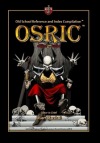
OSRIC
What the rules say: Rules are explicit, calling the effect level drain. The character loses abilities associated with the levels lost, including reducing xp to minimum of new level.
Monster descriptions: Alternates between calling it level drain and energy drain, but otherwise simply lists the effect and doesn't repeat a summary of the rules.
Recovery options: Restoration spell recovers one level, has a time limit based upon caster level, and brings the character back to minimum xp for level restored.

Adventures Dark and Deep
What the rules say: I don't own the Game Master's Toolkit
Monster descriptions: I don't own the Bestiary
Recovery options: Restoration spell recovers one lost level, has a time limit based on the level of the caster, and doesn't mention recovering xp.
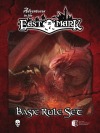
Adventures in the East Mark
What the rules say: No explicit description within the rules.
Monster descriptions: Referred to as energy loss, it causes a loss of HD and abilities but there is no mention of losing xp.
Recovery options: Restoration recovers all lost levels but must be performed within 24 hours of losing them.
The following OSR systems deviate in significant ways from the original AD&D rules...

Swords & Wizardry
What the rules say: No rules given and no mention of xp loss.
Monster descriptions: Describes effect as level drain, and adds whether the characters dies or becomes the monster in question if reduced to zero level. Effect is described as if level is just another separate set of hit points.
Recovery options: Restoration spell recovers all lost levels.

Dungeon Crawl Classics
What the rules say: No section explicitly describes it.
Monster descriptions: Some monsters have a "drain xp" or "vampire bite" ability that drains xp if a Will save is failed, and nothing describes what happens if xp drops below the current level - probably nothing because in DCC losing 1 point of experience can be potentially devastating. Ironically, there is no vampire in the monster section of the rules.
Recovery options: The Restore Vitality spell only recovers lost ability scores and there is no apparent way of recovering lost xp.

Lamentations of the Flame Princess
What the rules say: Describes the traditional effect of level drain but offers a fairly powerful and brutal Constitution drain rule as an alternative time saving rule.
Monster descriptions: There are no monsters in the rulebooks.
Recovery options: There is no spell for recovering lost levels or lost attribute points.
I really like the way LotFP handles level drain because losing Con is a simple way of tracking the loss of energy and your maximum HP will degrade as you lose Con, plus in the LotFP rules the draining is actually more brutal for a high level character and could be used with a low-level character and still be an equal challenge because it only takes a few drains to die from it but it's always based on the character's Constitution, which rarely goes up and down from level to level.
Unexpectedly, I also really like the DCC method where the character loses 1 xp per drain, even though that's a devastating effect and it's still permanent the character won't lose levels from the effect and will only be pushed back from earning new levels - and ironically, the opposite of how the rule was first explained to me.
How I would bring back Level Drain while running 5th edition D&D
I would let my players decided between two options:
1) use LotFP's alternative system for Con draining. This still gives most characters a lot of breathing room since it only drains 2 Constitution at a time, but give the Vampire double the effectiveness and you've restored a monster to a semblance of brutality that modern players will gasp at. The 4th-level spell Greater Restoration is required to recover this lost Constitution, a Long Rest simply won't cover it.
2) modify the monster entries in the 5th edition Monster Manual so that instead of permanently draining hit points or ability scores convert the damage dice to an XP loss multiplier. 1d4 Strength damage? No, 1d4 x 100 experience points. 4d8 hit points? No, 4d8 x 100 experience points. These effects all have saving throws built in so if you fail the save then the experience points are lost permanently, just like in DCC. This way spells don't need to be modified to accommodate the new rule and a Long Rest still just won't cut it!
Yup, a house rule!
Why not? Everybody else does it.
The way level drain was first described to me, and the way I've always envisioned it ever since, was that when your character gets drained they don't lose xp. Instead your level drops but your xp is still used to calculate when you level up. If you don't see a cleric and get a Restoration spell cast then you're simply stuck at that level as you level up. So if you're a 7th level fighter (125k xp for level 8) and you get drained down to level 1, if you manage to acquire 125,000 xp afterwards then you go up to level 2 - until you see a cleric, if ever.
But it turns out that was a houserule.
It would be fair to say that I have never played with a GM who used level drain as described by the rules. Either the GMs I played with didn't understand exactly how it was supposed to work, or they understood it but modified it to fit their personal style. The only time I have encountered level draining monsters were as a cheap way of stripping a PC of their levels. When I started GMing I never used monsters that had level drain abilities, and the one time I had a vampire NPC I just houseruled it as a Constitution drain that would heal the vampire of hit points.
1st edition Advanced Dungeons & DragonsWhat the rules say: Referred to as energy drain, it causes the character to lose a level without a saving throw. Hit points and abilities from the experience level are lost, and xp is dropped to the mid-point of the next lower level. Characters reduced to zero level can never gain xp again, and zero level characters die when they are drained of a level.
Monster descriptions: Brief summaries of the effect, but descriptions assume you have access to the PHB and DMG.
Recovery options: 7th-level cleric spell recovers a single level by restoring lost experience points to the minimum needed to recover the lost level. There is a time limit of effectiveness based on the cleric's level.
The first time I had a character get level drained, the GM basically isolated my character and forced me into a one-on-one encounter with a spectre, and he only realized as I was about to die that I didn't have a single weapon that could have hurt the thing. I have only ever seen level drain used in this manner, as a personal "challenge" or as a punishment by a pisspoor DM (with one exception, the original Ravenloft module and the third time I ever played D&D). But even if that weren't my experience, the concept is pretty flawed simply because it's not very elegant.
Let's assume an 8th level fighter is going up against a vampire, an 8 HD creature. Seems like a pretty even match, right? But the vampire wins initiative. Suddenly the fighter is 6th level and it's no longer an even match, and if the circumstances of that situation mean the fighter is trapped or was forced into this fight then you're basically playing a game of "Who wins initiative?" followed by a game of "How long can we keep this character alive through sheer luck of dice rolls?" and all because you lost the first round of initiative.
I can't imagine where this might be an acceptable game mechanic because it ranks right up there with "let's have your 14th-level character make this saving throw or else they die" in terms of how fun it is.
Zak Smith has told me that I just need to play smarter, but this statement assumes the GM is smart too (and also assumes the GM isn't some sadistic dickhead who GMs with something to prove). The GM is responsible for setting the stage and delivering information to the players about their environment, and if the information is paltry or even nonexistent, or the GM deliberately ambushes the player, then you're never given the opportunity to play smarter. I've played games where I've never even been given the opportunity to run away, or running away was simply not an option from how the GM described the scenario.
Let's say my character has been asked to hunt down a vampire that's tormenting the little town of Barovia and I ask the GM how he uses level drain, the GM says "vampires have traditional level drain." I would likely try to do everything in my power to avoid confronting the vampire directly. I'd turn his servants against him rather than face him head on. From my personal experience, no GM would ever allow such tactics to work, they would always force a direct confrontation with the main villain or simply allow all of your schemes to spoil in some way.
The same Zak Smith uses level drain for his vampires in Red & Pleasant Land and in that adventure it seems completely appropriate, there are no ambushes or Gotcha! moments written into R&PL. A good GM with smart players could have a grand olde tyme evading the dark machinations of the vampire lords in Voivodja, but if it were me I still wouldn't use level drain as its written.
Let's examine my reasons why.
Exhibit A: Absurdity
A character's xp and level are meant to be an abstract way of determining how skilled and learned a character is, just as hit points is an abstract way of determining overall health and fatigue. Levels are not just a way of giving your character hit points but they also represent stuff your character knows. Fighters know better moves, wizards learn better spells, thieves learn how to sneak and pickpocket better, and so on. When those things disappear because a wight touched your skin it just doesn't make sense because it's not called memory drain.
There's a counterargument that levels don't represent memory but overall skill. When your level is drained you are becoming sluggish and less skilled, hence the loss of skills. Then why doesn't level drain actually do that by draining skills and abilities? Why the abstract overall level? My answer to that is: see Exhibit D.
Exhibit B: Houserules + Paperwork
I have never seen a GM, nor heard of a GM, who uses level drain by the book. Why keep using level drain if nobody actually uses it the way it's written?
The DMG suggests that to be truly accurate when PCs level up you should instruct players to write how many HP they earned as a string of numbers on their character sheet. This was back in 1st edition when you didn't have proficiencies and skill checks and you also had level-based saving throws that weren't tied to ability scores. In both 1st and modern editions, unless you're doing that with every aspect of levelling up then the paperwork involved slows down play, and I would want the mechanic to be elegant and simple. I suspect the reason most people houserule level drain is because of this complexity, the tedium of rewriting a character stops the action at the table.
Exhibit C: Recovery is a bitch!
Unconsciousness and petrify have magical solutions which can end them in one casting. Death is a variable because some GMs don't allow Raise Dead or Resurrection in their games, but according to the rules a single spell can still solve that problem. In comparison Level Drain is not simple, recalculating HP, losing abilities and erasing xp and on top of that Level Drain requires multiple castings of Restoration to correct, and even then you've lost the xp forever so you can't recover completely.
The Restoration spell will only bring the character back up one level per casting, and even then your xp is only restored to the bare minimum of what was necessary to get to that level. That's lame all by itself. The mechanic is simply a way to divest a PC of experience points. The xp lost is completely and utterly unrecoverable. I don't even mind the rule that it might require multiple castings of Restoration to return to the level at which you once were, but the permanent loss of xp is just unacceptable to me. That is primarily why I find the effect so tiresome and nobody seems to want to argue a case for justifying or overlooking this part of the rules.
If a single Restoration could bring you back to what you were at pre-draining (without any loss of xp) then I would likely have less of an issue with it. But then I'm just houseruling it, aren't I?
Exhibit D: Cheap
How do you know it's cheap? There's no save. It just happens. This is the biggest factor about why I think it's dumb. Level drain isn't even in the same category as a save-vs-death or vs-unconsciousness or vs-petrify. Those things suck, but at least they're still simple effects and you get to roll dice.
It's not scary to lose xp and levels permanently, it's eye-rollingly boring. Especially if you're less than 1000 xp away from your next level and some GM springs a level drain on you then you're basically fucked. It's a cheap shot, and Gygax was the king of cheap shots!
In summation
I'm already playing RPGs to have fun and cut loose and I don't like the idea of tracking each individual HP roll every time I level up, or tracking my skills either. Just playing as a wizard and tracking my maximum ability scores in DCC was pretty time-consuming (but not to the point of making that game completely unfun). Furthermore, if I'm playing a high level fighter and I'm only 1000 xp shy of level 9, get drained to 7, then still manage to defeat my enemy and get a Restoration spell, I would still have permanently lost hundreds of thousands of experience points. That's stupid. I would rather play a houserule where I can still recover that lost xp, or in a different game altogether.
More comparisons & addendum
What the rules say: Virtually identical to 1st edition rules except the effect is clarified for all classes with extra paragraphs.
Monster descriptions: Simple descriptions that assume you have a DMG.
Recovery options: Identical to 1st edition, however Wish is made note of as a spell that can cure all lost levels with a single casting.
3rd edition Advanced Dungeons & DragonsWhat the rules say: Energy drain is simplified into a cumulative negative effect applied to ability/skill checks, attack rolls, saving throws, hit points, and character level. Saving throws now apply to avoid the energy drain and experience points are unaffected. The rules are completely absent from the PHB and the entirety of the effect's description is in the DMG.
Monster descriptions: Simple summaries which refer to the effect and explain what the saving throw is to avoid.
Recovery options: The cleric spell, Restoration, has been brought down to 4th level but otherwise is identical to the 1st and 2nd edition versions of the 7th-level spell Restoration. A new 7th-level spell, Greater Restoration, recovers all lost levels from an energy drain with a time limit measured in weeks rather than days.
I was expecting there to be a bit more variation between 1st and 2nd editions, but this just shows that 1st and 2nd edition rules changed only in miniscule ways while 3rd edition introduced the first radical departures from the original ruleset.
What the rules say: Never mentions level draining in either the PHB or the DMG.
Monster descriptions: Previously level-draining monsters have direct damage attacks with names that are called "life drain" or "soul siphon" but the words level drain and energy drain are never mentioned anywhere. Just reading the Vampire entry without the context of an undead lord it reads like a blood sorceror with tons of attacks that can only damage a single target. Lame.
Recovery options: Rest for an hour and you'll probably be fine (I fucking hate 4th edition).
5th edition Advanced Dungeons & DragonsWhat the rules say: Nothing. It doesn't exist anymore.
Monster descriptions: Monsters that used to have energy drain have been replaced with abilities that lower hit points permanently. This is, to me, scarier than the traditional level drain, however the effect is nerfed right out of the gate since every ability describes that the permanently lost hit points can be recovered after a Long Rest, 5th edition's mechanic for "sleeping it off." The vampire in the 5e Monster Manual just seems like a crude version of Lugosi's Dracula.
Recovery options: Restoration no longer exists. Lesser and Greater Restoration still exist as 2nd- and 4th-level spells, but they now apply healing to different damaging effects.
Losing level drain from the rules completely doesn't seem right. Powerful undead, especially vampires, should have some kind of special attack that you can frighten PCs with. The whole concept behind level draining is that a character drained below zero level becomes an undead version of themselves. You can leave a similar attack in place of level drain and still have an ability to frighten PCs into picking their battles and running away if they need to.
Let's take a look at how some of the OSR systems handle level drain starting with the ones most similar to, or mimicking, the original AD&D rules...
Labyrinth Lord
What the rules say: Alternately refers to effect as energy drain, drain energy, or level drain. Rules are explicit that there is no saving throw and the character loses HD and abilities associated with levels lost, but doesn't mention xp loss.
Monster descriptions: Repeat incomplete summaries of level drain rules, and some descriptions are explicit about losing xp to the minimum of the new level.
Recovery options: Restoration spell recovers one level but with a time limit based upon caster level, also recovers xp to minimum of restored level.
Adventurer Conqueror King
What the rules say: Rules are explicit, calling the effect energy drain. There is no saving throw and the character loses abilities associated with the levels lost, including reducing xp to minimum of new level. Rules also explicitly call out that only ritual magic can reverse the effect.
Monster descriptions: Do not summarize rules but simply refer to the effect as energy drain.
Recovery options: There is no Restoration spell. Wish is called out as an appropriate ritual spell for recovering levels but there is no mention of recovering xp.
Castles & Crusades
What the rules say: Calls the effect energy drain and allows a Constitution-based saving throw to avoid. Explicitly calls out loss of abilities and HD associated with levels lost, and xp is reduced to halfway point toward next level. Characters can be drained to zero level, but drained below zero level causes death.
Monster descriptions: Each monster description gives a brief but comprehensive summary of how the energy drain works.
Recovery options: Restoration spell recovers one lost level, and Greater Restoration spell recovers all lost levels and abilities. Both have time limits based on the level of the spell caster, and neither mentions recovering xp.

OSRIC
What the rules say: Rules are explicit, calling the effect level drain. The character loses abilities associated with the levels lost, including reducing xp to minimum of new level.
Monster descriptions: Alternates between calling it level drain and energy drain, but otherwise simply lists the effect and doesn't repeat a summary of the rules.
Recovery options: Restoration spell recovers one level, has a time limit based upon caster level, and brings the character back to minimum xp for level restored.
Adventures Dark and Deep
What the rules say: I don't own the Game Master's Toolkit
Monster descriptions: I don't own the Bestiary
Recovery options: Restoration spell recovers one lost level, has a time limit based on the level of the caster, and doesn't mention recovering xp.

Adventures in the East Mark
What the rules say: No explicit description within the rules.
Monster descriptions: Referred to as energy loss, it causes a loss of HD and abilities but there is no mention of losing xp.
Recovery options: Restoration recovers all lost levels but must be performed within 24 hours of losing them.
The following OSR systems deviate in significant ways from the original AD&D rules...
Swords & Wizardry
What the rules say: No rules given and no mention of xp loss.
Monster descriptions: Describes effect as level drain, and adds whether the characters dies or becomes the monster in question if reduced to zero level. Effect is described as if level is just another separate set of hit points.
Recovery options: Restoration spell recovers all lost levels.

Dungeon Crawl Classics
What the rules say: No section explicitly describes it.
Monster descriptions: Some monsters have a "drain xp" or "vampire bite" ability that drains xp if a Will save is failed, and nothing describes what happens if xp drops below the current level - probably nothing because in DCC losing 1 point of experience can be potentially devastating. Ironically, there is no vampire in the monster section of the rules.
Recovery options: The Restore Vitality spell only recovers lost ability scores and there is no apparent way of recovering lost xp.
Lamentations of the Flame Princess
What the rules say: Describes the traditional effect of level drain but offers a fairly powerful and brutal Constitution drain rule as an alternative time saving rule.
Monster descriptions: There are no monsters in the rulebooks.
Recovery options: There is no spell for recovering lost levels or lost attribute points.
I really like the way LotFP handles level drain because losing Con is a simple way of tracking the loss of energy and your maximum HP will degrade as you lose Con, plus in the LotFP rules the draining is actually more brutal for a high level character and could be used with a low-level character and still be an equal challenge because it only takes a few drains to die from it but it's always based on the character's Constitution, which rarely goes up and down from level to level.
Unexpectedly, I also really like the DCC method where the character loses 1 xp per drain, even though that's a devastating effect and it's still permanent the character won't lose levels from the effect and will only be pushed back from earning new levels - and ironically, the opposite of how the rule was first explained to me.
How I would bring back Level Drain while running 5th edition D&D
I would let my players decided between two options:
1) use LotFP's alternative system for Con draining. This still gives most characters a lot of breathing room since it only drains 2 Constitution at a time, but give the Vampire double the effectiveness and you've restored a monster to a semblance of brutality that modern players will gasp at. The 4th-level spell Greater Restoration is required to recover this lost Constitution, a Long Rest simply won't cover it.
2) modify the monster entries in the 5th edition Monster Manual so that instead of permanently draining hit points or ability scores convert the damage dice to an XP loss multiplier. 1d4 Strength damage? No, 1d4 x 100 experience points. 4d8 hit points? No, 4d8 x 100 experience points. These effects all have saving throws built in so if you fail the save then the experience points are lost permanently, just like in DCC. This way spells don't need to be modified to accommodate the new rule and a Long Rest still just won't cut it!
Yup, a house rule!
Why not? Everybody else does it.
Thursday, July 2, 2015
Re: why I love Apocalypse World
For a long time I never paid very much attention to the indie RPG scene. I was aware of Indie Press Revolution but I didn't know who Ron Edwards was. I had played a few indies due to a very enthusiastic friend, and for the most part I enjoyed seeing new game mechanics along with the unique scenarios one could encounter from thrusting these games onto players who didn't have any expectations. What I didn't enjoy was that every game seemed to last for only one or two sessions of play, and in such a short span of time I often felt that there was no room for character growth. They were neat little experiments but I came away from most indie games with a sour taste in my mouth and only a handful of good experiences.
The first time a game of Apocalypse World was suggested by somebody in my group I was wary. I had heard of Apocalypse World, though I couldn't tell you what I heard people saying about it beyond describing it as "sexy." I expected that it would be a short game, and that it might have an interesting hook but that after playing it I would also likely forget most of the rules. Ultimately, this expectation is why I didn't fight the suggestion and just said, "Sure, let's try it." I treated playing Apocalypse World like ripping off a band-aid: I was going to get it over with as quickly as possible.
We were given choices of characters to play. Similar to D&D classes, each character starts as a playbook, a character that fits within the genre and conventions of the post-apocalyptic setting. There are 11 playbooks in the rulebook accompanied by 9 more “limited edition” playbooks that can deepen the setting, or make it weirder. There is also a player community that has created over 50 more playbooks for expanding character creation into stranger, crueler, or more horrific directions.
Since my main point of reference to post-apocalyptic settings was one of my favorite films, The Road Warrior, I eyed the Driver, a character with a powerful vehicle who was better behind the wheel than outside of his car. I also got interested in the Hocus and the Brainer because they were psychic characters that had some unique moves related to coercing other characters. When it came time to pick characters I chose mine last. That was a mistake! Other players had managed to choose every character I had been interested in. Out of desperation I grabbed the Chopper, the leader of a rambunctious biker gang, because I (incorrectly) believed it was as close to the Driver as I could still get.
During the first session, one of my gang members was being assaulted by somebody and I said to the GM, the Master of Ceremonies (MC), "I pull out my shotgun and shoot him." I rolled the dice and received the best result possible. The MC asked "Where are you shooting him, exactly?" and I said "As close to the head as possible. What do I roll for damage?" She replied "You don't. He's dead, you blew his head off."
I was stunned into silence. No hit points? No damage? He’s just dead? “That’s what you wanted, right?” the MC asked me. Oh sure, I guess. I had never played a tabletop game before where that kind of power is given to a starting character and is just a single dice roll away. I dived into the game after that and became a murderous wrecking ball knocking over players and NPCs alike in my quest for power.
There is no alignment system, no faux morality scale to judge one’s actions upon, and this freed up playing so I could actually discover where my character’s sympathies lied. I discovered that I was playing a control freak, every setback and each failure felt like an opportunity to rush forward and wreck my opposition. I was the ultimate murderhobo but my prize wasn’t money or magic or anything luxe and fancy, it was simply to declare myself the most unstoppable badass of the wasteland. Anybody who challenged me ended up dead or disfigured. By the time the game ended four months later I had already retired that character, but I never wanted to stop playing the game.
- - -
"There are a million ways to GM games; Apocalypse World calls for one way in particular. This chapter is it. Follow these as rules. The whole rest of the game is built upon this."
Apocalypse World has a very specific method for GMing the game. The MC is given an agenda to follow with the instruction that everything you say and do is meant to follow this agenda. There are principles of conduct to follow that assist the agenda, and these principles maintain an emotional distance between the MC and the world so that they don't play favorites. There are even rules for what to say, which help to highlight how the MC is in charge but is still playing the same game with the other people sitting around a table.
Characters have very broad abilities called Moves that when executed successfully allow them to push NPCs around, give them things, and can even define new aspects of the game world. Sometimes these Moves come with a heavy price, and failing the roll of one of these Moves can come with a heavier price. Every time you roll the dice, the state of the game can potentially change regardless of success or failure. The characters can’t prevent everything bad from happening, the slow march of entropy eventually seeps in and crumbles away at any status quo that the players try to cement.
I imagine there are numerous internet forums and essays on blogs where the author says something similar to "When you roll dice and the character fails, saying 'nothing happens' is boring." I've heard this sentiment expressed and restated in different ways and I don't know who first said it. I'm sure it was probably first addressed as a bit of generic GMing advice because I can remember hearing the statement as far back as 1993. The Master of Ceremonies chapter in Apocalypse World follows this philosophy not just in advice to the MC, but provides solid rules (the Agenda, the Principles, the Hard Moves) that drive this sort of play. Failure always has something interesting or challenging to throw at the player and every time a player rolls the dice something is either going to happen or going to change.
At it's crunchy core Apocalypse World has a pretty simple mechanic for determining success. You roll two six-sided dice then modify it by one of your character's stats, -2 is the worst and +3 is the best. Other factors could adjust that modifier, but usually it's just one of your stats. If you roll 10 or higher, that's the best possible result. But if you hit between 7 and 9 you get a partial success, or a success with a cost. If you roll 6 or less, you missed the roll completely and the MC gets to make a hard move. Sometimes this hard move is in addition to some negative effect of the roll you were making.
Why does the MC get to make this hard move? Because the MC never rolls dice.
Instead, when a player rolls the dice and they fail the roll this generates the hard move for the MC to use which in turn keeps the action going and sometimes presses the player to make another roll. A hard move is something bad that's going to happen and that you know is likely to happen, or it's letting the player know that something bad is going to happen. If you're in the middle of a gunfight and you miss your roll, it’s obvious to everyone at the table that you're likely to get shot, which could be the MC’s hard move -- the character gets shot.
But the MC might instead declare that a barrage of gunfire forces you behind cover and you lose sight of what's happening, or you might see one of your opponents has a grenade in his hand and he just pulled out the pin, or you might realize that the tractor you're taking cover behind just had a hole blown through the gas tank and the ground at your feet is quickly pooling gasoline. These are all variations of the same hard move, and there are about two dozen hard moves that the MC could use, each is a narrative decision which metaphorically throws a brick at the player’s head. The MC is instructed to always follow up a hard move with the question “What do you do?”
All of these pieces work in concert. The MC’s Agenda tells them what to push for in their Hard Moves, the MC’s Principles keep them brutal and honest and impartial when a Hard Move is called for, and the MC’s Moves keep the game moving along briskly and unpredictably. Follow the rules and Apocalypse World teaches you how to be an effective and exciting GM that is capable of devising challenges on the fly while also being able to sit back and allow the players to drive the action of the campaign. This has always been what I wanted from a GM and what I’ve always striven to do as a GM.
- - -
Apocalypse World is built upon a simple philosophy of scarcity. The characters of Apocalypse World do not have ready access to food, water, shelter, safety, or health. How the players push their characters forward to secure these things often defines what a campaign is about just as much as how a campaign will unfold.
When players create their characters during the first session, this actually builds the skeleton of what a campaign will become. Each player establishes their character not just by the playbooks they selected and the abilities they chose but also by defining who their character is, where they came from, and how they got here. Through the character’s growth in experience, all the way to retirement, the players inform the campaign world around them just as much as anybody else at the table does. It would be fair to say that the players are more in control of the world than the MC is, because the MC merely builds off of what the players give them.
In the game I played, my character was always seeking to overthrow tyranny and injustice. In the course of four sessions I had traded one tyrant for another, and in two more sessions I became the tyrant myself. The MC never prepared for these upsets of power or the turnabout which put my own character into the spotlight. Following the rules allowed the MC to always stay one step ahead of me, and using my character’s Moves brought me to the eventual conclusion that she was just as much a villain as those who had come before her.
Characters in Apocalypse World have their retirement coded into their character sheets, the Playbooks. As you gain experience from session to session, you acquire Advances that expand your character thematically and allow them to “level up.” Some of the “upper level” Advances involve abandoning your current playbook and taking on a new one, or creating a secondary character to play. With my first character, I began to fill every Advance and got access to the “upper level” Advances fairly quickly.
When I brought in my second character I felt like I had made a real achievement because I had succeeded at so much in such a short amount of time. Looking back, I never finished any goal that I had set for myself yet I had ended up with a character who was in control of the local community, was relatively secure, had access to plenty of food and water, and feared by many if not all who came into contact with her.
One of the Advances reads “Retire your character to safety” and by the time I had filled everything else on my first character, it was the only one left for me to choose. I chose the moment of my character’s retirement - the player is always in control of what happens to their character - and could have prolonged it forever if I wanted to. In the end, I asked “I don’t think she would leave for a safe place. Can I retire her as a threat?” and the MC answered “Sure, that’s cool.”
As I write this, I haven’t played Apocalypse World in months. I miss it.
The first time a game of Apocalypse World was suggested by somebody in my group I was wary. I had heard of Apocalypse World, though I couldn't tell you what I heard people saying about it beyond describing it as "sexy." I expected that it would be a short game, and that it might have an interesting hook but that after playing it I would also likely forget most of the rules. Ultimately, this expectation is why I didn't fight the suggestion and just said, "Sure, let's try it." I treated playing Apocalypse World like ripping off a band-aid: I was going to get it over with as quickly as possible.We were given choices of characters to play. Similar to D&D classes, each character starts as a playbook, a character that fits within the genre and conventions of the post-apocalyptic setting. There are 11 playbooks in the rulebook accompanied by 9 more “limited edition” playbooks that can deepen the setting, or make it weirder. There is also a player community that has created over 50 more playbooks for expanding character creation into stranger, crueler, or more horrific directions.
Since my main point of reference to post-apocalyptic settings was one of my favorite films, The Road Warrior, I eyed the Driver, a character with a powerful vehicle who was better behind the wheel than outside of his car. I also got interested in the Hocus and the Brainer because they were psychic characters that had some unique moves related to coercing other characters. When it came time to pick characters I chose mine last. That was a mistake! Other players had managed to choose every character I had been interested in. Out of desperation I grabbed the Chopper, the leader of a rambunctious biker gang, because I (incorrectly) believed it was as close to the Driver as I could still get.
During the first session, one of my gang members was being assaulted by somebody and I said to the GM, the Master of Ceremonies (MC), "I pull out my shotgun and shoot him." I rolled the dice and received the best result possible. The MC asked "Where are you shooting him, exactly?" and I said "As close to the head as possible. What do I roll for damage?" She replied "You don't. He's dead, you blew his head off."
I was stunned into silence. No hit points? No damage? He’s just dead? “That’s what you wanted, right?” the MC asked me. Oh sure, I guess. I had never played a tabletop game before where that kind of power is given to a starting character and is just a single dice roll away. I dived into the game after that and became a murderous wrecking ball knocking over players and NPCs alike in my quest for power.
There is no alignment system, no faux morality scale to judge one’s actions upon, and this freed up playing so I could actually discover where my character’s sympathies lied. I discovered that I was playing a control freak, every setback and each failure felt like an opportunity to rush forward and wreck my opposition. I was the ultimate murderhobo but my prize wasn’t money or magic or anything luxe and fancy, it was simply to declare myself the most unstoppable badass of the wasteland. Anybody who challenged me ended up dead or disfigured. By the time the game ended four months later I had already retired that character, but I never wanted to stop playing the game.
"There are a million ways to GM games; Apocalypse World calls for one way in particular. This chapter is it. Follow these as rules. The whole rest of the game is built upon this."
- excerpt from the Master of Ceremonies chapter, Apocalypse World
Apocalypse World has a very specific method for GMing the game. The MC is given an agenda to follow with the instruction that everything you say and do is meant to follow this agenda. There are principles of conduct to follow that assist the agenda, and these principles maintain an emotional distance between the MC and the world so that they don't play favorites. There are even rules for what to say, which help to highlight how the MC is in charge but is still playing the same game with the other people sitting around a table.
Characters have very broad abilities called Moves that when executed successfully allow them to push NPCs around, give them things, and can even define new aspects of the game world. Sometimes these Moves come with a heavy price, and failing the roll of one of these Moves can come with a heavier price. Every time you roll the dice, the state of the game can potentially change regardless of success or failure. The characters can’t prevent everything bad from happening, the slow march of entropy eventually seeps in and crumbles away at any status quo that the players try to cement.
I imagine there are numerous internet forums and essays on blogs where the author says something similar to "When you roll dice and the character fails, saying 'nothing happens' is boring." I've heard this sentiment expressed and restated in different ways and I don't know who first said it. I'm sure it was probably first addressed as a bit of generic GMing advice because I can remember hearing the statement as far back as 1993. The Master of Ceremonies chapter in Apocalypse World follows this philosophy not just in advice to the MC, but provides solid rules (the Agenda, the Principles, the Hard Moves) that drive this sort of play. Failure always has something interesting or challenging to throw at the player and every time a player rolls the dice something is either going to happen or going to change.
At it's crunchy core Apocalypse World has a pretty simple mechanic for determining success. You roll two six-sided dice then modify it by one of your character's stats, -2 is the worst and +3 is the best. Other factors could adjust that modifier, but usually it's just one of your stats. If you roll 10 or higher, that's the best possible result. But if you hit between 7 and 9 you get a partial success, or a success with a cost. If you roll 6 or less, you missed the roll completely and the MC gets to make a hard move. Sometimes this hard move is in addition to some negative effect of the roll you were making.
Why does the MC get to make this hard move? Because the MC never rolls dice.
Instead, when a player rolls the dice and they fail the roll this generates the hard move for the MC to use which in turn keeps the action going and sometimes presses the player to make another roll. A hard move is something bad that's going to happen and that you know is likely to happen, or it's letting the player know that something bad is going to happen. If you're in the middle of a gunfight and you miss your roll, it’s obvious to everyone at the table that you're likely to get shot, which could be the MC’s hard move -- the character gets shot.
But the MC might instead declare that a barrage of gunfire forces you behind cover and you lose sight of what's happening, or you might see one of your opponents has a grenade in his hand and he just pulled out the pin, or you might realize that the tractor you're taking cover behind just had a hole blown through the gas tank and the ground at your feet is quickly pooling gasoline. These are all variations of the same hard move, and there are about two dozen hard moves that the MC could use, each is a narrative decision which metaphorically throws a brick at the player’s head. The MC is instructed to always follow up a hard move with the question “What do you do?”
All of these pieces work in concert. The MC’s Agenda tells them what to push for in their Hard Moves, the MC’s Principles keep them brutal and honest and impartial when a Hard Move is called for, and the MC’s Moves keep the game moving along briskly and unpredictably. Follow the rules and Apocalypse World teaches you how to be an effective and exciting GM that is capable of devising challenges on the fly while also being able to sit back and allow the players to drive the action of the campaign. This has always been what I wanted from a GM and what I’ve always striven to do as a GM.
Apocalypse World is built upon a simple philosophy of scarcity. The characters of Apocalypse World do not have ready access to food, water, shelter, safety, or health. How the players push their characters forward to secure these things often defines what a campaign is about just as much as how a campaign will unfold.
When players create their characters during the first session, this actually builds the skeleton of what a campaign will become. Each player establishes their character not just by the playbooks they selected and the abilities they chose but also by defining who their character is, where they came from, and how they got here. Through the character’s growth in experience, all the way to retirement, the players inform the campaign world around them just as much as anybody else at the table does. It would be fair to say that the players are more in control of the world than the MC is, because the MC merely builds off of what the players give them.
In the game I played, my character was always seeking to overthrow tyranny and injustice. In the course of four sessions I had traded one tyrant for another, and in two more sessions I became the tyrant myself. The MC never prepared for these upsets of power or the turnabout which put my own character into the spotlight. Following the rules allowed the MC to always stay one step ahead of me, and using my character’s Moves brought me to the eventual conclusion that she was just as much a villain as those who had come before her.
Characters in Apocalypse World have their retirement coded into their character sheets, the Playbooks. As you gain experience from session to session, you acquire Advances that expand your character thematically and allow them to “level up.” Some of the “upper level” Advances involve abandoning your current playbook and taking on a new one, or creating a secondary character to play. With my first character, I began to fill every Advance and got access to the “upper level” Advances fairly quickly.
When I brought in my second character I felt like I had made a real achievement because I had succeeded at so much in such a short amount of time. Looking back, I never finished any goal that I had set for myself yet I had ended up with a character who was in control of the local community, was relatively secure, had access to plenty of food and water, and feared by many if not all who came into contact with her.
One of the Advances reads “Retire your character to safety” and by the time I had filled everything else on my first character, it was the only one left for me to choose. I chose the moment of my character’s retirement - the player is always in control of what happens to their character - and could have prolonged it forever if I wanted to. In the end, I asked “I don’t think she would leave for a safe place. Can I retire her as a threat?” and the MC answered “Sure, that’s cool.”
As I write this, I haven’t played Apocalypse World in months. I miss it.
Tuesday, May 5, 2015
player responsibilities
"People behave very differently under gold as xp than under monsters as xp." I never played under that style of play, neither have I ever run a game that way. I always played in games where role-playing was the dominant force for xp rewards and during my 2nd edition days that's when I started to see players who would follow a plot that was spoonfed to them from a GM or follow a protocol of behavior that the same GM had established. Bowing to lords, currying favor with locals, haggling with shopkeepers, and asking for opponents to surrender mid-battle. However, some of the worst games I ever played in happened to be because the GM expected their players to role-play their way out of a situation rather than looking for alternative solutions or resorting to violence.
I think it's that expectation of player behavior that makes a bad GM. However, there can be bad players too. Playing badly means following vague descriptors (of class, of alignment, etc.) and never looking for anything outside of the box that has been drawn for them, essentially a bad player is dull and predictable. A good player creates the game as they go and asks the GM to accommodate them, a good player throws creative punches. Rolling with those punches is what makes a good GM.

I once played a cleric-wizard in a game set in Waterdeep, the metropolis of the Forgotten Realms setting, where my character worshipped Gond, god of artifice. I started asking about who owned the land around certain areas and the GM never had easy answers. He finally asked me why I was so interested in who owned what and I told him of my plans to introduce a mass transit system to Waterdeep, utilizing both magic and machinery. I will never forget how he guffawed and said "Yeah, that'll never happen."
The younger version of myself soldiered on, but today if I heard a GM be that dismissive I would confront them with their buffoonery. I had just handed him a whole campaign worth of adventures on a silver platter - corrupt government officials, mobilizing labor, maintaining facilities, funding the construction, monetizing the finished project, attempts at espionage, disputes over property values - and he was more concerned with maintaining his status quo of experience points per session. The same horrible GM who would create impossible to solve problems to force us into role-playing our way out of them didn't want to bite into a veritable feast of role-playing potential that I was just handing over to him.
On the other hand, I've described the ingenious problems that could have arisen from this venture to many other players over the years and they all say the same thing: "Why don't you run that campaign?" and therein lies the problem. Most players don't even create their own goals, I can't expect them to follow one of mine.
I remember another game with another GM that had just as final a moment when it came to shutting down a player's goals. In a game where virtually any character was allowed, I asked to play an ogre and was allowed to do so. The ogres and dwarves of this world were locked in a centuries-long animosity. I don't remember what the two races fought over, but I remember that the GM often used it as a stick to beat my character with. Everywhere our party went we always ran into dwarves who took extra pains to be dicks to my character, and thus also the party. Since my ogre character traveled and adventured alongside another dwarf - a PC playing the only dwarf in the world who seemed to be polite and friendly - I mentioned that there must be friendlier dwarves and as soon as I found them I could forge an ogre-dwarf alliance that would shame the other dwarves. The GM just said "Good luck with that! The only friendly dwarves you're ever going to meet will be player characters."
I was still pretty young and I stopped playing with that group at that time because I took that oafishness personally.

As a player, I always create a lofty goal for my character. Maybe something that could be attainable, but often it is something that a GM could build adventures off of. I hate playing with GMs who expect you to share their goals, or follow their breadcrumbs.
As a GM I always try to foster a player creating goals for their character, and though I don't expect it, I am disappointed when a player would rather just level up then interact with the world. That disappointment probably makes me a weaker GM overall. When I run the Dwimmermount game I feel like the campaign skirts a fine line between role-playing and XP-gathering. The characters have goals and there are some inter-party conflicts brewing, but in relation to the dungeon itself it is just there as a thing for them to conquer rather than to interact with.
I think it's that expectation of player behavior that makes a bad GM. However, there can be bad players too. Playing badly means following vague descriptors (of class, of alignment, etc.) and never looking for anything outside of the box that has been drawn for them, essentially a bad player is dull and predictable. A good player creates the game as they go and asks the GM to accommodate them, a good player throws creative punches. Rolling with those punches is what makes a good GM.

The younger version of myself soldiered on, but today if I heard a GM be that dismissive I would confront them with their buffoonery. I had just handed him a whole campaign worth of adventures on a silver platter - corrupt government officials, mobilizing labor, maintaining facilities, funding the construction, monetizing the finished project, attempts at espionage, disputes over property values - and he was more concerned with maintaining his status quo of experience points per session. The same horrible GM who would create impossible to solve problems to force us into role-playing our way out of them didn't want to bite into a veritable feast of role-playing potential that I was just handing over to him.
On the other hand, I've described the ingenious problems that could have arisen from this venture to many other players over the years and they all say the same thing: "Why don't you run that campaign?" and therein lies the problem. Most players don't even create their own goals, I can't expect them to follow one of mine.
I remember another game with another GM that had just as final a moment when it came to shutting down a player's goals. In a game where virtually any character was allowed, I asked to play an ogre and was allowed to do so. The ogres and dwarves of this world were locked in a centuries-long animosity. I don't remember what the two races fought over, but I remember that the GM often used it as a stick to beat my character with. Everywhere our party went we always ran into dwarves who took extra pains to be dicks to my character, and thus also the party. Since my ogre character traveled and adventured alongside another dwarf - a PC playing the only dwarf in the world who seemed to be polite and friendly - I mentioned that there must be friendlier dwarves and as soon as I found them I could forge an ogre-dwarf alliance that would shame the other dwarves. The GM just said "Good luck with that! The only friendly dwarves you're ever going to meet will be player characters."
I was still pretty young and I stopped playing with that group at that time because I took that oafishness personally.
As a player, I always create a lofty goal for my character. Maybe something that could be attainable, but often it is something that a GM could build adventures off of. I hate playing with GMs who expect you to share their goals, or follow their breadcrumbs.
As a GM I always try to foster a player creating goals for their character, and though I don't expect it, I am disappointed when a player would rather just level up then interact with the world. That disappointment probably makes me a weaker GM overall. When I run the Dwimmermount game I feel like the campaign skirts a fine line between role-playing and XP-gathering. The characters have goals and there are some inter-party conflicts brewing, but in relation to the dungeon itself it is just there as a thing for them to conquer rather than to interact with.
Wednesday, December 31, 2014
games I didn't get to play in 2014
let's make this short & sweet
Curse the Darkness - a kickstarted game that I've owned for a while and still haven't put a game together of, not for lack of opportunity as people have suggested playing it, it's probably my own fault as I received the game at the same time that I was super excited about playing and GMing Apocalypse World and it's just been sitting on my bookshelf ever since
Poison'd - the gamers I know who have heard of this game have stated they don't want to play a game that includes rape as part of the rules, whatever
Our Last Best Hope - another kickstarter I funded, it's a GM-less storygame RPG about impending disaster porn, I read through the rules when I first received the print book but have yet to even actually attempt to scrounge together players to give it a go, totally my fault
Dogs in the Vineyard - I don't get it, what's it about? mormons and the old west and really violent conflicts that spring out of necessity, that seems to be what people are able to accurately explain to me, I want to try it but nobody I know seems to want to play it (regardless of whether they've played it or not)
Time Lord - an out of print RPG about timelords and time travel and Doctor Who, and shit! I love Doctor Who so why haven't I put together a game of this? no idea
Numenera - another goddamn kickstarted game! I have read the rules and I don't like them, but the setting is fucking amazing and I want to play in this world, I just don't want to use that stupid scaling difficulty system that feels like another version of d20
Murderous Ghosts - a 2-player game that my wife and I keep intending to play, but every time we make an attempt we just end up having sex instead
I just realized that most of these games were designed by Vincent Baker
Thursday, September 4, 2014
perception rumination
Something I've been thinking about a lot lately is how the GM can fail to give information to the players which can lead to the players taking actions they might not have otherwise taken. The characters' perception of events is only as good as the GM's ability to narrate the scene. This should be one of those obvious statements that begins every and any chapter of GMing advice, but it's surprising how many people just don't make the mental leap of how much the collective concept of what is happening in the game rests on one person's shoulders.
There are several games that use perception as a risk-taking procedure, and supply a rule that gives players a mechanic with which to gain an advantage or simply to be warned of impending danger. 3rd edition D&D invented the much abused Spot check, World of Darkness has a derived Perception skill check, Apocalypse World has the Read A Situation move, and many times I've seen a GM who in the absence of a rule for it simply has a PC make a saving throw or a luck check or similar oddity. Using these checks as ways of doling out information is where the inspiration for Trail of Cthulhu came from.
It's a two-way street though, it's important for players to ask questions and prod for more information. Generally, I've noticed that if players just take the scene as described it's because they think their GM gave them all the information they needed. As a player, I am always asking for more details "Is the ceiling a dome or is it flat? How far does the curve in the wall go, all the way to the ceiling? Does it look like there might be a crack or crease where the wall meets the floor?"
Character perception requires player communication.

I used to think that being able to separate what your character knows from what you, as a player, know is a sign of good role-playing, but as I get older I find that I don't like the adventure to take too long. If there is something there and I've asked the right question I just want to hear a "Yes" so we can get on with the game without fiddling with dice or wasting time. But then, what is the right question?
If a room is trapped, how do detect it if the GM assumes you will just roll dice to discover it? Different games handle discovering traps and pitfalls in different ways. In old school D&D you better have a Thief to search for traps, otherwise you're hosed. In 3rd edition and in Dungeon World anybody could potentially search for traps, some are just better at it than others since in both games it almost entirely relies on your Wisdom bonus. In Dungeon World the existence of a trap might be determined by the dice roll to detect it.
In this same vein, if an NPC is lying to your character how do you detect it? Depending on the GM they might make this obvious, no roll required, but there are mechanics in games for having this kind of interaction with a skilled bluffer. Deadlands made a huge (but broken) mini-game out of the Bluffin' and Scrutinize skills. In some versions of D&D this might just be a saving throw but it could easily be a Sense Motive roll. In Apocalypse World the Read A Person move becomes a catchall for this kind of interaction, which I have noticed most players don't even actually use unless they think violence is imminent.
Sometimes pulling out dice to determine the answer to a question can answer the question for the player, and since the act of rolling might give the players information their characters shouldn't be privy to then how do you imbue that dice roll with failure and success?
Careful scrutiny still requires the possibility of failure.
There are several games that use perception as a risk-taking procedure, and supply a rule that gives players a mechanic with which to gain an advantage or simply to be warned of impending danger. 3rd edition D&D invented the much abused Spot check, World of Darkness has a derived Perception skill check, Apocalypse World has the Read A Situation move, and many times I've seen a GM who in the absence of a rule for it simply has a PC make a saving throw or a luck check or similar oddity. Using these checks as ways of doling out information is where the inspiration for Trail of Cthulhu came from.
It's a two-way street though, it's important for players to ask questions and prod for more information. Generally, I've noticed that if players just take the scene as described it's because they think their GM gave them all the information they needed. As a player, I am always asking for more details "Is the ceiling a dome or is it flat? How far does the curve in the wall go, all the way to the ceiling? Does it look like there might be a crack or crease where the wall meets the floor?"
Character perception requires player communication.

If a room is trapped, how do detect it if the GM assumes you will just roll dice to discover it? Different games handle discovering traps and pitfalls in different ways. In old school D&D you better have a Thief to search for traps, otherwise you're hosed. In 3rd edition and in Dungeon World anybody could potentially search for traps, some are just better at it than others since in both games it almost entirely relies on your Wisdom bonus. In Dungeon World the existence of a trap might be determined by the dice roll to detect it.
In this same vein, if an NPC is lying to your character how do you detect it? Depending on the GM they might make this obvious, no roll required, but there are mechanics in games for having this kind of interaction with a skilled bluffer. Deadlands made a huge (but broken) mini-game out of the Bluffin' and Scrutinize skills. In some versions of D&D this might just be a saving throw but it could easily be a Sense Motive roll. In Apocalypse World the Read A Person move becomes a catchall for this kind of interaction, which I have noticed most players don't even actually use unless they think violence is imminent.
Sometimes pulling out dice to determine the answer to a question can answer the question for the player, and since the act of rolling might give the players information their characters shouldn't be privy to then how do you imbue that dice roll with failure and success?
Careful scrutiny still requires the possibility of failure.
Tuesday, June 10, 2014
hit points
I was thinking about how much I hate hit points. When I was playing D&D as a kid and earning levels it was the first thing I latched onto as a symbol of power. Lots of hit points meant you could survive fights longer so in kid logic it meant you were tougher. When I started looking at how the classes had different rates of earning hit points I started to question the rules, my first finagling doubts that D&D wasn't perfect. About the same time I started reading Dragon magazine and if the pages of Out On A Limb (and later called Forum) are to be believed it was a subject of much contention that hit points made no logical sense. That some PCs could achieve triple digit amounts of hit points only added fuel to the fire. It's also a bit of a joke, a 1st-level wizard can be taken out by a housecat due to his abysmally low starting HP.
The game HOL, Human Occupied Landfill, had a rule that every living thing has 20 "hit points" and damage had different thresholds which were adjusted by size and damage type. Hit a bunny with a hammer and you'll cripple it if you don't kill it outright. Hit a man with a hammer and you'll do some damage. Hit a man in powered armor with a hammer and he'll laugh at you. In theory it made a lot of sense but in practice it tended to be wonky and weird and too much math, thus no fun. But the idea really appealed to me and has stuck with me ever since I first read it.
There's a need players have to gain in strength and power as they advance their characters, and there's also a need for some level of realism that allows a suspension of disbelief. It occurred to me the other day that it would be very easy to fulfill the two by returning to the idea that everybody starts with the same amount of hit points but relative to who they are they can increase, without the need to alter anything in the rulebooks.
Every PC has 5 hit points and adds their current level. Constitution modifiers now count as double, but are only applied once.
Let's look at it in practice:
1st level Wizard with CON 10 = 6 HP
1st level Fighter with CON 10 = 6 HP
1st level Wizard with CON 15 (+1) = 8 HP
1st level Fighter with CON 5 (-1) = 4 HP
Now there's a real incentive to NOT have a low Constitution starting out. But this equation does create one obvious problem: How do you compensate for monsters' hit points? All those stats with varying levels of Hit Dice? Another simple equation that can be done just by looking at HD under a monster's stat block. Monsters get 1d8 for HD, so their equation is MAXd8+level. But this creates another question: what about when a monster has a +1 or +2 next their HD number? Just add it to the total. A monster with HD 3+2 would then be 8+3+2 = 13 hit points.
How would this look?
Ogres have HD 4+1 = 13 HP
Trolls have HD 6+6 = 20 HP
Young Red Dragons have HD 13 = 21 HP
Adult Red Dragons have HD 17 = 25 HP
Armor Class becomes a much bigger factor at higher levels now. Ogres have AC 5, Trolls have AC 4, and those Dragons have AC -2 (Young) and -4 (Adult). This greatly enhances the perceptual value of seemingly "low powered" magic items as well. Having a +1 sword suddenly becomes really valuable to the PC wielding it. I haven't looked at books or tables beyond 1st or 2nd edition AD&D so I'm not sure how it work with 3rd edition books, I know some monsters are given different die type so I would have to account for that, and I think magical damage probably needs to be adjusted to compensate for the low numbers but for now I think this works pretty solidly as a simple and elegant system to build off of. Leaving it as is means that Wizards become MUCH more powerful earlier on (casting Magic Missile at 3rd level is possibly deadlyand 5th level Wizards basically become murder machines), and 5th level or higher Clerics can basically heal anybody instantly (maybe kind DMs would allow healing to "bleed" off onto multiple targets).
* - in 1st edition AD&D some monsters were given HUGE modifiers to their hit points, probably to ensure they were difficult to kill regardless of what the DM rolled
The game HOL, Human Occupied Landfill, had a rule that every living thing has 20 "hit points" and damage had different thresholds which were adjusted by size and damage type. Hit a bunny with a hammer and you'll cripple it if you don't kill it outright. Hit a man with a hammer and you'll do some damage. Hit a man in powered armor with a hammer and he'll laugh at you. In theory it made a lot of sense but in practice it tended to be wonky and weird and too much math, thus no fun. But the idea really appealed to me and has stuck with me ever since I first read it.
Every PC has 5 hit points and adds their current level. Constitution modifiers now count as double, but are only applied once.
Let's look at it in practice:
1st level Wizard with CON 10 = 6 HP
1st level Fighter with CON 10 = 6 HP
1st level Wizard with CON 15 (+1) = 8 HP
1st level Fighter with CON 5 (-1) = 4 HP
Now there's a real incentive to NOT have a low Constitution starting out. But this equation does create one obvious problem: How do you compensate for monsters' hit points? All those stats with varying levels of Hit Dice? Another simple equation that can be done just by looking at HD under a monster's stat block. Monsters get 1d8 for HD, so their equation is MAXd8+level. But this creates another question: what about when a monster has a +1 or +2 next their HD number? Just add it to the total. A monster with HD 3+2 would then be 8+3+2 = 13 hit points.
How would this look?
Ogres have HD 4+1 = 13 HP
Trolls have HD 6+6 = 20 HP
Young Red Dragons have HD 13 = 21 HP
Adult Red Dragons have HD 17 = 25 HP
Armor Class becomes a much bigger factor at higher levels now. Ogres have AC 5, Trolls have AC 4, and those Dragons have AC -2 (Young) and -4 (Adult). This greatly enhances the perceptual value of seemingly "low powered" magic items as well. Having a +1 sword suddenly becomes really valuable to the PC wielding it. I haven't looked at books or tables beyond 1st or 2nd edition AD&D so I'm not sure how it work with 3rd edition books, I know some monsters are given different die type so I would have to account for that, and I think magical damage probably needs to be adjusted to compensate for the low numbers but for now I think this works pretty solidly as a simple and elegant system to build off of. Leaving it as is means that Wizards become MUCH more powerful earlier on (casting Magic Missile at 3rd level is possibly deadlyand 5th level Wizards basically become murder machines), and 5th level or higher Clerics can basically heal anybody instantly (maybe kind DMs would allow healing to "bleed" off onto multiple targets).
* - in 1st edition AD&D some monsters were given HUGE modifiers to their hit points, probably to ensure they were difficult to kill regardless of what the DM rolled
Sunday, June 8, 2014
fuck WATCH_DOGS
WATCH_DOGS is a game for dudebros. Steeped in manly male manmeat, the man character is a gruff take-no-prisoners antihero who will steal your money and shoot you if you're black. He might be one of those pansy hackers who would normally be sat behind a computer sucking on Mountain Dew and pissing into the bottle after it's empty because nothing can tear them away from their screens, but he wears a stylish hat and a trenchcoat, plus his voice is deep and gravelly, so you know he's a tough guy who don't piss in no bottles. But he's not really a hacker anyway, he's got an app on his cellphone which turns it into a magic wand, it lets him turn on all the traffic lights at an intersection, steal money from some bank accounts, steal any car including ones that look like they were produced before the internet existed, or pop steam tunnels in the road that conveniently disable cars but never ever stop spewing out cubic tons of steam.
In WATCH_DOGS, your man character will beat up gangsters, shoot fixers (which is an obscure way of saying hitmen), collect massive amounts of weaponry that all fit underneath his stylish trenchcoat, construct rudimentary explosives and mp3 players that are the size of a fucking light switch yet somehow will never be able to construct a portable camera or drone, and spy on any citizen, all in a way that totally doesn't rip off any other open world games with better storylines or more interesting casts of characters.
You'll meet Jordi Chin, a badass Asian hitman who should be the character you are playing but you're probably a white male and playing an Asian doesn't get you to pay $60 for games so he's relegated to smartass sidekick and for some stupid reason likes the man character and does favors for him. Jordi is the most interesting and likeable character, but since you're not playing him that means he will probably betray the man character in the second to last mission.
You'll work with Clara Lille, the goth hacker who serves as the nerdbait stand-in plagiarized out of Girl with the Dragon Tattoo but without all of that uncomfortably pesky rape storyline, or any storyline really. The man character's search for the hacker who is responsible for his niece's death will almost assuredly lead to her judging from the way she's always looking at Aidan like he's a walking dildo that she feels guilty about not cleaning.
There are other characters in this game, but they're so one-dimensional it actually hurts my psyche just thinking about writing about them. There are some missions you will probably enjoy playing, especially if you like getting chased by cops for 30 minutes at a time, or trying to disable somebody's car so you can knock him down to the ground with your nightstick while he's surrounded by a fucking platoon of soldiers with body armor and assault rifles, or playing poker where the computer opponents will say things like "Too rich for my blood" as they raise the pot because apparently they are all mentally disabled, or playing drinking games which are really just contrived quick time events.
I played the demo for Super Time Force for less than 10 minutes and had more fun than I had playing WATCH_DOGS for four hours. In summation, play something else!
But you won't.
Thursday, May 29, 2014
diphikulte
I read the rules for Numenera a couple of months ago and I couldn't quite put my finger on why it didn't resonate with me, until today. I was reading the rules for mutants & machineguns (m&m) and about the only thing it has in common with Numenera is that difficulties are determined on a scale. In m&m this is fairly simple since doing stuff requires a roll of 2d6, there are five levels of difficulty and a trivial level called "routine" is mixed in there so it's more like it only has four difficulty levels. Numenera has ten difficulty levels and most of the game mechanics involve jumping up and down the scale of difficulty, on top of that your ability to change difficulty levels increases as you level up. As a GM it's a little difficult to call a difference between a "challenging" or "formidable" difficulty, so it almost feels like the target numbers for tasks should just increase as PCs level up - which feels disingenuously like d20 mechanics. d20 has this tendency of making everything across the board increase in difficulty in relation to what level the PCs are, which means tasks are almost always hovering around this 50% chance of success for everything and if your chances of succeeding are always relatively the same then what's the point of leveling up?
Numenera is a really awesome setting! I feel like I should point that out right now since all I'm ever going to do is bitch about the game's mechanics. I hate the rules, I don't find them intuitive to use at all. But the setting, the history, the technology, and the peoples and creatures are all great. As I read further into the rulebook I really enjoyed immersing myself in this strange new world and I really wanted to try playing it. The rules just get in my way. I've thought about matching the setting to something else, like World of Darkness or Stars Without Number or Dungeon World or something, but it seems like a lot of work to do for something I might only play for a couple of sessions before everyone involved wants to play something else.
But here's a thing about difficulty levels that I think is stupid: there is always some level for "routine" tasks. Not just in m&m but also in Numenera and in 3rd edition D&D and in Deadlands and in Shadowrun. Shit! Just about any RPG that uses levels of difficulty has a trivial or routine level. What's the point? Nobody is ever going to roll for a routine task, and if they do it's going to be incredibly lame when you ask them to roll the dice to brush their teeth and they roll a 1 because now you have to come up with some reason for why they failed at brushing their teeth. I guess in Numenera's case it is there to illustrate how low you can reduce the difficulty of a task before it becomes practically a routine task, but if the game doesn't allow for adjustable difficulty then there's almost no reason for it to be in there.

Monday, May 26, 2014
Grand Theft Auto

Grand Theft Auto III
At the beginning of Grand Theft Auto III (GTA3) you are asked by a fellow escaped prison inmate, his name is Eight-Ball, to take him to a safehouse he knows about. His hands are broken and burned, he can't drive so you must do it for him. Arriving at the safehouse you and Eight-Ball get a change of clothes and he asks you to take him to his old boss'es nightclub. It's your first mission in the game and it's relatively simple. Drive to point A, then drive to point B. When the mission is over there is a character who tells you to go around to the back of the nightclub where your next mission awaits, but there is nothing stopping you from getting back into your stolen car and driving off into the city and never coming back.
When I first played GTA3 I completed the first few missions for Luigi, the mafia nightclub owner who gives you the first simple missions and sets up your other contacts, and then his missions ran out and I got lost. It's hard for me to imagine now, but I couldn't find my way in the city blocks around his nightclub. I drove down a street that looked familiar and then found the elevated train that led back to the front of my safehouse alley. As I pulled my car into that alley I was annoyed and thinking "What kind of game is this? It's not telling me where to go and what to do."
That was the moment where I realized what that actually meant, and it was a revelation!
Can I just run down pedestrians on the street? Yes. Can I blow up this car? Yes. Can I jump my car off this cliff? Yes. Can I drive on the train tracks? Yes. Can I just stand on this street corner and listen to the pedestrians? Yes. Can I steal this Taxi? Yes. Can I pick pedestrians up and take them to their destinations? YES! This was the kind of video game I had always wanted, it gave the player what most games only cheat at giving: freedom. The story in GTA3 is virtually nonexistent, and consists of taking a series of jobs from psychopaths and criminals, whose allegiances pit the player against former allies throughout the course of the game. This isn't where the game shined, instead it was in the world and the freedom of testing what would happen by interacting with it, usually violently. The more I played, the more I explored the limits of what the game was capable of, and the longer I stayed in this world the more I became acutely aware of the game world's limitations. In truth, it really doesn't give you complete freedom, but it gave enough of illusion of freedom that testing the limits of what could be done within the game seemed like it would never run out. The boundaries of the world can only stretch so far, and the game could only give so much. The talk radio station, Chatterbox, featured a roughly hour-long loop of dialogue that breathed life into the setting, but it only left me craving more.
Grand Theft Auto: Vice City
Grand Theft Auto: Vice City was the first video game I ever pre-ordered. I remember checking the preview website every week, waiting for a new screenshot or a new update from the fictional Kent Paul. When the game neared release I checked it every day. I re-started GTA3 and finished it to 100% completion twice in the time I waited, so great was my anticipation.
Delving into the 1980s Miami-inspired Vice City, a deeper story was told and a broader picture of this world emerged, despite the fact that the only things linking this game to the previous one were a few weak references to Liberty City and the appearance (but not the voice) of Donald Love, a major character from GTA3. The main character of Vice City (I would be remiss if I referred to him as a protagonist) was given a voice and the story was told from his perspective, this could give context and narration for the more ambiguous missions. Serving as a prequel of sorts for GTA3, Vice City put the player into the shoes of Tommy Vercetti, an old-fashioned mobster put in charge of a drug deal turned bad. Vercetti's first goal is to get revenge for the game's opening betrayal, and when I first encountered the mission that sent me after the top criminal of Vice City I thought "I'm at the ending already?" The game seemed short, but the story continued on after I had defeated Ricardo Diaz. The revelation of this game was discovering that I was taking over the criminal empire and could now purchase property and run businesses in Vice City. My mind boggled! Discovering the businesses and unlocking the profits from them was more exciting than playing through the story.
This game wasn't just about revenge, it wasn't just telling the story of Tommy Vercetti, it was built around the idea that the player could build and run a criminal empire. This is the charm of what the game really held, but you don't discover this until you're halfway through the story. It was a one-two punch for anybody expecting just more of the same GTA.
Manhunt
I can't talk about GTA without mentioning Manhunt, it's an ultra-violent stealth-based video game where you play the role of James Earl Cash, a convicted murderer who has been secretly kidnapped from his execution to "star" in a snuff film where he has to sneak past various gangs that are all getting paid to hunt him down through a dilapidated section of the fictional stand-in for Philadelphia known as Carcer City.
Anybody who has played Manhunt alongside any of the GTA games will instantly see the links connecting the two. Every iteration of GTA makes references to Carcer City, and many of the fictional brand names that were created for Manhunt have carried over to the GTA games in different ways. There is a literal connection on one of the radio stations of GTA3 as an announcer broadcasts a news story about the events of Manhunt, placing the game in the GTA timeline as a prequel to GTA3.This game, rather than being a world to explore, is challenging and tense. It was a punch to the gut for anybody expecting more of the bawdy and twisted humor from GTA to find a seedy and profane world of criminals and deviants. GTA is a punchline about atrocity, Manhunt is the cold rebuttal. Despite the fact that Manhunt is not officially part of the GTA universe, it's the best game in the series!
Grand Theft Auto: San Andreas
The opening of Grand Theft Auto: San Andreas sees our new protagonist, Carl Johnson, getting pulled over and harassed by two dirty cops. The entire game is four times bigger and three times longer than anything that has come before in the GTA series, but Carl spends most of his time getting kicked down and pushed around by all of the people in his life. This was the first game that featured a traditional story arc and feature five distinct acts coordinated with the location of missions within the terrain of the west coast state, San Andreas - which actually acts as a hybrid of southern California and Nevada.
In the first act we see Carl rejoining his old boyhood gang, the Grove Street Families, and trying to rebuild their influence and control over east Los Santos, the game's parody of Los Angeles. At the end of the first act Carl is betrayed, and those two dirty cops from the beginning force Carl to start working for them, all in the name of keeping his brother safe while he's stuck in prison. During this second act Carl is forced to kill people and run drugs in the lush countryside and farmland of San Andreas. Soon Carl has set his sights on taking down the drug lords who betrayed his brother and the story shifts gears, Carl finally starts to call some of the shots in San Fierro, a stand-in for San Francisco, but this doesn't last long. When Carl catches up with one of the supposed drug kingpins he quickly learns the man is a government agent who has been watching his every move. Still a pawn as the fourth act opens, Carl is now forced to work for the agent in the deserts between San Fierro and Las Venturas, i.e. Las Vegas.
The final act revolves around Carl pulling a casino heist and returning to his hometown city with his ill-gotten gains. Along the way Carl has become a licensed pilot, won illegal street races, escaped ambushes, destroyed a drug cartel, and made permanent enemies of the mafia bosses who all get killed in GTA3.If GTA3 was a the lightning bolt that ushered in a new kind of video game, San Andreas was the storm that followed. It gave everything that first title had, but there was simply more of it and depending on what part of the state you were in the game played differently. Honestly, it was difficult to describe how playing San Andreas in 2005 felt, but it was impossible to imagine how much better the GTA games could get.
Grand Theft Auto IV
Grand Theft Auto IV (GTA4) opens with all of the grandiosity and pomp of a large-scale Hollywood production. The music swells, the credits pop through the scenery, and we are introduced to Niko Bellic, our new main character, through a short conversation he is having with a shipmate as he disembarks from a cargo vessel into the industrial harbor of Liberty City, the same city from GTA3 but now it looks more real, more alive, more dirty.
In this game we lose much of what made the previous iterations so much fun to play at the benefit of a huge sprawling storyline with relationships. The graphics are excellent and the physics are a marked improvement from the first few games, but hinging so much of the game on an uninteresting story about a hypocritical sociopath while simultaneously removing all of the side missions that fueled most of the exploration from previous games means that this is the least interesting game in the series. I made my own game of running over pedestrians and seeing how long I could survive with huge levels of cops chasing after me. At one point I even abandoned GTA4 for one of it's predecessors. GTA4 had two DLC packs which breathed a bit more life into the game, the most interesting of these was one focusing on a biker gang in GTA4's equivalent of New Jersey. But both of the tacked-on stories were too short and neither one brought back the missing side missions or activities from previous games.
Grand Theft Auto V
You will probably hear other people tell you that Grand Theft Auto V (GTA5) features three characters that you can play as, and the story is about how their lives intersect. And while most of the story hinges around Michael's mid-life crisis, and the character I found myself playing the most was Trevor, the main character of GTA5 is obviously Franklin Clinton, the black car thief and hustler. Franklin has the best abilities, the best car, the best home, and his story is the one that decides the fate of the other two characters. This game features a strong story that doesn't contradict itself or try to rise above the underhanded premise of the game you are playing, and the game features the southern end of the state of San Andreas again. There is no Las Venturas or San Fierro, which is mildly disappointing as the game is still huge. There is almost too much area to explore, especially since not everything in the game takes you into every area of the game. The old and familiar side missions are still missing, instead you get tennis.


Subscribe to:
Posts (Atom)